PSX rebounds as market recovers over 5,000 points after steep slide
"Today’s rise reflects a technical rebound, with value hunters stepping in," says analyst
Published March 03, 2026
- KSE-100 Index settled at 157,132.09 points, up 5,159.10 points, or 3.39%.
- Index reached session high of 158,217.01, gaining 6,244.02 points, or 4.11%.
- Index recorded a low of 151,258.85, down 714.14 points, or -0.47%.
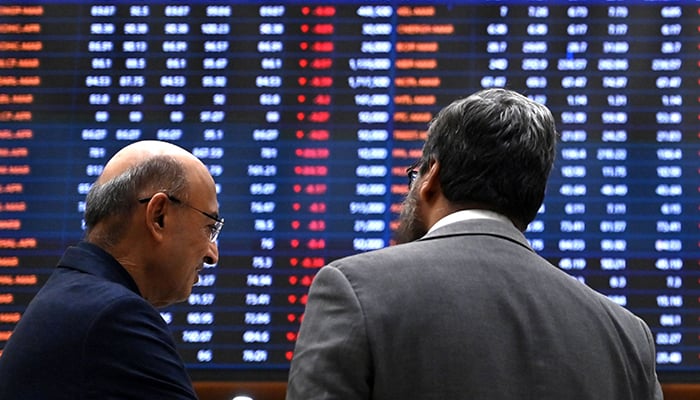
The Pakistan Stock Exchange (PSX) rebounded on Tuesday, gaining more than 5,000 points after a sharp correction, following losses exceeding 16,000 points triggered by escalating Middle East tensions.
The benchmark KSE-100 Index settled at 157,132.09 points, up 5,159.10 points, or 3.39%.
During the session, the index rose to an intraday high of 158,217.01, gaining 6,244.02 points, or 4.11%, and receded to a low of 151,258.85, down 714.14 points, or -0.47%.
The benchmark was trading higher after Monday’s historic plunge, when the index closed at 151,972.99, down 16,089.17 points, or -9.57%, in its biggest ever one-day fall.
"Market is rebounding as it had declined significantly yesterday [due to a correction],” Samiullah Tariq, Head of Research at Pak-Kuwait Investment Company, told Geo.tv.
Topline Securities' Maaz Mulla told Geo.tv that after yesterday’s panic-driven slide — fueled largely by mutual fund selling and ranking among the worst-performing global indices — a pullback was always on the cards.
"Today’s rise reflects a technical rebound, with value hunters stepping in as excessive pressure eased. The key now is whether this recovery gains follow-through or remains just a short-term bounce," he noted.
Meanwhile, a selloff in stocks deepened and the dollar strengthened as investors considered the implications of US and Israeli strikes on Iran on energy prices and the global economy.
MSCI's broadest index of Asia-Pacific shares outside Japan fell 1.5% to extend losses for a second day, led by a drop of as much as 4.1% in Korean shares, Tokyo's Nikkei 225 slumped 2.3% and S&P 500 e-mini futures EScv1 were down 0.6%.
"Economic policy uncertainty was already elevated and now with the Iran conflict, the geopolitical risk is expected to rise too," said Rupal Agarwal, Asia quant strategist at Bernstein in Singapore. "Last time both spiked was in 2022 during the Russia-Ukraine conflict, which didn’t work well for Asian markets."
US President Donald Trump sought to justify a broad, open-ended war on Iran, saying on Monday the campaign was ahead of expectations.
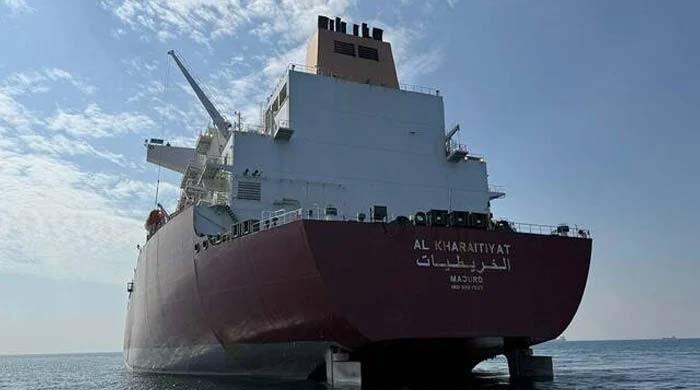
With no end to hostilities in sight, an official from Iran's Revolutionary Guards said on Monday that the Strait of Hormuz is closed to marine traffic and the country will fire on any ship trying to pass.
The threat had an immediate impact, pushing the cost of hiring a supertanker to ship oil from the Middle East to China to a record high of more than $400,000 a day, LSEG data showed.
After oil and gas prices surged on Monday, Brent crude futures LCOc1 tacked on another 2% to $79.22 on Tuesday. In natural gas markets, benchmark European TFMBMc1 and Asian LNG prices leapt by around 40% on Monday.
— Additional input from Reuters