Petroleum price hike: Are oil companies making massive inventory profits?
Fuel price issue has been used to fuel "sensational narratives", says finance ministry adviser
Published March 07, 2026

Following the announcement of a massive hike in petroleum prices, a government official on Saturday clarified the rationale behind the decision and how the fuel pricing mechanism works in Pakistan.
The clarification comes a day after the government raised petrol and diesel prices by Rs55 per litre each as surging global oil prices, fuelled by the US‑Israel war with Iran, put pressure on domestic energy costs.
Concerns were raised that certain companies have earned huge profits from the sudden hike in petroleum product prices in the country.
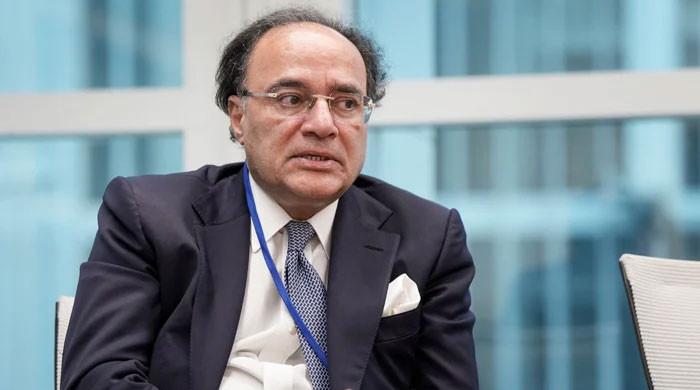
However, Khurram Schehzad, an adviser to the finance ministry, dispelled the claims, saying the issue has been used to fuel "sensational narratives" without fully understanding how pricing mechanisms work.
In a post on X, he detailed how the pricing mechanism works, both in Pakistan and in most global markets.
Schehzad began by refuting reports that oil marketing companies (OMCs) were making a massive "inventory profit", saying the assumption was based on a misunderstanding of how fuel pricing and inventory actually work in Pakistan.
"Fuel prices are determined using the average Platts benchmark prices of petrol and diesel during the pricing period, along with exchange rate adjustments," he said.
The price is not based on the cost of a particular shipment purchased weeks earlier, he added.
According to Schehzad, oil companies are legally required by the Oil and Gas Regulatory Authority (Ogra) to maintain around 20 days of mandatory stock, meaning that they are continuously selling fuel while simultaneously buying new cargo at prevailing international prices to replenish the same inventory.
He explained that every litre of fuel sold has to be replenished with a litre bought at current international market prices to keep reserves at the mandated level.
"What people describe as an 'inventory gain' disappears because the stock is being replenished with more expensive molecules," Schehzad said.
He maintained that companies are often forced to sell inventory purchased at higher prices at lower regulated prices when international prices fall, resulting in significant inventory losses.
Citing an example, Schehzad said petrol prices in Pakistan were reduced by around Rs24 per litre in December last year after international oil prices declined.
At the time, refineries and OMCs were holding mandatory inventory purchased at higher prices, leading to billions of rupees in inventory losses.
He added that similar situations occurred in 2022 and 2023, when multiple price cuts forced companies to sell higher-cost inventory at lower regulated prices.
Schehzad said that while price adjustments may sometimes appear to create temporary gains, they often result in losses when international prices fall.
"It is not a windfall profit from 'cheap oil bought earlier,'" he added.