Pakistan as diplomatic bridge
Evolving conflict architecture created significant opening for Pakistan to reposition itself as state with rising diplomatic utility
Published April 27, 2026
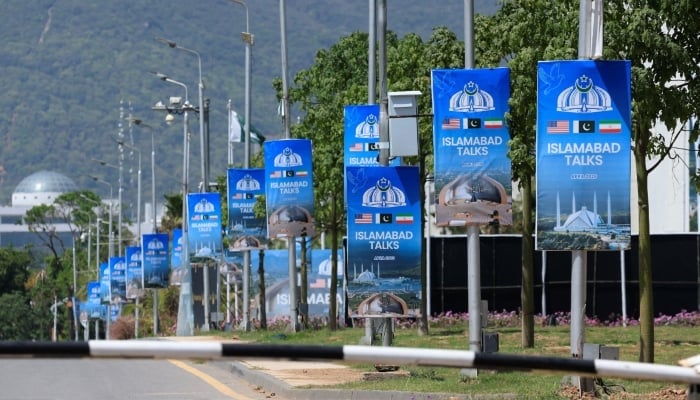
West Asia is no longer merely a theatre of conflict for Pakistan to observe from a distance; it has become a region where Islamabad is increasingly being viewed as a credible facilitator, stabiliser and diplomatic bridge.
The evolving conflict architecture involving Iran, Israel, the US, the Gulf states and the broader regional security framework has created an unusual but significant opening for Pakistan to reposition itself as a state with rising diplomatic utility.
The recent dialogue channels involving Iran and the US, alongside the broader tensions generated by Israeli military actions and the fragile security balance across the Gulf, have elevated the importance of neutral and trusted intermediaries. Pakistan has quietly but effectively emerged within this space. Unlike many regional actors constrained by overt alliances, Pakistan possesses a rare strategic advantage: it enjoys working trust and credible engagement with all three major global powers, the US, China and Russia, while simultaneously maintaining deep institutional relationships across the Muslim world.
Very few countries in the world, and arguably none in the immediate region, can claim sustained strategic relevance with Washington, Beijing and Moscow at the same time. Pakistan has a long-standing security and diplomatic relationship with the US, an iron-clad strategic partnership with China, and increasingly pragmatic and expanding ties with Russia, particularly in energy, regional security and Eurasian cooperation. This rare triangular trust gives Pakistan diplomatic muscle that extends far beyond its economic size.
In moments of global polarisation, states that can speak to all sides become more valuable than states that merely choose sides. This is where Pakistan’s strategic credibility has strengthened. It is not simply geography that matters but trust. Pakistan can communicate with Tehran without suspicion, engage Riyadh with confidence, speak to Washington without hostility, coordinate with Beijing without ambiguity and maintain channels with Moscow without strategic contradiction. In a fractured world, this is diplomacy by design.
Years ago, the strategic conversation around Pakistan was dominated by Afghanistan and South Asia. But the regional frame has changed. The revised US Integrated Country Strategy (under Ambassador Donald Blome) had already begun recalibrating Pakistan’s relevance from a narrow counterterrorism lens towards a broader focus on economic growth, climate cooperation, regional stability and strategic diplomacy. Pakistan was gradually being repositioned from a purely South Asian context towards a wider West Asian and MENA-Afghanistan, Pakistan (MENAAP) framework.
Today, that shift is visible. Pakistan’s quiet role in facilitating regional communication has drawn international recognition. Islamabad’s ability to maintain open lines with both sides, while avoiding theatrical diplomacy, has improved its standing. In a region increasingly divided by absolutist positions, credibility belongs to those who can still be trusted by opposing camps.
Pakistan’s recent diplomatic conduct has reinforced this trust. It has chosen de-escalation over provocation, strategic restraint over symbolic rhetoric, and engagement over isolation. This has increased its value as a country capable of facilitating difficult conversations.
Its credibility has also been strengthened by confidence at home. Operation Sindoor and Pakistan’s ability to win both the strategic and narrative dimensions surrounding it reshaped external perceptions of Pakistani state capacity. It signaled that Pakistan is not merely reacting to regional developments, but can also shape them.
China’s growing role in West Asia further amplifies Pakistan’s relevance. Beijing is increasingly positioning itself as a peace broker, as seen in its facilitation of Saudi-Iran normalisation. Pakistan benefits from being one of the few countries trusted by both China and the US, despite their strategic rivalry. Add Russia to that equation – and Islamabad’s diplomatic bandwidth becomes even more significant.
At the same time, Pakistan’s traditional relationships with Saudi Arabia, the UAE, Qatar, Turkiye, Iran and the broader Muslim world remain strong. Its military cooperation, labour linkages, religious legitimacy and political trust with Gulf capitals provide influence that many states cannot easily replicate. While Saudi Arabia undergoes structural transformation under Vision 2030 and gradually shifts towards a more liberal governance model, a vacuum is emerging in the symbolic leadership of the Muslim world, particularly in representing the conservative and faith-driven segments of the global Muslim population.
This is where Pakistan holds a distinct opportunity.
Unlike many Muslim-majority states, Pakistan was created in the name of a civilisational idea rooted in Muslim political identity. It possesses both democratic legitimacy and strategic military strength. It is the only nuclear power in the Islamic world, giving it symbolic and strategic stature that extends far beyond South Asia. Its religious institutions, military credibility and geopolitical positioning allow it to engage both modern statecraft and traditional faith-based legitimacy simultaneously.
The question is not whether Pakistan should lead radical Islam, but whether it can provide responsible leadership to prevent radicalisation from becoming violent extremism. There is a crucial distinction between ideological conservatism and militancy. The Muslim world requires leadership that can preserve faith-based identity while rejecting terrorism, sectarian violence, and political chaos. Pakistan can occupy that middle ground.
Rather than allowing extremist narratives to be monopolised by violent non-state actors, Pakistan can reposition itself as the state that gives voice to conservative Muslim concerns through diplomacy, governance, and strategic engagement. It can become a stabilizing force for the Muslim world, one that protects religious identity without allowing it to be weaponised.
Türkiye’s ability to assume this mantle remains constrained by its secular constitutional legacy and competing Western alignments. Iran’s ideological model remains too sectarian and polarizing for broader Sunni acceptance. Saudi Arabia’s domestic transformation is shifting its priorities inward. This leaves Pakistan with a rare opening: to emerge as a credible political and moral center for Muslim-majority societies seeking both dignity and stability.
Pakistan occupies a rare middle ground.
Its legitimacy derives not from wealth, but from strategic resilience, institutional continuity, military credibility, and the ability to speak across ideological and geopolitical divides. It does not carry the baggage of imperial ambition, nor the burden of sectarian expansionism. This gives Pakistan a unique moral and diplomatic space to act as a facilitator rather than a competitor.
The Israel-Palestine question remains central to this role. Pakistan’s principled support for Palestinian rights has historically given it moral clarity. But moral clarity alone is no longer sufficient. A country that seeks relevance in West Asia must be able to influence outcomes, not merely issue statements. Quiet diplomacy, coalition building, humanitarian leadership and strategic mediation are now more valuable than rhetorical maximalism.
Washington also understands this recalibration. Earlier strategic priorities focused heavily on terrorism, militant threats and nuclear stability. The newer approach gives greater emphasis to economic cooperation, democratic resilience, climate policy, peace diplomacy and regional stability, while retaining security concerns. This reflects recognition that Pakistan’s utility lies not only in managing threats, but in shaping regional outcomes.
The question now is whether Islamabad can institutionalise this moment. Diplomatic relevance cannot depend solely on episodic crises. It requires doctrine, continuity and strategic patience. Pakistan must strengthen its foreign policy institutions, deepen economic diplomacy, expand policy research on West Asia and align its domestic governance narrative with its international ambitions. Mediation abroad requires credibility at home.
The old Middle East order is collapsing, and a new West Asian architecture is being negotiated in real time. In that transition, Pakistan has an opportunity few expected.
If sustained, this trajectory could redefine Pakistan’s global role, not merely as a participant in geopolitical contests but as the one country capable of bringing diplomatic trust across the great powers to the same negotiating table, while also serving as a responsible political voice for the Muslim world. That is not just strategic relevance. That is diplomatic power.
The writer is a public policy expert and leads the Country Partner Institute of the World Economic Forum in Pakistan. He tweets/posts @amirjahangir and can be reached at: [email protected]
Disclaimer: The viewpoints expressed in this piece are the writer's own and don't necessarily reflect Geo.tv's editorial policy.
Originally published in The News