India and New Zealand sign free trade deal
Deal could see more than 20,000 Indian migrants entering New Zealand, say officials
Published April 27, 2026
- Deal to facilitate $20bn of investment into India: minister.
- Trade agreement comes amid Trump's global tariff war.
- New Zealand PM says deal means more jobs and money.
India and New Zealand signed a free trade deal on Monday as they seek to boost exports amid global economic uncertainty made worse by the war in the Middle East.
Negotiations over the agreement concluded in December 2025, and will see India gain greater access for a range of products, including engineering goods, machinery and textiles, while also protecting its sensitive dairy sector.
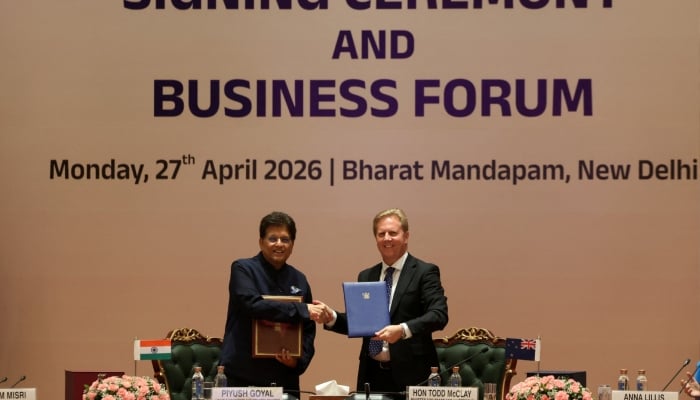
"This forward-looking agreement will also facilitate $20 billion of investment into India," New Delhi's Commerce Minister Piyush Goyal said after signing the agreement alongside his New Zealand counterpart, Todd McClay.
New Delhi, in return, has offered to reduce tariff barriers in sectors such as forestry, lamb and wool, while granting quota-based access for fruits such as apples.
Trade between New Delhi and Wellington is small, with merchandise trade growing from $873 million in 2023-24 to nearly $1.3 billion in 2024-25.
The deal was struck at a time when US President Donald Trump's tariff war had upended global trade, forcing countries around the world to tap new markets.
The Middle East war has since delivered a global energy shock, disrupting production across multiple sectors and reinforcing the need to bolster trade ties and shed protectionist stances.
New Zealand Prime Minister Christopher Luxon on Monday said the "once-in-a-generation agreement" will give local exporters "unprecedented access" to the world´s most populous nation.
"It means more jobs on farms and orchards, it means more money coming into local communities, and it means more opportunities for your family to get ahead," Luxon said in a social media post.
However, parts of the agreement have sparked criticism in Wellington.
These include greater visa access for skilled Indians, with New Zealand officials telling AFP that the deal could see more than 20,000 Indian migrants entering the country.
The right-wing populist NZ First party has also pointed to concerns about a NZ$34 billion (US $20 billion) investment New Zealand is bound by the deal to make in India over a 15-year period.