WhatsApp rolling out read-based disappearing messages feature
New feature allows users to set messages to automatically delete after the recipient opens and reads them
Published May 16, 2026

Meta-owned WhatsApp is testing a new privacy-focused feature that allows messages to disappear after being read, offering users greater control over their conversations.
The feature, currently available to select beta testers, is being rolled out on both Android and iOS platforms.
According to WABetaInfo, the feature is designed to enhance disappearing messages by introducing a new "After reading" timer.
This tool will allow users to set messages to automatically delete after the recipient opens and reads them, rather than relying solely on fixed time-based expiry options.
Previously, WhatsApp users could choose disappearing message timers such as 24 hours, seven days, or 90 days. Despite being useful, these options sometimes created limitations, particularly when messages expired before being read.
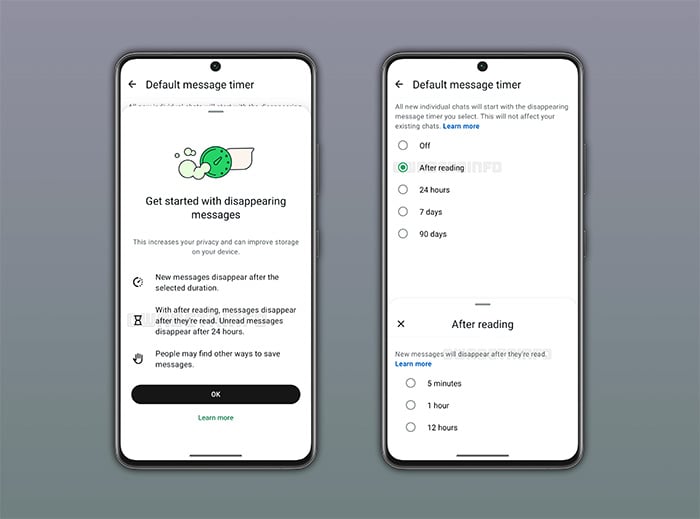
The new system will address the issue by ensuring messages to remain visible until the recipient actually views them.
Once a message is read, a countdown begins based on the sender's selected duration, which can be set to five minutes, one hour, or 12 hours.
After this period expires, the message is automatically removed from the chat. If the recipient does not open the message, it will still disappear after 24 hours, maintaining a balance between privacy and reliability.
The rollout has already begun for some WhatsApp beta users on Android, while iOS testers had earlier access through version 26.19.10.72. WhatsApp says the feature will gradually expand to more users over the coming weeks as testing continues.
The company believes the update will give users more flexibility in managing sensitive conversations while reducing the risk of messages being stored indefinitely. However, it also notes that extremely short timers could create usability challenges in some cases, particularly if messages disappear before being seen.
This new "After reading" feature represents a significant step in Meta-owned messaging and video calling platform's ongoing efforts to strengthen privacy controls and give users more precise control over their messaging experience.