NASA to send robot in space to save $250m Swift Telescope from falling back to Earth
NASA has hired a space technology company to carry out the high-risk operation
Published June 29, 2026
In a thrilling race against time, the National Aeronautics and Space Administration (NASA) is working on a daring rescue mission to save one of its most valuable space telescopes from a fiery end in Earth's atmosphere.
The Neil Gehrels Swift Observatory, a true cosmic "multitool" that's been watching the universe's most explosive events for over two decades, is tumbling back toward our planet and a bold new mission could give it a second life.
Swift, launched in 2004, has played a significant role in spotting cosmic fireworks like gamma-ray bursts and supernovae. But the intense solar activity in recent years has caused its orbit to decay faster than expected.
Estimates suggest if the American space agency did not take urgent action, the Swift telescope could burn up by the end of 2026.
"If we let Swift re-enter, we would lose that telescope. We would lose a lot of capability," NASA’s science mission chief Nicky Fox warned. With tight budgets (under U.S. President Donald Trump’s administration, the science funding has taken a serious hit), building a replacement simply isn’t an option right now.
The space agency hired a space technology company to devise a plan for saving the telescope. Enter Katalyst Space Technologies, a nimble American startup was hired last year for a $30 million (£22.7 million) high-risk, high-reward mission.
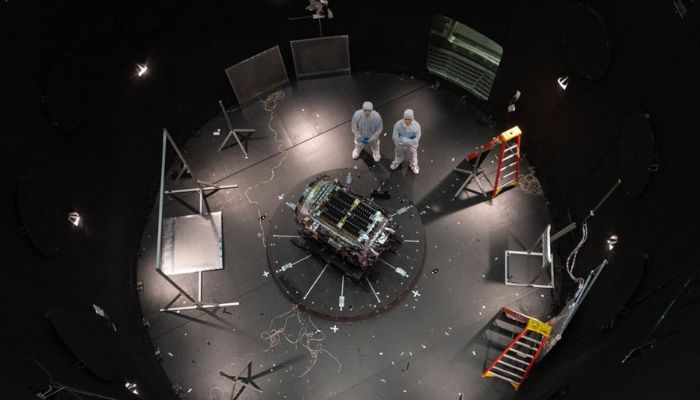
Their solution is a compact, fridge-sized robot spacecraft called Link, with three arms ending in pinchers. This little robot is designed to rendezvous with Swift, gently grab hold of it, and slowly boost the telescope from its current low orbit of around 224 miles (360 km) up to a safer 373 miles (600 km). If successful, it could extend Swift’s working life by at least a year and maybe much longer.
The robot is expected to be launched this week from a plane flying high over the Pacific Ocean near the Marshall Islands. After reaching orbit, the robot will take a month to reach the telescope before beginning the orbit-raising operation designed to preserve the $250 million observatory.