Stocks drop on deepening semiconductor rout; oil set for weekly gain
Brent crude futures LCOc1 up 0.6% at $84.75 a barrel, while US crude CLc1 advances 1.1% to $79.8 per barrel
Published July 17, 2026
- Chipmakers continue to drag stock indexes lower.
- Oil prices up more than 10% for the week.
- Japanese authorities back to jawboning as yen struggles.
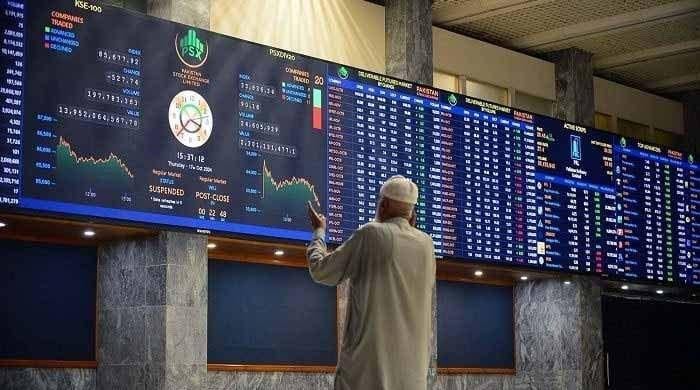
Another brutal sell off for chipmakers rippled through global stock markets on Friday, triggering a rout across Asia and a fall in European equity indexes as investors abruptly reassessed the durability of the artificial-intelligence-driven rally.
Renewed military strikes in the Middle East were also weighing on risk sentiment, keeping oil prices elevated and reigniting concerns about inflation and growth.
In Europe, the STOXX 600 fell 0.7%, with major bourses in Paris and Frankfurt trading lower. Britain's FTSE was flat.
Losses were starker across Asia, with MSCI's broadest index of Asia-Pacific shares excluding Japan down 3%, while the Nikkei tumbled 4%, leaving it down 12% from a recent peak.
Taiwan's stock market bore the brunt of the selloff, plunging more than 6% for its worst day since US President Donald Trump's "Liberation Day" tariffs, while China's blue-chip index fell 3.6%.
In Hong Kong, the Hang Seng Index slid 1.8%, and a 4.4% drop in the Hang Seng Tech Index marked its sharpest fall since April 2025.
Europe's relative lack of a technology hardware sector has meant it tends to be more insulated than other markets from a sharp selloff in tech stocks.
"From a European perspective, there's less exposure towards tech and more exposure to defensives and staples and that is why it looks a little better," said Lars Skovgaard, investment strategist at Danske Bank.
The selloff came even as Taiwan's TSMC said second-quarter profit blew past forecasts. And ASML, the world's dominant supplier of equipment needed to make high-tech computer chips, raised its 2026 sales forecasts earlier this week.
"Retail investors have borrowed to trade in this really impressive AI rally, so I think the unwinding of leveraged positions will definitely exaggerate the decline as well. It will feed into the market," said Fabien Yip, a market analyst at IG.
Markets in South Korea were closed on Friday for a holiday, a day after authorities said they would temporarily ban new listings of exchange-traded funds (ETFs) that are tied to certain major technology firms, while raising minimum required deposits for retail investors to invest in such products, in an effort to curb volatility.
In the US, Nasdaq futures NQc1 slumped 2.2% while S&P 500 futures ESc1 fell 1.1%.
Oil climbs again
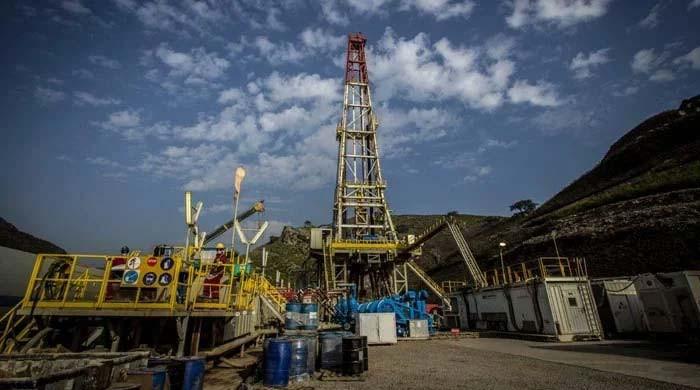
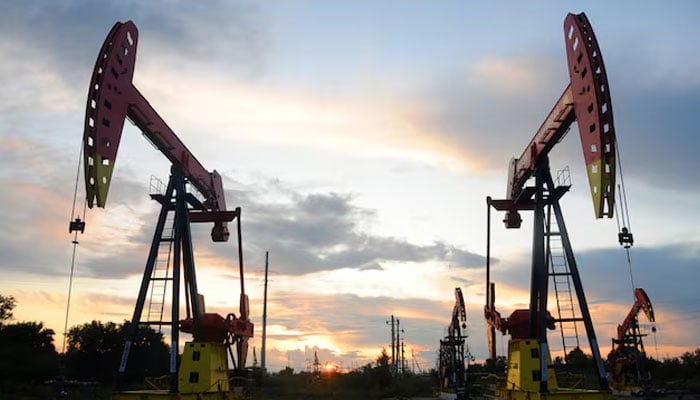
In commodities, oil prices were on the rise, with Brent crude futures LCOc1 up 0.6% at $84.75 a barrel, while US crude CLc1 advanced 1.1% to $79.8 per barrel.
Iran said it launched fresh attacks on US facilities in the Gulf on Friday after a sixth consecutive night of US strikes on Iranian military facilities.
For the week, Brent and US crude futures were set to rise more than 11% each, marking their largest gains since April.
"Some parts of the market are waiting on the sidelines," said Danske Bank's Skovgaard.
"As long as there is no progress on oil price developments, then you don't need to buy into the market. For that, it's just another negative."
Assessing the fed rate path
The dollar held steady on Friday and was set to end the week little changed as receding expectations of Federal Reserve rate increases this year were offset by renewed safe-haven demand.
Investors are now pricing in roughly 26 basis points worth of Fed hikes by December, following benign US CPI and PPI readings this week.
The euro was flat at $1.1438, while sterling fetched $1.3451.
The yen, meanwhile, languished near a 40-year low and last stood at 162.39 per dollar, prompting renewed jawboning from Japanese Finance Minister Satsuki Katayama to try to support the currency.