China's chip maker just became its most valuable company: Here's why that should worry Washington
CXMT was the number four ranked DRAM manufacturer globally behind Samsung
Published July 27, 2026
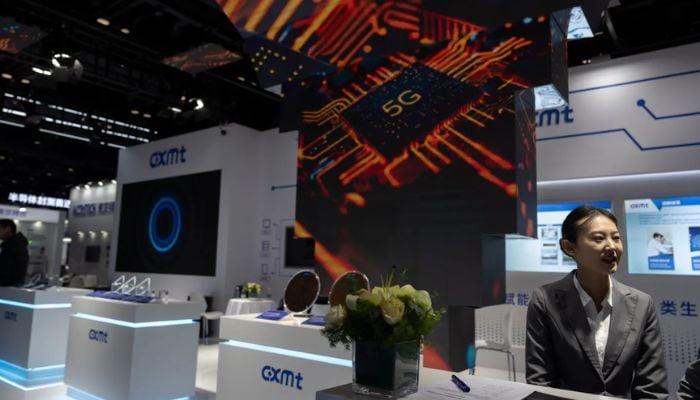
A four-year old memory chip company nearly all outside the semiconductor industry had no idea existed, today became China's most valuable listed company; larger than Industrial & Commercial Bank of China (ICBC), which is one of the world's largest banks.
Changxin Memory Tech Co., Ltd. (CXMT Corp.) officially debuted on the STAR Market (Shanghai Stock Exchange’s tech-focused board) yesterday and rose to incredible levels. Shares surged up to 530 percent during trading hours before ending at a still impressive 466 percent increase and settled at approximately 49 yuan per share against an initial offering price of only 8.66 yuan.
This caused CXMT's market cap to reach approximately 3.3 trillion yuan ($460 billion); higher than ICBC's 2.6 trillion yuan ($380 billion) market cap in a single day of trading.
Prior to one single share being traded, CXMT's listing was historic. CXMT raised 57.92 billion yuan ($8.6 billion) in what will be the largest semiconductor IPO ever completed in mainland China; more than seven times larger than when chip giant SMIC completed their IPO in 2020. Also, CXMT raised more money than any other Asian IPO this year.
What does a memory chip manufacturer make and why now?
In order to better understand why investors were willing to invest in such a manner we need to first understand what CXMT manufactures and where it fits into a much broader geopolitical picture. The Hefei-based firm manufactures DRAM (Dynamic Random Access Memory) chips used in almost every smartphone, laptop and data center server globally.
As of last year, according to CXMT's IPO prospectus, CXMT was the number four ranked DRAM manufacturer globally behind Samsung, SK Hynix and Micron and held a global DRAM market share of approximately 7.67%.
Right now this matters greatly due to the fact that there is an extremely tight global memory chip market. Explosive demand for artificial intelligence (AI) infrastructure (the servers and data centers that support the current AI craze) has consumed the majority of the available DRAM supply worldwide and analysts predict that prices will remain elevated until the end of 2027.
Thus, buyers throughout the world are actively searching for alternative sources of DRAM beyond Korea and America, precisely the opportunity that CXMT has been created to capitalize upon.
Additionally, there exists a deeper strategic layer. CXMT has become one of the key elements of Beijing's efforts towards creating domestic semiconductor manufacturing capabilities, a campaign that has become increasingly intense since Washington imposed tighter export control measures on advanced chip technologies destined for China.
For each dollar of market value added to CXMT, China essentially gains another data point in its arguments that it can produce enough chips to bypass the U.S.-imposed sanctions rather than be forced to accept those sanctions.
Additionally, it was reported last week that Apple began testing CXMT's memory chips for use in smartphones sold exclusively in China, potentially indicating that even major western companies will have limited options for avoiding the chip war rather than remaining on the sidelines.
Global implications
This is not merely a China story for markets and consumers located elsewhere in the world. A well-funded new DRAM manufacturer enters a global market with extreme constraints in terms of availability (at scale, with government backing and recently having access to an additional $8.6 billion dollars in funding) and therefore impacts all of us who purchase smartphones, laptops, cloud storage or computing power whether we live in Chicago or Karachi.
If CXMT is able to expand its production sufficiently to alleviate some portion of the existing memory shortage then it could lead to downward pressures on device prices over the next couple of years.
Alternatively if CXMT contributes significantly to China's ability to develop its AI ecosystem while failing to significantly improve global memory availability then prices for both memory and devices could either hold steady or rise further under current forecasts through the end of 2027.
Regardless of which scenario plays out, Monday's debut creates a new player (one with significant funds) in the ongoing global "chip war," one that is already changing global supply chain dynamics and places a very visible price tag on how serious investors believe China believes it can circumvent restrictions imposed by Washington through sheer production volume rather than negotiation.