Relief for livelihoods
Economic challenges must be addressed not only via policy decisions but also through practical measures
Published September 30, 2026
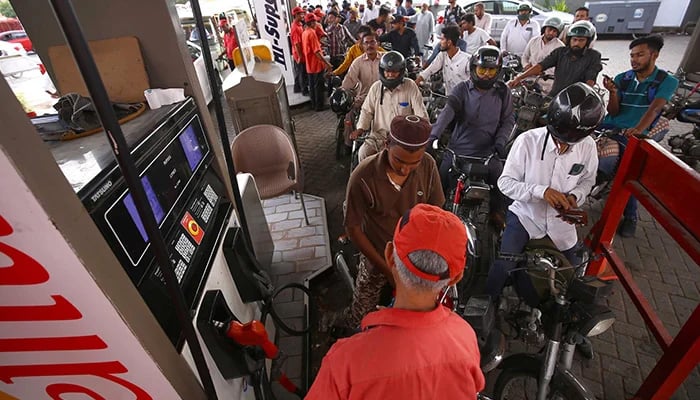
Global energy markets remain vulnerable to geopolitical tensions, supply disruptions and fluctuations in international oil prices. For countries like Pakistan, which rely heavily on imported petroleum products, these developments create significant economic challenges and place additional pressure on household budgets. In such circumstances, protecting vulnerable segments of society through targeted and carefully designed relief measures becomes an important public policy priority.
The Prime Minister’s Special Fuel Relief Scheme, introduced under Prime Minister Muhammad Shehbaz Sharif, is a timely response to these challenges. Recognising the direct impact of rising fuel costs on working families, the prime minister has prioritised assistance for citizens who depend on motorcycles, rickshaws, Qingqis and small cars to earn a living and meet daily transportation needs.
For millions of Pakistanis, a motorcycle or rickshaw is not a luxury; it is an essential means of earning an income and getting to work. Delivery riders, daily-wage workers, small traders and lower-paid employees rely on these vehicles to reach workplaces, transport goods and support their families. When petrol prices rise, the resulting increase in transport costs can put considerable pressure on their limited incomes.
The Prime Minister’s Special Fuel Relief Scheme has been designed to address this challenge through targeted assistance to eligible vehicle users. Under the initiative, eligible motorcycle, rickshaw and Qingqi users receive Rs500 in weekly relief, while eligible cars of up to 800cc receive relief on 30 litres of subsidised petrol per month through three 10-litre tokens worth Rs1000 each issued at ten-day intervals.
The scale of public participation reflects the initiative’s importance. According to the latest figures provided by the Ministry of IT portal, more than six million successful registrations have been recorded, with over five million fuel token redemptions. These figures demonstrate the programme’s substantial reach and the use of the digital mechanism by eligible citizens seeking fuel assistance.
The category-wise data further illustrates the programme’s focus on working people. Of the total tokens generated, over 8.1 million were issued for two- and three-wheelers, compared with 379,171 for eligible cars. Meanwhile, over 6.7 million tokens were redeemed by two- and three-wheeler users, while 312,751 were redeemed by car owners.
The strong participation of two- and three-wheeler users highlights the scheme’s relevance for citizens whose livelihoods are closely tied to daily fuel consumption. By directing assistance towards these segments, the government aims to ease transportation-related financial pressure on working families while maintaining a targeted approach to public expenditure.
An important feature of the initiative is the prime minister’s willingness to respond directly to public feedback. Removing the minimum five-litre petrol-purchase condition for eligible two- and three-wheeler users ensures that citizens buying smaller quantities of petrol can also receive the full Rs500 weekly relief. Extending eligibility to motorcycles, rickshaws and Qingqis up to 20 years old has further widened the scheme’s coverage, particularly for families that continue to depend on older vehicles for their daily needs. Making registration through 9771 completely free of charge has also removed an additional cost for applicants. These measures reflect an approach focused on making relief more accessible and responsive to the realities of low-income households.
The Ministry of Petroleum, in coordination with the Ministry of IT and Telecommunication, State Bank of Pakistan, Ogra, relevant fuel-sector stakeholders and district administrations, remains part of the broader institutional effort supporting the implementation of the scheme. Digital tokens and verification mechanisms at petrol stations provide an organised framework to facilitate eligible beneficiaries and strengthen transparency in the distribution process.
At the same time, the government is mindful of the broader challenges facing Pakistan’s petroleum sector, including dependence on imported energy, international price volatility and the need for responsible management of public resources. Targeted relief, therefore, forms part of a wider effort to balance immediate public needs with fiscal constraints and long-term energy-sector resilience and sustainability.
The Prime Minister’s Special Fuel Relief Scheme shows the government’s commitment to placing ordinary citizens at the centre of its response to economic challenges. Its continued implementation, supported by public feedback, digital facilitation and coordination among relevant institutions, offers a practical framework for extending assistance to those most affected by rising fuel costs.
As Pakistan navigates uncertainty in global energy markets, the initiative reflects an important principle of public service: economic challenges must be addressed not only through policy decisions but also through practical measures that recognise the everyday needs of working people. Under Prime Minister Shehbaz Sharif’s leadership, the scheme is intended to provide timely fuel assistance while strengthening the government’s capacity to respond to future economic pressures with targeted, transparent and citizen-focused measures.
The writer is the federal minister for petroleum.
Disclaimer: The viewpoints expressed in this piece are the writer's own and don't necessarily reflect Geo.tv's editorial policy.
Originally published in The News