France protests: Everything you need to know about student-led unrest
Thousands have been detained and charged since the unrest began
Published October 06, 2026
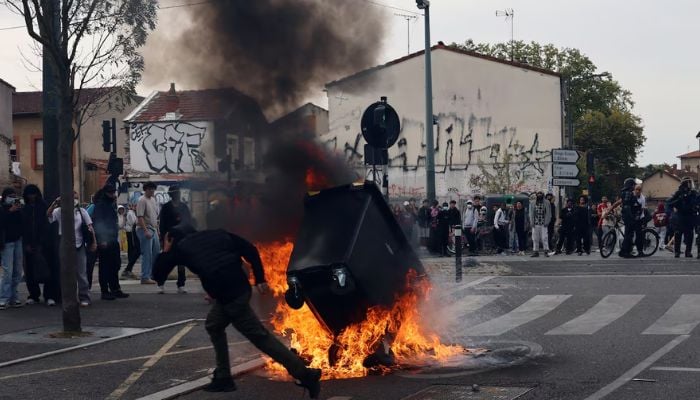
France is experiencing the largest wave of student unrest in years, as hundreds of thousands demonstrate against high schools blockade; as well as, tear-gas riots erupting in several cities.
What was initially an issue of conditions at a small number of schools around Paris has evolved into a national movement and an increasingly wide-ranging political problem for President Emmanuel Macron’s government.
Why did students begin protesting?
The initial protests occurred in September regarding conditions within French high schools. Students claimed they were concerned about the absence of teachers, overcrowding within classes, aging buildings, long school hours and resource shortages.
Many of the students reported concerning situations such as leaky roofs, damaged equipment, and even rodents. Videos were shared on social media, prompting student organisers to form similar blockades in additional areas outside of Paris.
How large have the protests grown?
These are no longer limited to a couple schools. Over 250,000 people demonstrated throughout France on Tuesday, the figure cited by The Associated Press, included approximately 56,000 demonstrators in Paris.
Demonstrations have taken place in several locations including Marseille, Lyon, Strasbourg, Rennes, Nantes and other locations. Hundreds of schools have been either shut down or blocked due to student unrest, stated student unions.
Why has the situation become violent?
Although most demonstrations were peaceful, a few of the demonstrations have escalated into violence. Some protesters used objects to throw at law enforcement and set fire in multiple city centers. Law enforcement responded with teargas and other crowd-control methods.
Thousands have been detained and charged since the unrest began, a significant amount of whom were minors. Law enforcement actions taken against minors have now become another source of complaint for young protesters.
The protests are not only about schools.
While education issues sparked the beginning of the movement, it has increasingly merged with larger dissatisfaction among citizens with regard to inequality, government spending and decreases in public services.
Public sector employees and trade unions have participated in demonstrations especially as the government attempts to manage the financial woes in France.
France currently carries a public debt burden of approximately €3.5 trillion. As a result, the government faces great challenges in attempting to cut spending while interest rates rise.
As a consequence, protesters seek increased funding for schools and public services at the very same time the government is working to contain its budget deficit.
What has the government provided?
French Prime Minister Sebastien Lecornu admitted that students’ grievances were valid and he announced measures intended to address teacher shortages and school environments.
The Education Department also established a mechanism whereby students may report specific issues related to their schools. However, these offers have proven insufficient to bring the protests to an end.
Partly, this is due to the fact that repairing old buildings, adding personnel and decreasing class sizes will likely require new significant spending allocations.
Why does this matter politically?
Since Macron is barred from running for president in 2027 by term limits, opposition politicians are attempting to establish how much France’s youth unrest reflects a desire for a new leader.
Jean-Luc Melenchon and his fellows on the left have supported the students, criticizing police behavior. On the other hand, Marine Le Pen and her supporters on the right are emphasizing returning public order.
Therefore, a protest movement that was originally centered upon school buildings has developed into a struggle over who should govern France after Macron.
What comes next?
Government officials hope concessions, along with continuing dialogue will eventually cause students to decrease their participation in demonstrations.
However, the current protests have already shown how rapidly they can travel through social media and organize teenage students beyond those at the schools where they originated.