A case for cost-benefit analysis of TERF
TERF was the brainchild of former State Bank governor Dr Reza Baqir
Published July 17, 2023
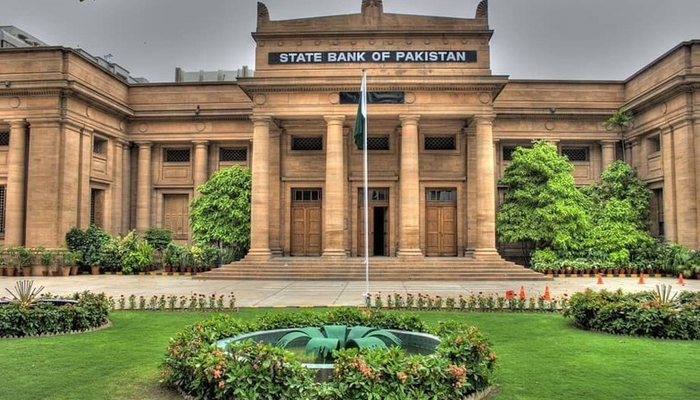
The much-hyped Temporary Economic Re-finance Facility (TERF) doled out foreign exchange worth $3 billion among 628 of the country's biggest industrialists without undertaking any proper gap analysis to identify where this money should have been utilised.
TERF was the brainchild of former State Bank governor Dr Reza Baqir, but the Letter of Intent (LOI) to the IMF was duly signed by former finance minister Dr Abdul Hafeez Sheikh and Dr Baqir.
TERF was designed in haste and in complete contrast to what was actually agreed with the IMF under the Rapid Finance Instrument (RFI) to obtain $1.4 billion.
However, the IMF did not object, raising questions about why it remained silent.
In fact, one of the components of the RFI clearly mentioned TERF in the Memorandum of Economic and Financial Policies (MEFP) but was never subjected to audit.
The scope of the Covid Audit clearly mentions: "This (Audit) includes all government allocations, loans and grants received or repurposed from the foreign donor partners for dealing with Covid-19. The scope of audit also includes commenting upon policy issues".
According to the SBP, TERF was introduced on March 17, 2020, for a total of Rs100 billion at a 7% interest rate fixed for a period of 10 years.
By July 2020, some four months later, 122 applications for a total of Rs79.4 billion had been received.
Of these, for 12 applications, Rs39 billion had already been approved. The cumulative rate of approval was 1,5,16,39 in those four months, respectively.
The rate of applications was 39,49,78,122 in the same four months.
Around the same time that applications were exploding, the incentive for the scheme was tumbling down. The policy rate plummeted from 14% in March to 7% in July 2020.
Despite the massive reduction in incentives, the response to the existing incentives was rapidly increasing, and in just four months, it had almost reached the limit of the scheme.
Clearly, the incentive designed by the SBP was way too large already.
However, something changed.
In its original form, the TERF scheme was only for new projects — thereby justifying the huge incentive as it would draw in additional commensurate investment in land and civil works.
On May 8, 2020 — just two months after the announcement — the State Bank also included the infamous BMR (Balancing Modernisation and Replacement) financing, thereby removing any incumbency on applicants to contribute additional financing.
Then, on July 8, 2020, the rate of interest on the TERF scheme was drastically further reduced to 4% for maximum end-user markup.
And not just that — loans that had been applied for prior to the announcement of the scheme were also allowed to re-finance under TERF.
Under the RFI, Pakistan had agreed with the IMF to provide a stimulus package of 1.2% of GDP.out of which Islamabad was supposed to utilise 0.2% of GDP on health and disaster response, 0.6% of GDP for supporting low-income groups, 0.2% of GDP for supporting exporters, and 0.2% of GDP for all others.
The IMF had also placed the audit of COVID-19-related spending as a condition, but it was not properly complied with and practically died down with the expiry of the Extended Fund Facility (EFF), which ended in a failure on June 30, 2023.
It is not yet known whether the IMF placed it as part of its structural benchmark conditions under the newly placed Standby Arrangement (SBA) programme of $3 billion for nine months period or not.
Under the RFI, Pakistan had agreed with the IMF that the fiscal stimulus package, worth 1.2% of GDP, included:
(i) relief to vulnerable families through an expansion of existing programmes and higher disbursements;
(ii) support for daily wage earners by establishing a Rs200 billion fund for the most affected workers;
(iii) strengthening the Utility Stores corporation network and funding to increase food security;
(iv) temporary reduction in food prices to ensure essential items remain affordable;
(v) provision of affordable healthcare through the elimination of taxes on essential health machinery and equipment;
(vi) support for the export sector by eliminating the backlog on GST tax refunds, which would provide immediate cash flow relief;
(vii) reduction in oil prices;
(viii) relief on electricity and gas bills by providing options for installment payments;
(ix) increase in funding for the National Disaster Management Authority of Pakistan for the purchase of additional equipment and operations; and
(x) building a contingency fund.
In addition, the authorities launched a programme for the construction sector to address the acute employment needs generated by the lockdown, which included a special tax regime and no wealth declaration for projects launched during a short window until the end of 2020.
To ensure the quality of emergency spending in the health sector, the Pakistani authorities committed to having the procurement of urgently needed medical supplies audited ex-post by the auditor general of Pakistan, the results of which were to be published on the Ministry of Finance website.
However, practically, the major chunk of the $3 billion was utilized to benefit those who were influential and well-connected.
There is a need to see whether the LCs opened had delivered machinery on the ground or whether just paperwork was done and the money was sent abroad without installing any machinery in the country.
Initially, the TERF scheme was designed to provide loans at a rate of 7% markup, but then it was reduced to 4.0%. However, according to an SBP official, it was provided at a rate of 5.0%.
There is another aspect to see here: why was this money not doled out to SMEs which are major employers in the country? Is it because their owners did not have clout and influence in the governance structure of elite capture?
This paper contacted Dr Khaqan Najeeb, former advisor to the Ministry of Finance, who said it would be beneficial for the SBP to conduct impact evaluation studies of its key concessionary financing schemes — including TERF.
He said that a key area to consider would be to see how many out of the small number of 628 firms benefiting from TERF had already availed of other concessionary facilities.
Areas of research, he said, must include sectoral impact as it appears an overwhelming focus may have been on the textile sector.
He also felt that the impact of TERF on exports, firm innovation efficiency and productivity should also be studied.
Another question is whether subsidised loans should only be the purview of the SBP or whether legislators have a role as well in such policies, with Dr Khaqan concluding that one would like to see how many of the goals set by the SBP for TERF had been met.
To get the point of view of all sides, this paper contacted top sources who stated — on condition of anonymity — that the TERF scheme was the continuation of a Long-Term Financing Facility (LTTF) from before and that the SBP had enough experience of running the LTTF.
The 2020 TERF was designed to restore the confidence of the private sector in the aftermath of the COVID-19 pandemic.
The sources also said that TERF was a re-financing scheme — a quantitative intervention made by the SBP to ease out pressures on the banking sector by providing a tool to finance the private sector after a devastating pandemic — and banks were responsible for complying with the regulations under TERF.
To another question regarding money supply growth (M2) by doling out Rs435 billion, the same sources said that the total money supply was standing at Rs30 trillion and loans of Rs435 billion were just around 1% of the total amount so it did not cause a major growth in the money supply.
They also raised a question over the timing of the hue and cry around the TERF scheme, implying that this could be used by some as a political agenda targeting individuals who might be under consideration for key positions in the upcoming caretaker setup.
Originally published in The News