Anti-reform?
Our constitution can sometimes behave less like an instrument of change and more like a shield for the status quo
Published September 13, 2026
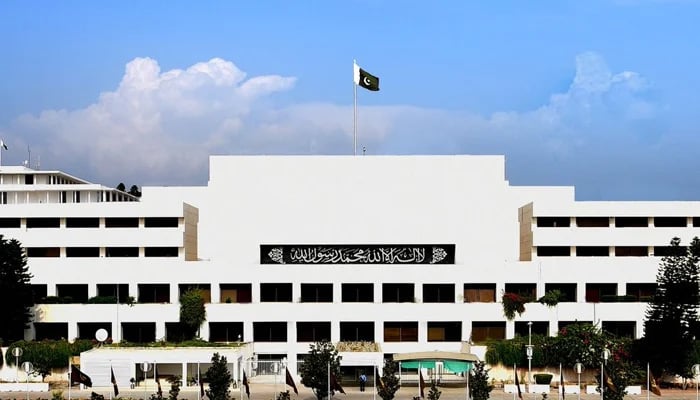
On structural reform, Pakistan’s constitution is practically anti-reform. Every reform creates gainers and losers. Creating new provinces or administrative units would be no different: some would gain power, representation, and better access to government; others would lose territory, authority, budgets and patronage.
In the case of new units, clear gainers would be citizens, cities, districts, local political leadership and service delivery systems. Clear losers would be provincial party machines, chief ministers, ministers, bureaucracies, contractors, patronage networks and parties whose power depends on controlling a large provincial territory and budget.
Suppose 200 million Pakistanis want structural reform, but two or three political power centres say no. What then? Constitutionally, their control over parliament and provincial assemblies will be enough to stop it. That is the paradox.
Suppose 75% of Karachi’s residents want control over water, transport and planning, but the provincial power centre refuses. What then? Suppose taxpayers want money and responsibility pushed down to districts, but provincial governments don’t. What then? The constitution asks the beneficiaries of the existing structure to approve dismantling it. In practice, that makes structural reform almost self-defeating.
In effect, potential losers have a veto. Consensus can therefore become another name for preserving the status quo. If the losers from reform are also the gatekeepers of reform, the status quo has a built-in majority. In the constitutional scheme of things, should those who stand to lose from reform possess an absolute veto over reform? How about changing who gets to decide? A referendum is one route. Another is to reform in stages: make the first change, create new stakeholders and let those stakeholders build support for the next change.
There may also be a less disruptive route. Keep the four provinces. Create 40 or so constitutionally protected regional and metropolitan governments. Give them real money. Real authority. Schools. Hospitals. Transport. Planning. Let the provinces remain. But move power downward, closer to where people actually live.
Change the structure of power first. Change the map later, if needed. Which brings us to Article 239(4). Does it give a provincial assembly a permanent veto over any future restructuring of Pakistan? Or is that veto meant only for a specific case – when parliament seeks to alter the boundaries of that particular province? One interpretation protects a province. The other can freeze the federation.
There is an even larger question. Does Article 239(4) apply only when the boundary of an existing province is being changed? Or can the same provision block a nationwide restructuring of the federation itself?
Historically, the status quo in Pakistan has been extremely resilient. The real resistance to reform is not about principle; it is about losing budgets, appointments, contracts, territory and control. Those who benefit from the present structure are also best placed to defend it. They have the offices, the networks and the money.
As a student of development economics, I see a deeper problem. Our constitution can sometimes behave less like an instrument of change and more like a shield for the status quo.
Pakistan’s problem is no longer that we do not know what needs reform. We know. The real problem is simpler: those who must approve reform are often the very people who stand to lose from it. And that is how the status quo protects itself.
The writer is a columnist based in Islamabad. He tweets/posts @saleemfarrukh and can be reached at: [email protected]
Disclaimer: The viewpoints expressed in this piece are the writer's own and don't necessarily reflect Geo.tv's editorial policy.