Changing the map is not reform
Strong local govt can reduce administrative distance, but it may not fully address demands rooted in regional identity
Published September 07, 2026
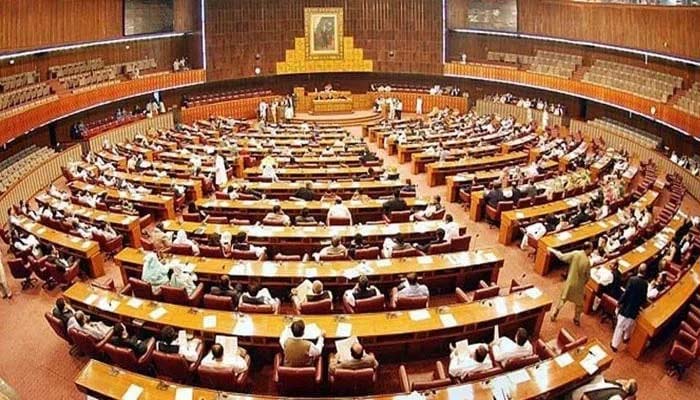
Pakistan’s debate over administrative restructuring is not new. Demands for South Punjab, Bahawalpur, Hazara and other provinces have resurfaced over several decades and occasionally entered the formal legislative process.
The Punjab Assembly adopted resolutions supporting South Punjab and Bahawalpur provinces in 2012, while a parliamentary commission proposed a new province in southern Punjab in 2013. Neither initiative produced a lasting constitutional settlement.
This time, however, the debate appears to have acquired greater momentum. What was previously treated as a collection of regional demands is increasingly being discussed as a possible redesign of Pakistan’s governance architecture.
Yet the debate has quickly settled into a familiar binary. One side argues that provinces containing tens of millions of people are too large, distant and centralised to govern effectively. The other responds that creating more provinces would merely multiply governors, chief ministers, assemblies, secretariats and bureaucracies without improving a single school, hospital or municipal service.
Both sides identify a real risk. Neither offers an adequate route forward. The concern about distance is legitimate. Punjab has more residents than many countries. Balochistan combines a vast territory with a dispersed population. Peripheral districts often experience the provincial capital as another remote centre.
But drawing new boundaries will not, by itself, bring government closer. A new provincial capital can centralise power as effectively as Lahore, Karachi, Peshawar or Quetta. Relying on existing provinces to empower local governments has also failed. Provincial governments have delayed elections, curtailed elected tenures, retained control over staff and budgets, and treated Provincial Finance Commission awards as discretionary exercises.
Strong local government can reduce administrative distance, but it may not fully address demands rooted in regional identity, political representation or control over provincial policy. Devolution should therefore be the first stage of reform, but not necessarily the final answer.
Pakistan needs a time-bound pathway: protect local government, pilot meaningful regional autonomy and allow successful regions to proceed, where citizens support it, towards provincial status through a managed constitutional transition.
The first step is to give practical meaning to the three tiers of government. Article 140A requires provinces to establish local governments and devolve political, administrative and financial responsibility to elected representatives. But it leaves the substance of devolution largely to provincial legislation. The result is a constitutionally recognised third tier without securely protected tenure, functions, finances or administrative authority.
A minimum constitutional floor should guarantee regular local elections, fixed council tenures, accountable local leadership, protected municipal and district functions, timely Provincial Finance Commission awards and predictable formula-based transfers. Provinces should retain flexibility over institutional design, but not the power to suspend local democracy or take back devolved functions at will.
The federation should concentrate on national responsibilities and cross-provincial challenges; provinces on policy, regulation and reducing territorial disparities; and local governments on services whose quality depends on proximity, including water, sanitation, waste management, local roads and land-use planning. This would strengthen provinces by allowing them to become better policymakers rather than oversized service-delivery departments.
International experience offers useful lessons. South Africa recognises three interdependent spheres of government, each entitled to a share of national revenue. India shows that constitutional recognition of local government achieves little unless functions, staff and finance follow. Indonesia brought authority closer to districts after 1998, but also demonstrated that creating smaller jurisdictions without adequate capacity can reproduce weak governance.
The second step should be to turn selected divisions into temporary Regional Governance Areas instead of immediately declaring them provinces. These should not be commissioner-led zones or miniature provincial secretariats. Regional Councils, composed mainly of elected district heads and mayors, could jointly manage functions that are too large for individual districts but unnecessarily remote from provincial capitals. These might include regional transport, tertiary healthcare, inter-district roads, water systems, industrial zones, spatial planning and disaster management.
Regional Councils would be an intermediate mechanism for managing shared functions, not a permanent fourth order of government or a substitute for elected local councils.
Each pilot should operate under a five-year Regional Autonomy Compact approved through provincial law. The compact should specify transferred functions, staff, financial powers, a predictable block grant, audit requirements and measurable service standards. Provinces should not be allowed to transfer responsibility without resources or take back devolved authority through executive notifications.
South Punjab offers a useful warning. Its secretariat was established in 2020 with 15 departments, while 35 per cent of Punjab’s development allocation was reportedly earmarked and ring-fenced for the region. Yet partial departmental presence, limited fiscal authority and continued dependence on Lahore-based bureaucracy prevented it from becoming a genuine test of regional government.
The problem was not the idea of an intermediate arrangement, but the absence of legally protected authority. A redesigned South Punjab compact could become the first serious pilot. Other regions should be selected on evidence rather than political convenience.
An independent Territorial and Devolution Commission should support this process. It should not begin with a predetermined target of 12, 16 or 32 provinces. Numbers make good headlines but poor constitutional design. Nor should it mechanically compare Punjab with Japanese prefectures, Turkish provinces or Kenyan counties, which perform different functions in different political systems.
The commission should assess accessibility, economic linkages, fiscal capacity, expenditure needs, service costs, minority protection, institutional readiness and public support. It should publish alternative maps and fiscal simulations showing the likely costs, division of assets and liabilities, required revenues and transfers, and implications for both the proposed region and its parent province.
The division of responsibility should be clear. The commission should provide independent evidence. The affected province should own and approve any regional pilot. Citizens should determine whether they support eventual provincial status. Any alteration of provincial boundaries would require parliament’s constitutional approval and a two-thirds majority of the affected provincial assembly.
The third step should be a provincial-readiness and transition process. A region should not become a province merely because powerful leaders demand it, nor should it be excluded because it is poor. Requiring complete fiscal self-sufficiency would disqualify precisely those neglected regions for which territorial equalisation may be most justified.
Fiscal viability should mean the ability to function through a realistic combination of own revenue, shared taxes and equalisation transfers. The test is not whether a region is rich, but whether it can manage resources responsibly and deliver its assigned functions.
During the five-year compact, performance should be assessed through budget execution, audit results, revenue effort, service outcomes, administrative capability and citizen satisfaction. Crucially, the region must also transfer authority and resources further down. A region seeking autonomy from Lahore, Karachi, Peshawar or Quetta cannot credibly withhold it from its own districts and municipalities. Devolution must travel all the way down.
A successful region should gain a right to formal constitutional consideration, not automatic provincial status. Administrative performance can demonstrate readiness, but it cannot replace democratic consent or the constitutional approvals required to alter provincial boundaries.
Before drawing any line, a Provincial Transition Framework should be prepared. Territorial division requires decisions on capitals, employees, pensions, debt, public corporations, courts, water, energy, natural resources and political representation.
Every proposal should therefore include a transition balance sheet, an agreed division of assets and liabilities, interim arrangements for fiscal transfers and protection against fiscal shocks for both the new and parent provinces. Shared judicial, regulatory and civil-service arrangements could reduce costs during the initial years.
The first transition should be limited to one or two regions. After several years, parliament and the provinces should examine whether accessibility, services, representation and accountability actually improved. Regions that do not proceed to provincial status could retain regional arrangements, be redesigned or return to ordinary provincial administration.
This reversibility matters. India’s reorganisations have produced successful states but also continuing disputes over capitals and resources. Nigeria’s multiplication of states expanded representation but left many heavily dependent on federal transfers. Vietnam spent decades dividing provinces but has recently moved towards consolidation. There is no universally correct number of provinces.
Pakistan’s central mistake is to treat the map as the reform. Boundaries can support better governance only if authority, money, personnel and accountability are redesigned with them.
The sequence should therefore be clear: protect local government; pilot legally secured regional autonomy; independently assess performance, viability and public consent; and allow successful regions to proceed through a managed constitutional transition.
Pakistan should not draw new provinces first and hope that governance follows. It should build functioning regional governance first and allow boundaries to follow where the evidence and citizens lead.
The writer is a research fellow at the Sustainable Development Policy Institute (SDPI), Islamabad.
Disclaimer: The viewpoints expressed in this piece are the writer's own and don't necessarily reflect Geo.tv's editorial policy.
Originally published in The News