A new geopolitical chessboard
Despite uncertainty about future projections, it is almost certain that China will become largest economy in second half of century
Published December 12, 2025
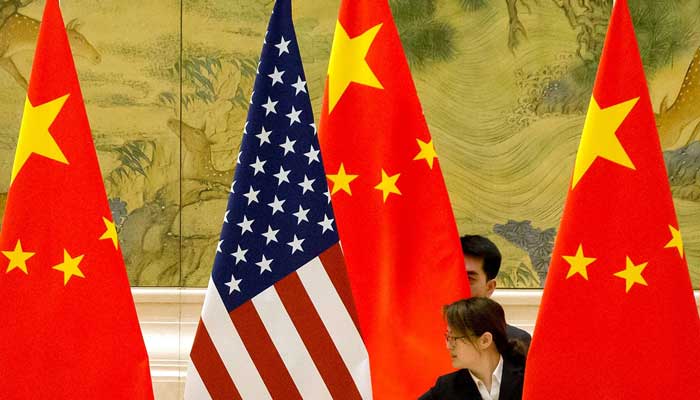
Global geopolitics is in a state of flux, driven by such factors as the rise of China and other major powers, erosion of international law, diminishing relevance of the UN in strategic issues of war and peace, rise of nationalism as against multilateralism, the primacy of economic and technological power, the growing trend towards a knowledge-driven world and climate change.
Each of these factors is transforming the global geopolitical scene at a dizzying pace, leaving the analysts and policymakers in a constant struggle to remain abreast of the latest developments and their implications for national security and economic well-being.
The dramatic rise of China over the past four decades is by far the most important development which has transformed the global geopolitical scene. China’s GDP in purchasing power parity terms is likely to be $41 trillion as against $30 trillion for the US in 2025, according to the IMF.
However, in nominal dollar terms, the IMF estimates that China’s GDP would be $19.4 trillion compared with $30.6 trillion for the US in 2025.
According to some forecasts, China’s GDP, even in nominal dollar terms, may overtake that of the US around 2040, when it would be about $40 trillion.
Despite uncertainty about future projections over the coming decades, it is almost certain that China will become the world’s largest economy in nominal dollar terms in the second half of the 21st century. If one also considers the expected rapid development of the Chinese military over the next quarter-century, China will undoubtedly become the world's most powerful country, both economically and militarily, after 2050.
This development will radically transform the world’s geopolitical map, as China’s power and influence gradually expand, particularly in the Asia-Pacific region, the Middle East, Africa and Latin America. The US and China are caught in a Thucydides’ trap, in which a rising great power challenges the supremacy of the ruling great power, making tensions and conflicts between them all but inevitable.
Since both the US and China are heavily armed nuclear-weapon states, an all-out war between them is unthinkable. The emerging confrontation between them is likely to manifest as political tensions, localised/proxy conflicts and economic competition, particularly in high-tech industries such as electronics, semiconductors, artificial intelligence, quantum computing, biotechnology, aviation and space exploration.
The US has pursued a policy of containing China through a network of alliances around China’s east and south, in addition to economic sanctions and tariffs to slow China’s economic and commercial progress. The Trump administration’s National Security Strategy, announced on December 4, characterises China primarily as an economic competitor, indicating that the US will prioritise economic instruments in its dealings with China. An important point to note is that competition between the US and China provides political space for regional states in the Asia-Pacific, Africa and Latin America to safeguard their legitimate interests.
China’s rise, combined with the growth of other major Asian economies such as Japan, India, Indonesia, South Korea, Saudi Arabia and Turkey, will shift the centre of gravity of global economic power from the Atlantic region to the Asia-Pacific region within the next two to three decades. The Asia-Pacific region will therefore play an increasingly important role in international decision-making on economic and commercial issues in the coming decades.
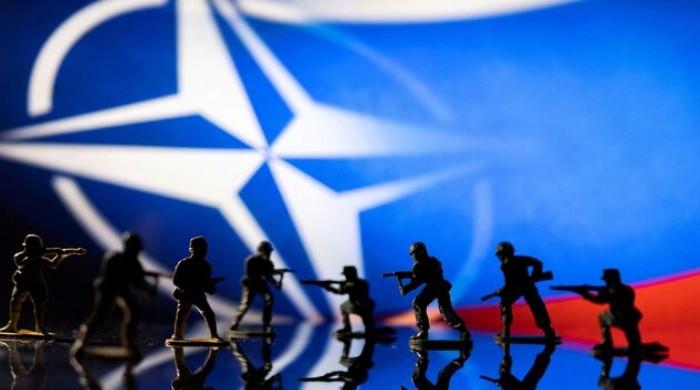
The emergence of centres of power in different regions, combined with a reassertive Russia, will herald a multipolar world, leading inevitably to shifting alliances as countries scramble to adjust their policies in response to rapid developments.
One can already see the negative impact of the Ukraine crisis on the Nato alliance. In the emerging, highly competitive, anarchic, and rapidly transforming world, a nation’s own economic and military power will be the ultimate guarantor of its security and economic well-being, given the fluidity of alliances and the diminishing role of international law and the UN in strategic matters of war and peace.
It also needs to be emphasised that, while military power is the most important element of national power in any short-term contest between nations, in the long run the decisive role is played by the economic and technological power in such contests. It is not surprising, therefore, that the US and China are vying for rapid economic and technological progress in their overall competition for ascendancy.
Countries can increase economic growth by raising national saving and investment rates, enhancing scientific and technological development, cultivating a spirit of self-reliance and fostering an innovative spirit to propel them to new heights.
Countries that perform poorly in these areas will ultimately be consigned to the dustbin of history. In the modern, highly competitive, knowledge-based and rapidly transforming world, particularly bleak will be the fate of those nations which neglect education, especially science and technology, discourage innovations, and rely on begging bowl diplomacy rather than austerity and self-reliance in the management of their economies.
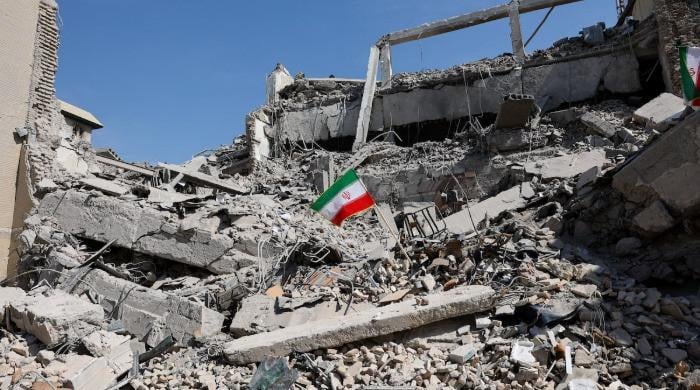
Recent examples of the Russian invasion of Ukraine, Israeli and US strikes on Iran’s nuclear facilities and the Israeli genocide in Gaza show how little international law and the UN count when powerful countries motivated by their security interests take the law into their own hands.
In the case of Taiwan, which is recognised by the international community as a part of China, the US – because of its security considerations and enormous military might – has so far successfully resisted its reunification with mainland China. It attests to the sagacity of the Chinese leadership that, rather than making hasty, unwise moves, they have focused on building up their national economic and military power.
The foregoing analysis carries important lessons for Pakistan’s policy makers in the face of the enduring threat posed by a hegemonic and Hindutva-driven India to its security. We must prioritise rapid economic growth while maintaining a credible security deterrent and domestic political stability. According to the IMF, Pakistan achieved an average annual GDP growth rate of only about 3.0 per cent during 2013-25, compared with India’s much higher annual GDP growth rate of over 6.0 per cent during the same period.
Pakistan’s poor economic performance over the past decade has inevitably weakened its strategic position vis-a-vis India in the long-term context. A radical overhaul of our economic policies is therefore called for, alongside the pursuit of a low-risk, non-adventurist foreign policy in our neighbourhood.
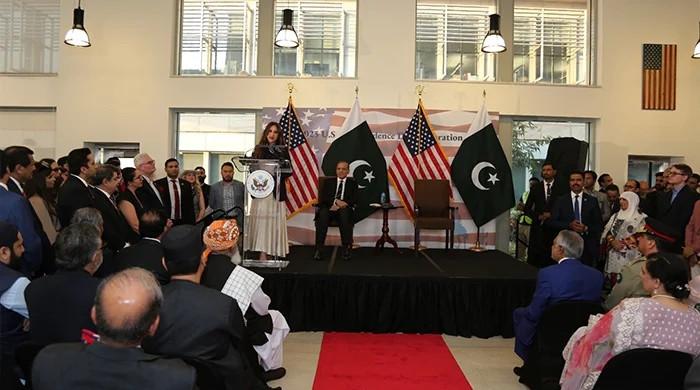
A peaceful neighbourhood is a must for Pakistan’s rapid economic progress and prosperity. Pakistan, in the interest of peace and stability in South Asia, must also strengthen its strategic partnership with China, which has been its steadfast friend for more than six decades, while maintaining friendly relations with the US and other Western countries.
Disclaimer: The viewpoints expressed in this piece are the writer's own and don't necessarily reflect Geo.tv's editorial policy.
The writer is a retired ambassador and author of 'Pakistan and a World in Disorder — A Grand Strategy for the Twenty-First Century'. He can be reached at: [email protected]
Originally published in The News