Getting over IMF dependence
Officials are proposing targets for our exports and investments to reach before we can operate without IMF loans
Published January 05, 2026
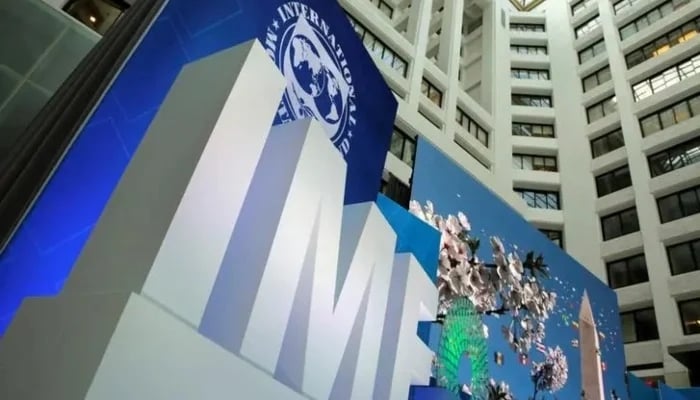
There is a debate these days on what Pakistan needs to do to wean itself off its dependence on the IMF. Officials are proposing targets for our exports and investments to reach before we can operate without IMF loans. But so far, the government seems more interested in the optics of wanting to end the IMF addiction rather than undertaking any reforms that would get us there.
Setting export targets is akin to saying that, if we had more dollars, we could exit the IMF programme. Of course, we could. But the question is how to achieve export growth. For this, the government has no plan.
A part of the IMF’s mandate is to help keep international trade and finance running smoothly. Poorly run countries defaulting on sovereign debt every so often would be very disruptive to global trade, so the IMF acts as a lender of last resort to countries unable to meet their international payment obligations — that is, paying for imports and debt servicing.
The IMF lends to countries when no other lender is willing to lend given the high risk of default. In fact, when a country’s foreign exchange reserves are insufficient to cover three months of imports and it is not in an IMF programme, even multilateral institutions such as the World Bank and the Asian Development Bank cease lending to it. Therefore, IMF programmes are necessary not only for the funds they provide but also for the signal they send to others to lend.
When the IMF lends as part of a restructuring programme, it typically imposes stringent conditions, including currency devaluation, reduction of current account and budget deficits, increases in taxes, and, as we have seen recently in our case, improvements in governance and transparency.
There are multiple ways to achieve the goals of an IMF programme. For instance, to reduce the budget deficit, which is the foundational goal of our Fund programme, we can either increase taxes or reduce expenditures. But our government — especially since 2008 — has never opted to reduce expenditures but always agrees to increase taxes.
In fact, since 2007-08, current and development expenditures of our governments have increased by 1007% and 937%, respectively. And tax revenues have increased by 1124%. This is much more than our nominal GDP growth of 807%. So we have been on a tax-and-spend spree for the last two decades.
There are, of course, many ways to increase tax revenues too. We can, for instance, start taxing agricultural income or taxing retailers and wholesalers. But we choose to give them a free pass and have focused on taxing urban salaried people and industry, including exports.
Similarly, when the IMF calls for reducing power-sector circular debt, we can seek to reduce theft and distribution losses, thereby overruling the vested interests that stand in the way. But this government isn’t inclined to take them on. Instead, the government raises electricity tariffs, particularly for industry and the middle class, thereby incentivising them to install solar power. Thus, customers who are the most diligent in paying their bills are forced to leave the grid. In response, the government continues to raise prices and blames solar consumers for the crisis.
So why does Pakistan keep needing an IMF programme? Simply put, we have to borrow foreign exchange to meet our external obligations.
Pakistan currently owes approximately $90 billion to external creditors, of which we must pay approximately $3 billion in interest. Let us assume we don’t have to repay any loans or that we are able to roll over the loans that are due. This is a strong assumption given our precarious fiscal health. Even with this assumption, we still need to pay $3 billion annually in interest payments.
In addition, this year we will import and export goods and services totalling approximately $74 billion and $31 billion, respectively, resulting in a trade deficit of $43 billion. However, we will receive remittances from overseas Pakistanis amounting to $39 billion. So when it comes to trade and remittances combined, we will again be $4 billion short.
There are other small items — foreign investments coming in, foreign investors (IPPs for instance) sending their profits back, our students and pilgrims going abroad needing foreign exchange, etc – but assuming no new loans and no repayments, we will still be about $6 billion to $8 billion short this year of our requirement. And if the economy grows in the future, our dollar requirements will increase further.
It needs to be asked why we have such a big difference between our exports and imports. The important structural reason for this is our large budget deficit. When the government runs a budget deficit, it can partly finance it by printing money (which can create inflation) and partly by borrowing from the private sector. However, given that the private sector doesn’t have surplus savings after investment, the government is forced to borrow from abroad.
Think of the money borrowed from the World Bank, Asian Development Bank and foreign banks to build power plants, motorways or for general budgetary support, etc. A simple accounting identity in economics shows that, other things being equal, an increase in a country’s budget deficit will result in an equal increase in the current account deficit.
Therefore, if we want to get rid of our dependence on the IMF and have the resources to meet our obligations, we will have to curtail our expenditures and reduce the budget deficit. That’s it. This is all that the government needs to do to say goodbye to the IMF.
In light of recent economic stagnation, businesses have recommended cutting tax rates. The government calculated that the revenue lost would be Rs1500 billion and responded that they will take up the proposal to the IMF.
Suppose the IMF agrees. This means that our budget deficit will go up by another Rs1500 billion. But this means that our current account deficit will also eventually grow by this amount and we will be even farther away from the financial independence that we are seeking. If you want to achieve financial independence, increasing the budget deficit is exactly the wrong thing to do.
But the government knows that the IMF will not agree to its proposal. For the government, it is merely the optics of appearing to care about economic growth and of blaming the IMF. If the government were serious about giving taxpayers a break, it would go to the IMF with not just a tax cut but an expenditure cut of equal amount. Then the government’s argument will have weight. And this is what we need to do.
If you think it is impossible to cut Rs1500 billion in expenditures, remember our provincial and federal governments budgeted over Rs4200 billion in ‘development’ projects last year. Even if you believe that corruption is not endemic in these projects and they are beneficial for the public, shouldn’t we be willing to forgo this ‘investment’ for a few years until our budget deficits shrink and we don’t have one of the highest tax rates in the world?
If you want to be rid of this dependence on the IMF, reduce the size, scope and expenditures of the federal and especially the provincial governments. With a decrease in expenditures, we can reduce tax rates and decrease power and gas rates.
Once the government’s deficit and borrowing decrease, interest rates will also come down. Exports will increase organically. FDI will come automatically. Our economy will start to grow again. And with time even tax revenues will increase.But until government expenditures and tax rates are reduced, all export targets and aspirations to become financially independent will continue to be just khayali pulao — daydream.
The writer is the secretary of the Awaam Pakistan party. He tweets/posts @Miftahismail
Disclaimer: The viewpoints expressed in this piece are the writer's own and don't necessarily reflect Geo.tv's editorial policy.
Originally published in The News