Main protesters 'announced end' of lawful protests: Iranian Embassy
Embassy in Islamabad says dialogue, security response helped restore calm after exchange-rate protests
Published January 05, 2026
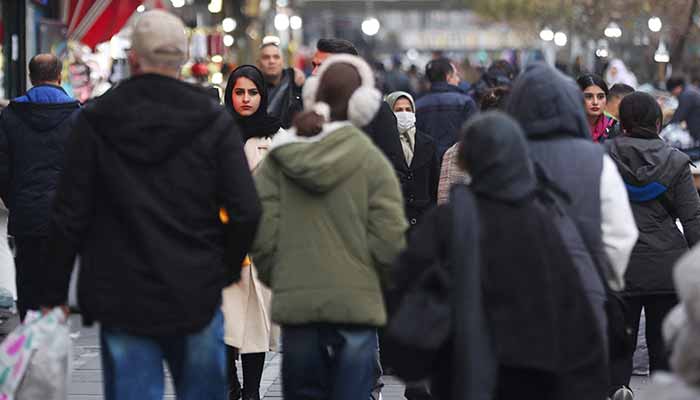
- Govt dialogue addressed shopkeepers’ concerns: embassy.
- Security forces swiftly contained scattered illegal protests.
- Internet restored nationwide amid cybersecurity monitoring.
The Iranian Embassy in Islamabad on Monday said that the main group of protesters, largely comprising shopkeepers and trade guilds, had officially announced the conclusion of their lawful protests following government engagement and confidence-building measures.
The demonstrations began last Sunday when shopkeepers staged a strike over high prices and economic stagnation, but they have since spread to other places and expanded to include political demands.
Protests took place in 25 out of Iran's 31 provinces and affected, to varying degrees, at least 45 different cities, most of them small or medium-sized and concentrated in the west, according to an AFP tally based on official statements and media reports.
At least 12 people have been killed since December 30 in localised clashes, including members of the security forces, according to a tally based on official announcements, and there have been media reports of episodes of property damage in the west.
The Fars news agency said on Monday that "the trend observed on Sunday night shows a notable decrease in the number of gatherings and their geographic reach compared to previous nights".
In a statement issued today, the embassy in Islamabad said protests had erupted in recent weeks after a sudden increase in the exchange rate, prompting demonstrations by shopkeepers and members of various professional guilds.
According to the embassy, the Iranian government immediately acknowledged the protests and initiated talks through relevant authorities, with President Masoud Pezeshkian playing a central role in negotiations. The discussions resulted in agreements aimed at addressing the protesters’ concerns.
The embassy claimed that hostile external elements sought to exploit the situation to create nationwide insecurity and instability, using cyberspace to incite certain groups.
It claimed that public statements by Israel and the United States in support of protesters further encouraged attempts to mobilise people in some smaller towns.
However, the embassy said the timely presence of security forces prevented the situation from escalating, adding that illegal elements were quickly contained.
Providing updates on the current situation, the embassy said internet connectivity had been restored across Iran, though minor and temporary reductions in speed remained in place due to security and cybersecurity considerations.
It said the government, while recognising the legal rights of lawful protesters, had launched constructive dialogue with representatives of trade guilds and market associations, a step that significantly contributed to stabilising the situation.
The statement noted that in a few cities, limited and weak clusters of illegal protests briefly appeared in remote locations but were swiftly dispersed by law enforcement agencies. In several other cities, calm and public order had been fully restored under the supervision of security forces, the embassy said.
It further highlighted that the responsible conduct and vigilance shown by lawful protesters, particularly their adherence to legal frameworks, played a crucial role in preventing escalation and containing unrest over recent days.
The embassy also claimed that Israel and the United States continued to incite what it described as deceived elements, adding that some arrested rioters had confessed to links with foreign agencies and receiving financial support from abroad.
Meanwhile, Gholamhossein Mohseni Ejei, the head of the judiciary, said Iran will offer no leniency to "rioters", though the public has a right to demonstrate.
"I instruct the attorney general and prosecutors across the country to act in accordance with the law and with resolve against the rioters and those who support them... and to show no leniency or indulgence," Gholamhossein Mohseni Ejei said, according to the judiciary's Mizan news agency.
He added that Iran "listens to the protesters and their criticism, and distinguishes between them and rioters".
The rial was depreciating again on Monday against the greenback after strengthening in recent days, according to the informal black-market rate, which stands at around 1.4 million rials, compared with about 770,000 a year earlier.