Cricketer Nasir Jamshaid apologises over 2017 spot-fixing plot
He was convicted in February 2020 at Manchester Crown Court, sentenced to 17 weeks in prison
Published February 11, 2026
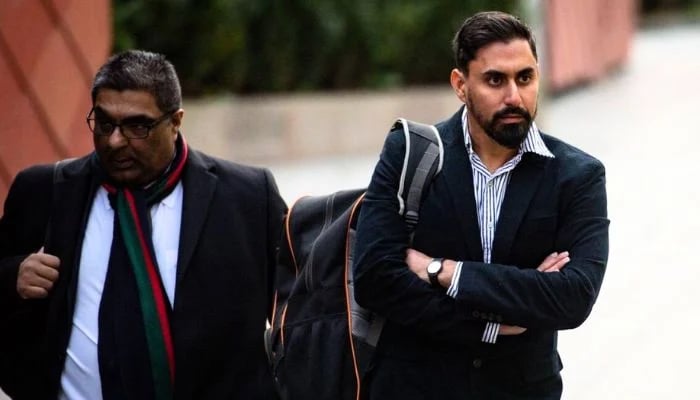
LONDON: Former Pakistani cricket star Nasir Jamshaid has apologised to Pakistanis and cricket fans around the world for his role in a 2017 spot-fixing and bribery conspiracy linked to T20 matches, including a fixture in the Pakistan Super League (PSL).
In his first interview since his arrest — and subsequent conviction — in Birmingham in February 2017 by the anti-corruption unit of the National Crime Agency (NCA), Jamshaid revealed that he contemplated suicide while in jail.
He was convicted in February 2020 at Manchester Crown Court, sentenced to 17 weeks in prison and banned from all forms of cricket for ten years.
At his home near Birmingham, Jamshaid told Geo News: “I apologise to Pakistanis and cricket fans all over the world. I am ashamed. What I did was completely wrong. My advice to newcomers is never to get involved in corrupt practices because it can destroy you and the people around you. There is too much suffering in it. Learn from my experience.”
Jamshaid, who represented Pakistan more than 60 times, revealed that he wanted to take his own life while in prison.
He said: “I wanted to end my life on many occasions. There was no hope for me after what I did, but my wife Dr Samara saved my life. She helped me a lot. She would send me pictures of our daughter Haniya Jamshaid, and that would bring positivity to my mind — that I would live for her and fight for her in whatever means I can. My wife and my daughter saved my life. I can never thank my wife enough for what she did for me.”
Jamshaid also appealed to Pakistan Cricket Board (PCB) Chairman Mohsin Naqvi to consider ending his ban, which expires within a year. “I would be thankful to Mohsin Naqvi if he can consider my request. I have already completed nine years of my ban.”
Jamshaid admitted his involvement in the conspiracy.
He told Geo News: “I was involved in the conspiracy with Yousef Anwar. He told me that he wanted to meet Pakistani players in Dubai and asked for my help to facilitate the contacts. I facilitated his contact with Sharjeel Khan and Khalid Latif and urged them to meet Yousef and help him in exchange for money.”
Last week, the Solicitors Regulatory Authority (SRA) announced that Jamshaid’s solicitor, Shahid Ali of Osborne Knight Solicitors, had been fined £40,000, along with £30,000 in legal costs, by the Solicitors Disciplinary Tribunal.
Ali was found guilty of dishonesty and serious professional misconduct in his handling of Jamshaid’s funds and communications during the criminal proceedings. The complaint had been filed by Jamshaid’s wife, Dr Samara Afzal, a senior doctor working in Birmingham.
Jamshaid welcomed the decision, saying it demonstrated how his own lawyer mishandled his case.
He said: “From the moment I was arrested by the NCA, my lawyer Shahid Ali advised me not to plead guilty, to cease all contact with the PCB, and to maintain that I had not taken part in the spot-fixing conspiracy. He asked me to give no comment to the police. I told him during our first meeting and subsequent meetings exactly what had happened and what my role was — that I was guilty of corruption.
“I went for no comment during my police interviews, but I could tell from the questioning that they had full evidence against me. I told Shahid Ali the same, but he insisted I should not plead guilty and said he would find some way to save me.”
“He assured me everything would be alright and that he would handle everything to my satisfaction. He failed me through bad advice. He was only interested in making money.”
The disciplinary proceedings also examined Ali’s handling of crucial covert audio evidence recorded in both English and Urdu. Ali, a fluent Urdu speaker, had listened to the recordings in August 2019 at a secure NCA location but told Jamshaid and instructed counsel that the Urdu portions were largely inaudible and not damaging to the defence.
When later transcribed and played in court, the conversations were found to be clear and strongly indicative of Jamshaid’s involvement. Jamshaid subsequently changed his plea to guilty mid-trial.
Jamshaid said: “I was assured again and again by Shahid Ali that the audio involving me, Yousef and the secret officer was not damaging and inaudible in many parts. He lied to me. I was shattered to learn the recordings were very clear and that my solicitor had not told my barrister about their contents. I immediately decided to change my defence to a guilty plea on the sixth day of the trial.”
Asked why he joined the criminal syndicate, Jamshaid said he wanted quick money: “I desperately needed money at that time because my father had suffered a brain haemorrhage and was in a coma in ICU for many months. I needed funds for his treatment. I was too embarrassed to ask my wife for help. I thought I was helping my family, but I didn’t realise I was about to ruin many lives, including my own, through reckless judgment. I deeply regret it and wish I could turn back time. I have paid a huge price.”
Jamshaid said that had he been properly advised, he might have faced only a short conviction, and his ban would already be over.
“Shahid Ali gave me completely wrong advice and got me into more mess than I was already in. My life was turned upside down. He told me that if I pleaded guilty, I would lose my family and go to jail, so I was scared.”
Jamshaid spoke out after the Solicitors Disciplinary Tribunal condemned Ali as dishonest.
The Tribunal heard that during an NCA search of Dr Afzal’s home, approximately £5,500 in cash was seized and later returned to Ali in September 2017. Ali failed to record this money in a client ledger and retained it for nearly two years while repeatedly denying to Jamshaid and Dr Afzal that he had received it.
It was also revealed that in October 2019, Jamshaid handed Ali a further £15,000 in cash, believing it was for legal fees. It later emerged that Jamshaid’s case was funded by legal aid. Ali misled the couple about the money’s purpose and admitted under cross-examination that earlier statements — secretly recorded by Dr Afzal — were untrue.
Dr Samara Afzal told Geo News: “The Tribunal concluded that Ali provided misleading information to me and Nasir and ruled his conduct dishonest by the standards of ordinary, decent people. He committed numerous breaches of professional obligations. He falsely implied he was contacting third parties to recover the cash, when he had been holding it himself.
“After I filed the complaint, I received a threatening call advising me to withdraw it. A recording was provided to the SRA, although Ali denied involvement. I am considering further action.”
Dr Afzal said Ali also mishandled key audio evidence, stopped Jamshaid from pleading guilty early, gave false hope and even hid evidence from his barristers.
“I was forced to contact a PCB representative in court to relay to the NCA that Nasir wished to change his plea. His case was totally mishandled. He made a mistake and deserved punishment, but he was prevented from pleading guilty early and moving on. Senior Counsel confirmed that had Nasir been properly advised, he could have entered an earlier guilty plea and possibly faced a lesser sentence.”
While the Tribunal did not uphold this allegation on the balance of probabilities, Dr Afzal maintains Ali intentionally misled both client and counsel for financial gain and is now considering further legal action.
Several attempts were made to contact Shahid Ali for comment, but he did not respond.
Nasir Jamshaid was jailed for 17 months after the plot was uncovered by an undercover officer. Co-conspirators Yousef Anwar and Mohammed Ijaz pleaded guilty and were imprisoned. They had met a man they believed to be part of an illegal betting syndicate at a Birmingham shisha café — he was in fact an undercover NCA officer.
In Pakistan, Sharjeel Khan and Khalid Latif were formally charged by the PCB for violating the anti-corruption code and were banned for five years and two-and-a-half years, respectively.