Oil prices surge to highest since 2022 at over $119 a barrel on Middle East war
Brent jumps as much as 29%, WTI surges up to 31%
Published March 09, 2026
- Brent jumps as much as 29%, WTI surges up to 31%.
- Iraq slashes its oil output due to Middle East conflict.
- Kuwait declares force majeure, cuts crude oil output.
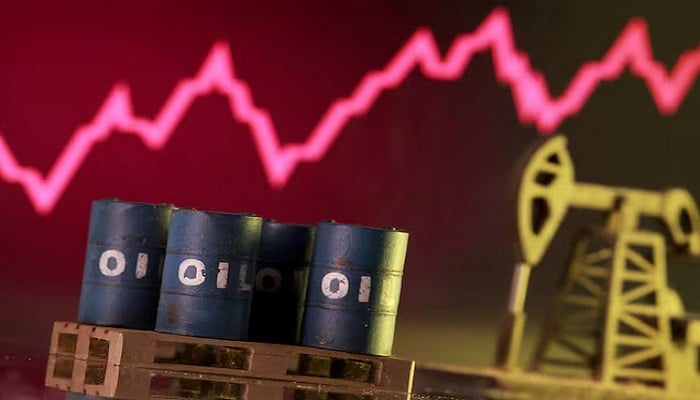
Oil prices surged over $119 a barrel, hitting levels not seen since mid-2022, on Monday as some major producers cut supplies and fears of prolonged shipping disruptions gripped the market due to the expanding US-Israeli war with Iran.
Brent crude futures LCOc1 were up $13.02, or 14%, at $105.71 per barrel at 0917 GMT, while US West Texas Intermediate (WTI) crude CLc1 futures were up $12.16, or 13%, at $103.06.
In a whiplash session, Brent had earlier hit a high of $119.50 a barrel, indicating the biggest-ever absolute price jump in a single day, and WTI reached $119.48 a barrel. Before the surge on Monday, Brent had already climbed 28% and WTI 36% over last week.
The Strait of Hormuz, through which roughly one-fifth of the world's oil and liquefied natural gas typically passes, is virtually shut. Also boosting prices is the appointment of Mojtaba Khamenei to succeed his father Ali Khamenei as Iran's supreme leader, a week into its conflict with the United States and Israel.
The war could leave consumers and businesses worldwide facing weeks or months of higher fuel prices even if the conflict, which started on February 28, ends quickly, as suppliers grapple with damaged facilities, disrupted logistics and elevated risks to shipping.
US gasoline contracts RBc1 surged to their highest since 2022 at around $3.22 a gallon, at a time when US President Donald Trump has told US consumers the impact on their cost of living would be limited ahead of mid-term elections in November.
Governments can release strategic petroleum reserves to counteract supply disruptions. US Senate Democratic Leader Chuck Schumer called on Trump to make such a move and a French government source said on Monday that the Group of Seven nations would discuss this also.
Iraq oil production from its main southern oilfields has fallen by 70%, sources said, with crude storage having reached maximum capacity.
Kuwait Petroleum Corporation began cutting oil output on Saturday and declared force majeure on shipments, though it did not say how much production it would shut.
Analysts expect OPEC heavyweights United Arab Emirates and Saudi Arabia will have to also cut output soon as they run out of oil storage.
Saudi Aramco has offered more than 4 million barrels of Saudi crude in rare tenders as its export routes are throttled.
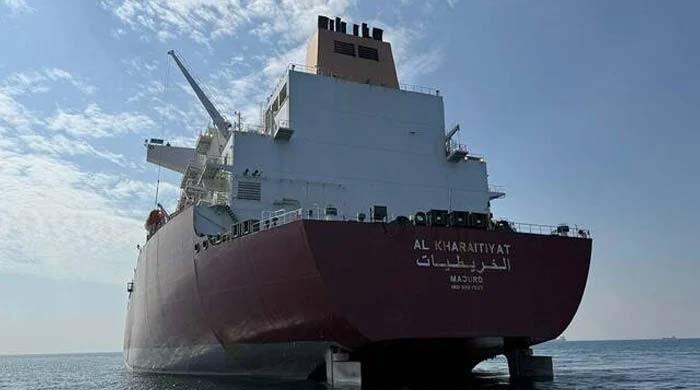
In gas markets, giant liquefied natural gas exporter Qatar had already stopped production after attacks on key infrastructure.
A fire broke out in the UAE's Fujairah oil industry zone resulting from falling debris, with no injuries reported. Saudi Arabia's Defence Ministry said on X it intercepted a drone heading to the Shaybah oilfield.
Refinery disruptions add to fuel supply cuts, with Bahrain's BAPCO announcing a force majeure following a recent attack on its refinery complex. Saudi Arabia has already shut its biggest oil refinery.