The dream that became a nation
Idea, now voiced as a clear path, gave millions of Muslims a collective purpose and a concrete goal
Published March 23, 2026
Nations are not born in a day. They are forged through hard work, sacrifice, blood, and sweat. But before any of that, it starts with someone daring to dream — to envision a world that does not yet exist, and which may take years beyond the dreamer's own lifetime to become real.
For the Muslims of India, that dream was Pakistan.
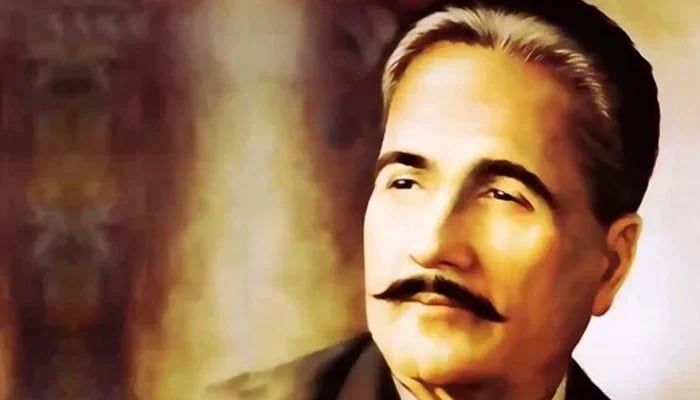
Long before the green and white flag was raised over a sovereign land, one of the subcontinent's most celebrated poets and philosophers, Allama Muhammad Iqbal, dared to imagine an independent state founded on the principles of Islam. He first articulated this vision at the annual session of the All-India Muslim League in Allahabad in 1930. Iqbal did not merely call for a separate piece of land. He envisioned a place where Muslims could freely practice and embody the true spirit of their faith, a state built not on ethnic identity alone, but on the ideals of justice, dignity, and self-determination that Islam enshrines.
A decade passed. Muslims across British India continued struggling for equal rights and fair representation in legislative bodies. The Hindu-majority Indian National Congress seemed intent on reducing them to a permanent political minority.
Then came March 23, 1940, the day the dream found its clearest voice.
At Minto Park in Lahore, before a gathering of thousands, a fearless leader from Bengal rose to speak. A.K. Fazlul Huq, known reverently as Sher-e-Bangla, presented a formal resolution calling for the creation of independent states in which Muslims would constitute a majority. The park echoed with his voice. This was no longer a poet's aspiration whispered in verse. It was now a political demand, declared before the nation and the world.
The Lahore Resolution, as it came to be known, did not create Pakistan overnight. Seven more years of struggle, negotiation, and sacrifice lay ahead. But what it did was transform an idea into a movement. As Victor Hugo said:
"On résiste à l'invasion des armées; on ne résiste pas à l'invasion des idées."
Translation: "One can resist the invasion of armies; one cannot resist the invasion of ideas."
The idea, now voiced as a clear path, gave millions of Muslims a collective purpose and a concrete goal. It told the British and the Congress alike that the Muslim demand for self-governance was not a passing sentiment, it was an irrevocable resolve.
It brought Quaid-i-Azam to realise the importance of fighting for an independent state, a cause which he led heroically till its realisation.
Today, March 23 is observed across Pakistan as Pakistan Day, a national holiday that commemorates not independence itself, but something perhaps even more powerful: the moment a dream turned into a united demand. It reminds us that nations begin not with borders drawn on maps, but with the courage to articulate what a people need and deserve.
Eighty-five years on, the Lahore Resolution stands as solid proof that an idea, when translated into conviction and then unwavering commitment and effort, can reshape the world.
— Pakistan Zindabad.