The echo of Chagai
The echo of Chagai must now become the echo of economic resurgence
Published May 27, 2026

History remembers those who rise above constraints and reshape their destiny through courage, vision and collective resolve. For Pakistan, May 28, 1998 – Youm-e-Takbeer – was one such defining moment in our national journey. On that historic day, the mountains of Chagai echoed not only with the sound of nuclear tests, but with the resolve of a sovereign nation determined to defend its dignity, independence and right to exist with honour.
Under the bold and visionary leadership of Nawaz Sharif, Pakistan made a decision that permanently altered the strategic balance in South Asia. The pressure at that time was immense. Pakistan faced threats of sanctions, diplomatic isolation and severe economic consequences. Attractive incentives were offered to persuade us to step back. Yet Pakistan’s leadership chose national sovereignty over temporary economic relief and strategic dependence.
That decision was not driven by aggression. Pakistan’s nuclear capability was developed purely as a deterrent to preserve peace and maintain strategic equilibrium in the region. Pakistan demonstrated to the world that when our nation rallies behind a clear national mission, no obstacle is insurmountable.
The success of Youm-e-Takbeer was not achieved overnight. It was the result of decades of strategic patience, institutional continuity, investment in science and technology and the tireless efforts of our scientists, engineers, armed forces, and policymakers. Most importantly, it reflected a national consensus that Pakistan’s sovereignty was non-negotiable.
Today, as we commemorate this defining milestone with pride and gratitude, we must also reflect on the next great challenge before us. The question facing Pakistan in 2026 is not whether we can defend our borders. By the grace of Allah and through the sacrifices of our people, Pakistan stands secure and sovereign. The real question now is whether we can achieve economic sovereignty with the same determination and unity of purpose that enabled us to achieve strategic sovereignty.
In the twentieth century, military strength determined the survival of nations. In the twenty-first century, economic power determines their influence, resilience and standing in the world. True sovereignty in today’s world means the ability of a nation to stand on its own economic feet. This is why I believe the spirit of Chagai must now guide Pakistan toward a new national mission: economic transformation and economic invincibility.
The lesson of Youm-e-Takbeer is profoundly important. Pakistan succeeded because we approached the nuclear program not as a short-term political project, but as a long-term national mission. The same Atomic Model of Success must now be applied to our economy. We must rise above short-termism and embrace a long-term vision for national development stretching towards 2035 and ultimately 2047 – the centenary of Pakistan’s independence.
This is precisely the spirit underpinning URAAN Pakistan, our national economic transformation framework. URAAN Pakistan is a national call for collective effort to transform Pakistan into a competitive, productive, innovative and self-reliant economy. Its objective is clear: to place Pakistan on the path toward becoming a trillion-dollar economy by 2035 and a leading developed economy by 2047. The framework rests on the 5Es: Exports, E-Pakistan, Environment & Climate Change, Energy & Infrastructure, and Equity, Ethics & Empowerment.
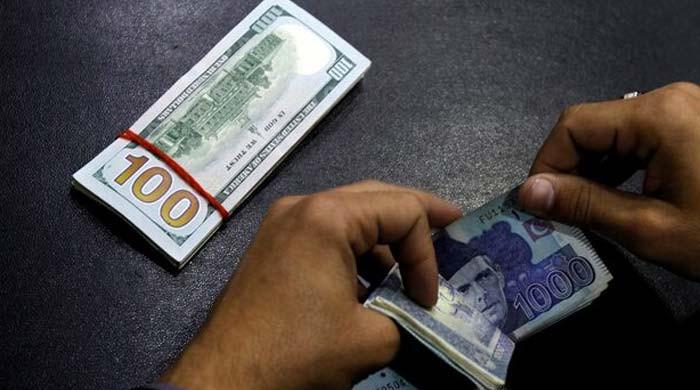
First and foremost, exports must become Pakistan’s national economic mission. No country in modern history has achieved sustained prosperity without building a strong export economy. Pakistan can no longer rely primarily on loans and consumption-driven growth. We must become a nation that earns through productivity, innovation, manufacturing, technology, services, agriculture and value addition. Pakistan possesses enormous untapped potential across multiple sectors: information technology, agriculture, engineering goods, minerals, pharmaceuticals, halal food, tourism, creative industries, and services. Our challenge is not the absence of opportunity but the need for sustained reform, improved competitiveness, reduced cost of doing business and policy continuity.
Second, the digital revolution presents Pakistan with a historic opportunity to leapfrog traditional stages of development. Artificial intelligence, fintech, e-commerce, digital governance, automation and emerging technologies are reshaping the global economy at an extraordinary speed. Countries that fail to adapt will be left behind.
This transformation places immense importance on our youth. Pakistan is one of the youngest countries in the world, with more than 60 per cent of the population under 30. I firmly believe that Pakistan’s youth possess extraordinary talent and potential. Our responsibility as policymakers is to create the ecosystem that enables our young people to innovate, build enterprises, lead industries, and compete globally. This is why the government is investing in higher education, digital infrastructure, innovation ecosystems, artificial intelligence, science and technology and skill development under the broader vision of URAAN Pakistan.
Third, economic sovereignty requires energy security and climate resilience. No economy can achieve sustainable growth with expensive and unreliable energy. Pakistan must accelerate its transition to affordable indigenous energy sources, including hydel, solar, wind, nuclear and Thar coal, while also modernising the power sector and improving efficiency. Likewise, climate change has become one of the defining challenges of our time. Pakistan remains among the countries most vulnerable to climate-induced disasters despite contributing minimally to global emissions. Climate resilience is therefore not simply an environmental imperative; it is a national economic priority.
Fourth, governance reform remains indispensable for economic takeoff. Countries that succeed in the modern world are those that build transparent, meritocratic, technology-enabled and responsive systems of governance. Under the reform agenda of URAAN Pakistan, the government is undertaking deep structural reforms in taxation, regulation, civil service modernisation, judicial efficiency, urban management, local governance and public sector performance. We are simplifying bureaucratic procedures, digitising public services, reducing unnecessary regulatory barriers and improving the ease of doing business to encourage entrepreneurship, investment, and innovation. At the same time, we are working to build a more transparent, efficient and predictable policy environment.
We are also introducing outcome-based development planning, accelerating digital governance reforms, modernising state institutions and promoting greater coordination between the federation and provinces to improve service delivery and economic management. Most importantly, Pakistan needs a renewed national mindset. Economic transformation cannot be achieved by the government alone. It requires a whole-of-nation effort.
When Pakistan pursued its nuclear programme, our scientists worked under sanctions and severe resource constraints because they believed they were serving a higher national cause. That same spirit of patriotism, discipline and excellence must now define our economic journey.
As we move towards 2047, we must think boldly and act strategically. The global economic centre of gravity is shifting towards Asia. Pakistan must become part of the success story. Our competition in the twenty-first century should not be defined by conflict, but by economic achievement, technological advancement, educational excellence, and national development. South Asia deserves a future shaped by prosperity and connectivity rather than perpetual instability.
There will always be voices of pessimism. There will always be those who argue that Pakistan’s challenges are too deep and its ambitions too large. But history reminds us that the same doubts were expressed before May 1998. Those who underestimated Pakistan then continue to underestimate the resilience, talent, and determination of the Pakistani nation today.
The spirit of Youm-e-Takbeer reminds us that Pakistan’s greatest strength has never merely been its geography or resources. Our greatest strength has always been the resolve of our people. Whenever Pakistan has united behind a national mission, it has achieved extraordinary outcomes. Today, our mission is economic sovereignty.
If Youm-e-Takbeer secured Pakistan’s strategic sovereignty, then the mission before our generation is to secure Pakistan’s economic sovereignty.
And I have no doubt that with unity, continuity of policy, political stability, reform and faith in our collective potential, Pakistan can emerge as one of the leading economies of the developing world by 2047. The echo of Chagai must now become the echo of economic resurgence.
The writer is the federal minister for planning, development, and special initiatives. He tweets/posts @betterpakistan and can be reached at: [email protected]
Disclaimer: The viewpoints expressed in this piece are the writer's own and don't necessarily reflect Geo.tv's editorial policy.
Originally published in The News