Centre, provinces move to introduce targeted fuel subsidy framework using tech
Participants noted with satisfaction that fuel supply situation remains stable, adequate across country, says statement
Published March 27, 2026
- IT ministry gives presentation on technological solutions.
- Any reduction POL prices should be passed on to consumers: Punjab.
- KP lauds efforts of federal govt for effectively managing oil supply.
Centre and provinces have agreed to expedite efforts to roll out a targeted subsidy framework for petroleum products using technological solutions amid a surge in global oil prices.
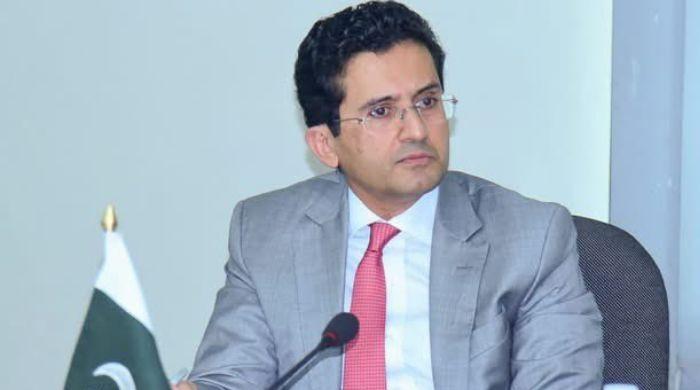
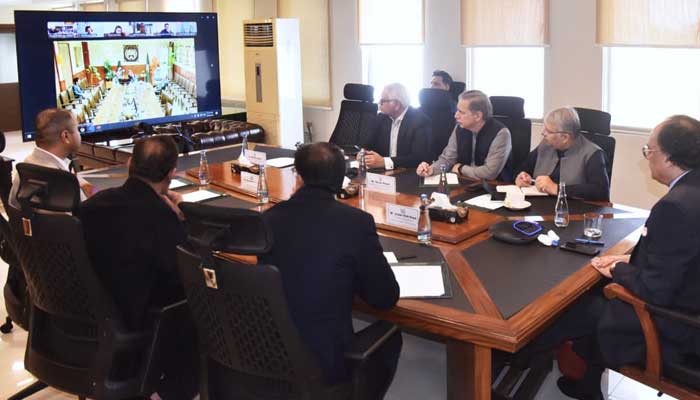
The development came as Finance Minister Muhammad Aurangzeb chaired a high-level consultative meeting on the petroleum products situation today at the Finance Division, said a statement issued by the finance ministry on Friday.
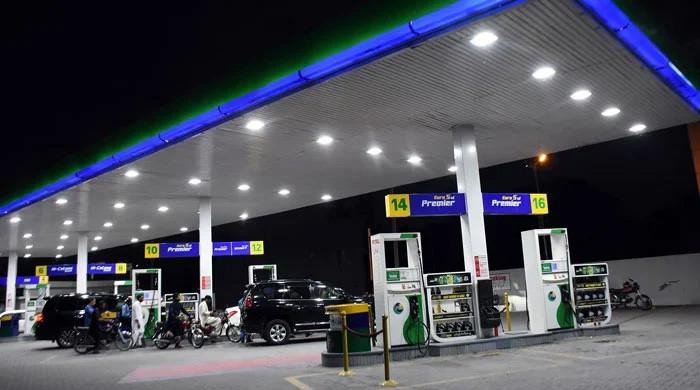
The meeting commenced with a detailed presentation by the Petroleum Division on the current status of petroleum products’ availability in the country, it said, adding that the participants noted with satisfaction that the fuel supply situation remains stable and adequate across the country.
"The Ministry of Information Technology and Telecommunication also gave a comprehensive presentation on proposed technological solutions to facilitate a targeted subsidy mechanism for petroleum products, with a focus on transparency and efficient delivery,” said the statement.
The provincial leadership shared their views on the prevailing situation and policy options. Sindh Chief Minister Murad Ali Shah appreciated the efforts of the federal government in maintaining uninterrupted fuel availability, while emphasising the importance of behavioural measures to promote fuel conservation.
Punjab Senior Minister Marriyum Aurangzeb, representing the Government of Punjab, emphasised the need to develop multiple policy scenarios in response to the evolving petroleum price situation.
She stressed that any reduction in international petroleum prices should be effectively passed on to consumers and highlighted the importance of incorporating behavioural aspects into crisis management to ensure more sustainable consumption patterns.
Khyber Pakhtunkhwa Finance Minister Muzzammil Aslam lauded the efforts of the federal government for effectively managing the oil supply situation.
He noted that Pakistan’s management of petroleum supplies has remained comparatively better than that of several countries in the region.
Balochistan Minister for Finance and Mines & Mineral Development, Mir Shoaib Nosherwani, also shared his views during the meeting.
The Finance Division briefed the participants on the fiscal situation and noted that limited fiscal space is available, primarily confined to revenues from the petroleum levy.
“The participants agreed to expedite efforts to finalise a targeted subsidy framework using technological solutions, while ensuring continued coordination between the federal and provincial governments.”
“It was emphasised that any relief measures would need to be carefully calibrated to maintain macroeconomic stability.”
In his remarks, the finance minister underscored that the current situation should be treated as an opportunity to undertake structural reforms rather than a constraint.
He emphasised the importance of adopting data-driven decision-making, particularly in the areas of taxation and subsidy design, to ensure transparency, efficiency, and better targeting of relief.
He also highlighted the need to promote responsible consumption behaviour and ensure that policy responses remain fiscally prudent while maximising relief for the public.