Give peace a chance
Increasingly, it appears that Washington may be preparing the ground for a unilateral ceasefire announcement
Published April 02, 2026
KARACHI: The shifting tone of US President Donald Trump, ranging from confident assertions that the war could end within weeks to claims that Iran is seeking a ceasefire, signals more than rhetorical inconsistency. It reflects a moment of strategic uncertainty in a conflict that could engulf the wider Middle East.
For observers of international politics, such statements are often less about clarity and more about testing the diplomatic waters before a decisive move. Increasingly, it appears that Washington may be preparing the ground for a unilateral ceasefire announcement.
Yet scepticism remains warranted. Trump is mercurial and deeply unpredictable, often shifting positions rapidly, making it difficult to say with certainty what direction his rhetoric or policy may ultimately take. Over the past fortnight, similar signals have faltered amid continued military escalation. Persistent strikes by US and Israeli forces on Iranian energy facilities and civilian infrastructure have deepened mistrust, while Iran’s retaliatory actions against assets in multiple regional states have widened the conflict’s geographic scope. Gulf countries, particularly the UAE, are now being discussed in Western media as potential participants rather than bystanders, a shift that shows how quickly a contained confrontation can spiral into a broader regional war.
Against this volatile backdrop, the White House has indicated that President Trump will deliver a nationally televised address outlining his administration’s position on Iran. His first address to the nation after the start of the war a month back. While the precise contents of that address remain unknown at the time of writing, his earlier remarks, including a social media post suggesting that Iran’s leadership has requested a ceasefire, point towards a possible pivot. Even so, such overtures have been accompanied by conditions, including demands tied to the Strait of Hormuz, highlighting the transactional nature of the current approach. Iran’s Foreign Ministry spokesman Esmaeil Baghaei, in a late-night statement, denied it, stating that Trump’s claim that Tehran requested a ceasefire is “false and baseless”.
Given Trump’s track record of abrupt reversals and contradictory messaging, it remains equally uncertain what he will ultimately say in his address or how firmly any stated position will hold.
The central question, however, is not whether a ceasefire will be announced, but whether it can hold. Temporary pauses in hostilities have historically failed in conflicts marked by deep mistrust and competing strategic objectives. In this case, a sustainable cessation of violence must be comprehensive, verifiable and reciprocal. Anything less risks becoming another tactical lull rather than a genuine step towards peace.
Statements from Tehran indicate a cautious openness. Iranian President Masoud Pezeshkian has reportedly affirmed that his government possesses the “necessary will” to end the conflict, provided certain conditions are met. This conditional readiness mirrors Washington’s own stance and suggests that both sides are, at minimum, exploring an off-ramp. The challenge lies in synchronising these parallel positions into a mutually acceptable framework.
Diplomatic sources in several capitals believe that a ceasefire of at least one month could provide the breathing space necessary for substantive negotiations. Such a pause would not merely halt the immediate violence but also create an environment in which political actors can recalibrate. For Iran, it would offer moderates an opportunity to argue for engagement over confrontation. For the US, it would allow policymakers to shift from military objectives to diplomatic outcomes without appearing to concede under pressure.
However, any US-led initiative must also account for the role of Israel. Prime Minister Netanyahu’s government has not only adopted a more hardline posture towards Iran but also doesn’t seem inclined to pursue a diplomatic solution. It looks like Israel has its own nefarious designs, much more than what even the Trump administration can swallow. Throughout this conflict, it has been a spoiler whenever peace efforts are initiated.
The success of a ceasefire, therefore, hinges not only on US-Iranian dynamics but also on Washington’s ability to ensure alignment with its closest regional ally. Without such coordination, there is a risk that unilateral actions could undermine collective efforts, as has occurred in previous attempts at de-escalation.
This highlights a broader structural issue: the fragmentation of decision-making within alliances. While the US may seek a diplomatic resolution, its partners in the region may calculate their interests differently. Bridging this gap requires not just political will but also credible guarantees, mechanisms that reassure all parties that their core security concerns will not be compromised.
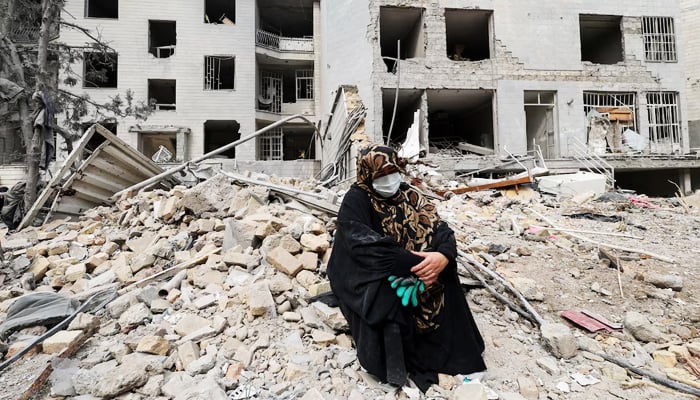
The argument for a ceasefire is both strategic and humanitarian. Continued attacks on infrastructure and civilian areas have far-reaching consequences that extend beyond immediate casualties. Energy disruptions, economic instability and displacement ripple across borders, affecting populations far removed from the battlefield. In an interconnected global economy, such disruptions can trigger cascading effects, from rising fuel prices to supply chain breakdowns. A sustained ceasefire would, at the very least, halt this downward spiral and provide space for recovery.
Equally important is the role of backchannel diplomacy. Despite the public escalation, there are indications that communication between Washington and Tehran has not entirely broken down. Figures such as Iran’s Foreign Minister Abbas Araghchi and US Special Envoy Steve Witkoff are believed to have maintained lines of contact, demonstrating that even at moments of peak tension, diplomacy persists in quieter forms. These channels are essential; they allow for the exchange of proposals, the clarification of intentions and the prevention of miscalculations that could lead to unintended escalation. Overseen by senior-most officials in Washington and Pakistan’s top military and civilian leadership, the entire process was given umbrella support to counter detractors who might sabotage it. “It is a high-risk, high-reward endeavour, and only men with nerves of steel can manage that”, a source confided.
Pakistan has played a significant part in containing the crisis. It has engaged in sustained diplomatic outreach, leveraging its relationships across the region to encourage restraint. Its efforts have been crucial in preventing the conflict from widening. By maintaining dialogue with multiple stakeholders, Islamabad has positioned itself as a potential facilitator in any future negotiations, enhancing its standing on the international stage.
The involvement of other intermediaries, whether Turkiye, Gulf states or European actors, could further strengthen the prospects for dialogue. The new move to include China will further help the peace process. Multilateral engagement not only distributes the burden of diplomacy but also increases the legitimacy of any eventual agreement. A ceasefire brokered or supported by a broader coalition is more likely to endure than one imposed unilaterally.
Still, the path to lasting peace is fraught with obstacles. Deep-seated mistrust, domestic political pressures, and competing regional ambitions all complicate the picture. Hardliners on both sides may view a ceasefire as a sign of weakness rather than an opportunity, seeking to derail negotiations through provocations. Managing these internal dynamics is as critical as navigating the external ones.
This is why the design of the ceasefire matters as much as its declaration. Clear terms, robust monitoring mechanisms and phased confidence-building measures are essential components. For instance, an initial halt to airstrikes could be followed by reciprocal steps, such as suspending missile activities or easing certain economic restrictions. Each step would need to be verified and linked to the next, creating a structured pathway towards de-escalation.
Ultimately, the goal should not be merely to stop the current war but to address its underlying causes. Issues such as regional security arrangements, economic sanctions and nuclear concerns cannot be resolved overnight. However, a sustained ceasefire can create the conditions necessary to tackle these complex questions systematically.
The stakes could hardly be higher. A failure to de-escalate risks drawing in additional actors, transforming a bilateral confrontation into a regional conflagration with global repercussions. Conversely, a successful ceasefire could mark the beginning of a broader realignment, one in which diplomacy regains primacy over force.
In this context, the call to ‘give peace a chance’ is not an abstract ideal but a pragmatic necessity. Military victories, even if achievable, are unlikely to produce lasting stability in a region as intricate as the Middle East. Only through dialogue, grounded in mutual recognition of interests and constraints, can a durable peace emerge.
As the world awaits Washington’s next move, the imperative is clear: seize the moment. A comprehensive ceasefire, backed by genuine commitment from all sides, offers the best and perhaps the only opportunity to step back from the brink. The alternative is a descent into a wider conflict whose costs would be borne not just by those directly involved, but by the international community as a whole.
The writer is the managing director of Geo News.
Originally published in The News