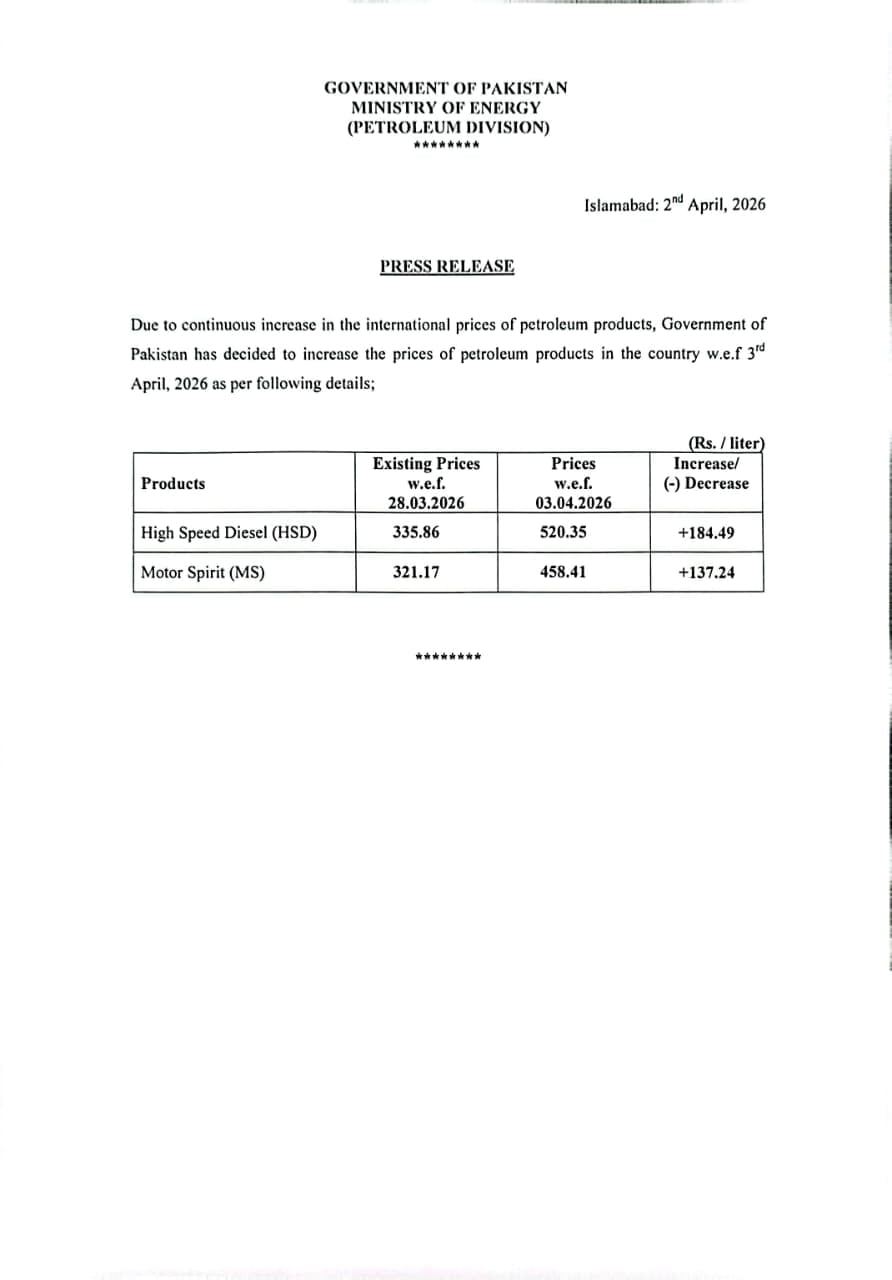
Govt hikes petrol to Rs458.41, diesel Rs520.35 per litre amid global fuel crisis
Rs100 per litre subsidy on up to 20 litres of petrol to be given to motorcyclists, says finance minister
Published April 02, 2026
- Government hikes petrol price by Rs137.24 per litre.
- High-speed diesel price increased by Rs184.49.
- FinMin announces shift from blanket to targeted subsidies.
Federal Minister for Petroleum Ali Pervaiz Malik on Thursday announced a massive increase in petrol and diesel prices, citing the ongoing Middle East conflict and rising global energy costs.
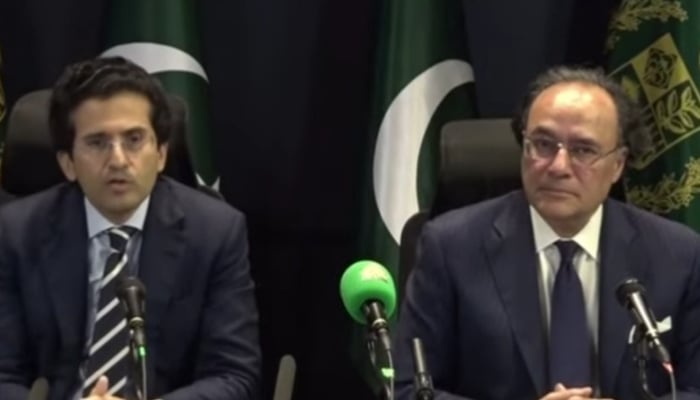
Addressing a press conference along with Finance Minister Muhammad Aurangzeb, the petroleum minister said the price of petrol was being hiked to Rs458.41 per litre and that of high-speed diesel to Rs520.35 per litre.
"The new petrol price has been fixed at Rs458.41 per litre, marking a rise of Rs137.23 per litre. Diesel will now cost Rs520.35 per litre, up by Rs184.49 per litre,” announced the minister.
Global energy and oil markets were upended after the United States and Israel launched joint strikes on Iran on February 28. Tehran, in response, effectively blocked the Strait of Hormuz, a key shipping route, and hit oil refineries across the Gulf region.
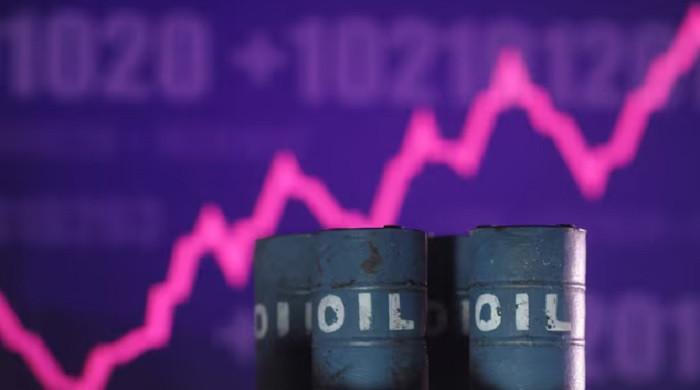
The turmoil in the Gulf region has led to a spike in global oil and energy prices, with countries around the world rushing to ration fuel and energy.
Pakistan also rolled out a wide-ranging austerity and fuel conservation plan and initially announced a sharp increase of Rs55 per litre in the price of petrol and diesel on March 6.
The PML-N-led federal government, however, kept the prices of petroleum products steady in the previous three weekly reviews.
Addressing the presser earlier today, Malik said the situation in the region has made the global economy difficult. He noted the government’s efforts to shield the public, saying, “We have made every effort to ensure that the burden does not fall on the people through austerity and spending cuts.”
Referring to the global oil market, the minister said: “For several weeks, the situation has been worsening. Crude oil prices have reached record levels, with diesel in the international market rising above $250 per barrel.”
Highlighting supply challenges, Malik explained: “Oil supply primarily comes through the Strait of Hormuz. Even countries with strategic reserves have declared energy emergencies.”
Praising the timely decisions of the government, the petroleum minister said: “During this difficult time, the prime minister formed a committee that took prompt decisions. These timely decisions ensured that fuel supply was not disrupted.”
On subsidy adjustments, the minister said that a major meeting was held with Prime Minister Shehbaz Sharif and chief ministers, and it was decided that blanket subsidies may no longer protect the public from global price increases. Instead, assistance will focus on vulnerable groups.
Kerosene hiked to Rs467.48 per litre
The federal government has increased the price of kerosene oil by Rs34.08 per litre, taking it to Rs467.48 per litre, according to a notification issued by the Oil and Gas Regulatory Authority (OGRA). The latest adjustment marks one of the steepest single increases in recent weeks, reflecting sustained pressure on domestic fuel pricing.
On March 28, the federal government increased the price of kerosene oil by Rs4.66 per litre, bringing it to Rs433.40 per litre, following a March 21 revision, when kerosene prices had surged to Rs 428.74 per litre, marking a sharp increase last month.
Unlike petrol and high-speed diesel, which are often adjusted with broader consumer impact in mind, kerosene prices tend to more directly mirror international trends, making them more susceptible to abrupt increases.
The increase is expected to have a disproportionate impact on lower-income households, especially in remote and colder regions where kerosene remains a primary source of fuel for cooking and heating.
Petrol levy hiked to RsRs160.61 per litre
In a parallel development, sources said the government has sharply revised the petroleum levy structure, significantly increasing the burden on petrol consumers.
The levy on petrol has been raised by Rs55.24 per litre to Rs160.61 per litre, while the levy on high-speed diesel has been reduced to zero from the earlier Rs55.24 per litre.
Officials indicated that the move comes amid an unprecedented surge in global fuel prices following the Middle East conflict, with cumulative increases of Rs192.24 per litre in petrol and Rs239.55 per litre in diesel recorded in recent weeks after the US and Israel launched attacks on Iran on February 28.
The adjustment in levy, sources added, reflects an effort to manage revenue requirements while partially cushioning the impact on the transport and agricultural sectors that heavily rely on diesel.
Business forum slams petrol levy hike
Reacting to the sharp increase in petroleum prices, the Pakistan Business Forum (PBF) criticised the government’s decision to raise the petroleum levy, terming it unjustified amid extraordinary economic conditions besetting the country.
In a statement, the forum said that the levy on petrol has been pushed up to around Rs160 per litre following the latest price revision, adding that the government appears determined to continue taxing fuel despite mounting pressure on businesses and consumers.
The PBF urged Prime Minister Shehbaz Sharif to immediately abolish the petroleum levy, warning that the move would further strain industrial activity and inflate the cost of doing business across the country.
Rs100 per litre subsidy for bikers
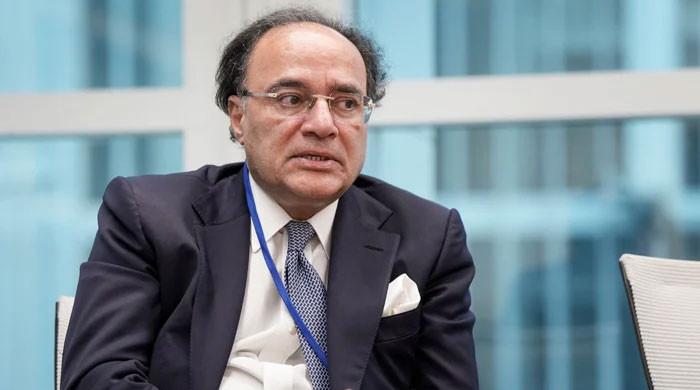
For his part, Finance Minister Muhammad Aurangzeb said that the key decision about a hike in fuel prices was made after consultation with the country’s leadership.
Addressing the joint presser, the finance czar announced a shift from blanket subsidies to targeted support to ensure relief reaches those most in need.
He said that motorcyclists would receive a subsidy of Rs100 per litre on up to 20 litres of petrol per month.
Separately, a subsidy of Rs100 per litre on diesel will be given to intercity public transport, he added.
The finance minister further said that a subsidy of Rs70,000 per month on fuel will be given to trucks and goods transport. The government will also provide a subsidy for railways so that fares can be managed, the minister said.
The finance czar said the govt would review market timings nationwide to conserve fuel and reduce electricity generation costs.
He added that a final decision about the market timings would be made after consultations with provincial governments.