Nepra abolishes application fee, licence rule for solar systems up to 25KW
Power authority issues notification, stating order is applicable and deemed to be effective from Feb 9, 2026
Published April 28, 2026
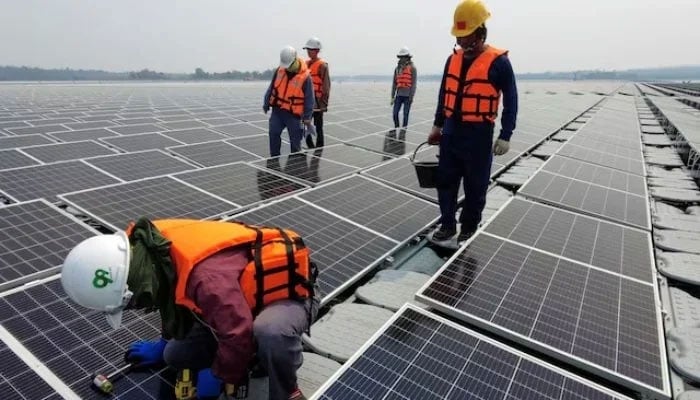
The National Electric Power Regulatory Authority (Nepra) has abolished the licence requirement and application fee for solar consumers with systems of up to 25 kilowatts.
In compliance with the directive, Nepra issued a notification stating that the prosumers’ regulations are amended, eliminating licence fees for distributed generation up to 25kW. It added that prosumers with higher capacity are required to pay a one-time fee of Rs1,000 per kilowatt.
“This notification shall be applicable and deemed to be effective from February 9, 2026,” the order further said.
The move comes two days after the Power Division, amid intense public backlash, instructed Nepra to remove the licence requirement and associated fee for solar prosumers of up to 25 kilowatts.
The request follows directions from Federal Minister for Power Sardar Awais Ahmed Khan Leghari, who pushed for a rollback of recent regulatory changes that centralised approvals with Nepra and imposed fees even on small-scale systems.
Earlier, Nepra clarified that solar consumers who are not connected to the national grid do not require any licence from the regulator, and no such proposal was currently under consideration.
Under the previous 2015 regulations, distributed generation facilities of 25 kilowatts or below did not require a license from Nepra. Applications were processed directly by Distribution Companies (Discos) without any fee, serving as a major fiscal incentive for residential users, it added.
However, the new Prosumer Regulations centralise approval authority with Nepra and impose application fees even on these small facilities.
The Power Division noted that the Private Power and Infrastructure Board (PPIB) had flagged the regulatory shift and requested Nepra to maintain consistency with the earlier approvals regime for systems of 25KW or below.
Additionally, during public hearings, the Pakistan Solar Association, Primage (Pvt) Ltd, the Pakistan Alternative Energy Association, and Siddiq Renewable Energy (Pvt) Ltd formally objected to the changes, arguing that removing approval authority from Discos creates unnecessary bureaucratic hurdles.