Pakistan refineries face Rs24bn losses amid April pricing pressures
Sector warns margin cap distorts returns, intensifying financial strain across refineries
Published May 02, 2026
- Pakistan oil refiners face pressure after diesel pricing formula shift.
- Industry players accuse authorities of imposing artificial margin cap.
- Refinery officials say govt’s calculation ignores true cost of crude oil.
ISLAMABAD: Pakistan’s oil refining sector, which had earlier agreed to a government-backed pricing formula linking diesel prices to imported crude benchmarks, is now facing mounting financial pressure
The industry players allege that authorities have imposed a cap on margins that is “artificial and misleading,” exacerbating the strain on the sector, The News reported on Saturday
At the centre of the dispute is the government’s decision to lock the diesel “crack spread” at $41.5 per barrel, a figure industry representatives say is being used as a headline number divorced from ground realities. They argue that the actual economics of refining are being systematically understated.
According to refinery officials, the government’s calculation ignores the true delivered cost of crude oil, including freight, premiums, and increasingly significant war risk insurance costs tied to regional geopolitical tensions.
On top of that, authorities are charging a 5% customs duty on crude oil imports further distorting the economics. Refineries say they are able to recover only 2.5% to 3% of this additional burden through the diesel deemed duty mechanism, leaving the bulk of the cost unrecovered and directly eroding margins.
“The $41.5 per barrel crack being quoted is not real, it’s a notional number,” an industry source said. “When you factor in delivered crude costs, freight, premiums and war risk insurance, the effective margin is far lower.”
Market data underscores the gap. As of April 30, 2026, the crack spread stood closer to $60 per barrel, based on Dubai crude near $110 per barrel and diesel prices around $160 per barrel. Yet, under the revised mechanism effective April 1, refineries are being compensated on the capped $41.5 per barrel, with a floor of $11 per barrel, below which partial government support is envisaged.
Industry officials warn that this combination of an artificially suppressed crack, exclusion of real costs, and imposition of additional duties is pushing the sector into unsustainable territory. They stress that unlike fertilisers and cement sectors that have consistently maintained import parity pricing and protected margins, refineries agreed to compromise profitability to support consumers and the government during a difficult economic period.
The impact has been immediate and severe. In April 2026 alone, the country’s four refineries collectively suffered losses of around Rs24 billion, while declining sales have further complicated their ability to reach breakeven. Weekly losses were recorded at Rs7.1 billion (April 4–10), Rs8.5 billion (April 11–17), Rs6.6 billion (April 18–24), and Rs2 billion (April 25–30).
Officials warn that if the current situation persists, refineries may struggle to sustain operations. This marks a sharp reversal from earlier in the fiscal year, when the sector had posted profits during the first nine months — the first such recovery in nearly five years.
For instance, Pakistan Refinery Limited (PRL) earned about Rs10 billion in March, but profits dropped to roughly Rs0.5 billion in April, with expectations of losses in May.
Refineries maintain they accepted the pricing formula, including the capped crack, in the national interest to stabilise domestic fuel prices and provide relief to consumers during a period of regional uncertainty. They argue that had they exported diesel, they could have realised significantly higher margins in international markets, but instead chose to pass on the benefit domestically, effectively reducing margins to less than half of global levels for a temporary three-month period.
The financial strain extends beyond diesel. Petrol margins remain relatively low at around $9 per barrel, while furnace oil continues to generate negative margins of approximately minus $40 per barrel, compounding overall losses. In addition, a sales tax exemption introduced in the FY2025 budget has further burdened the sector, with refineries and oil marketing companies collectively facing losses of around Rs35 billion annually due to this measure.
On the import side, costs have surged sharply amid geopolitical tensions, including war-related risks, higher insurance premiums, and freight charges. Pakistan State Oil is importing diesel at $160–170 per barrel, including a premium of around $40 per barrel due to these factors. The company has been compensated through an increase of Rs28 per litre in the Inland Freight Equalisation Margin (IFEM). Additionally, refineries have contributed Rs7.1 billion to support the state-owned entity. However, industry representatives argue that similar relief has not been extended to refineries, and that if the IFEM increases were applied to them, the sector could return to profitability.
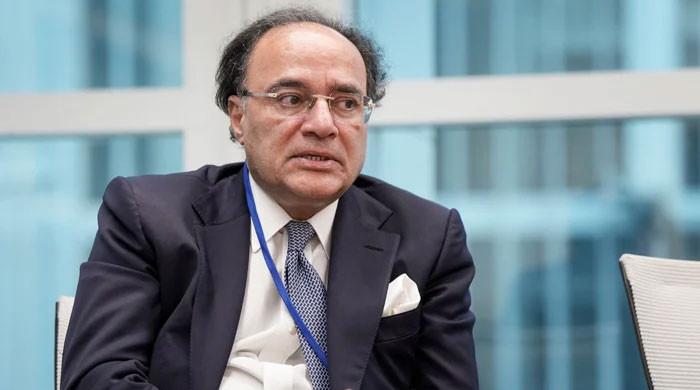
Ali Pervaiz Malik, Federal Minister for Petroleum and Natural Resources, stated that the new pricing formula has the backing of the International Monetary Fund (IMF).
When asked why refineries are facing losses in April despite profitability in March, he explained that the government is making extensive efforts to support the refining sector. These efforts aim to facilitate refinery upgrade projects and offset losses resulting from the sales tax exemption introduced as a budgetary measure in the Finance Bill for FY2025.
The minister acknowledged that refineries contributed approximately Rs 7.1 billion from their March profits to compensate Pakistan State Oil, which had incurred losses due to the high cost of diesel. He further noted that, beyond assisting PSO, refineries have also supported the government in multiple ways.
Officials also highlight that even when refineries earn profits, a substantial portion flows back to the government. In one cited example, a refinery earning Rs70 billion contributed Rs30 billion directly to the national exchequer, while about 60 per cent of the remaining Rs40 billion was also absorbed through dividends.
Beyond current financial pressures, stakeholders point to long-standing structural issues. They argue that from 2002 to 2021, the government failed to provide consistent support to the refining sector, contributing to recurring losses under previous pricing regimes. Policy inconsistency over the years has discouraged both local and foreign investment, resulting in no major greenfield refinery projects, while progress on brownfield upgrades has remained slow due to concerns over policy predictability and returns.
In the recent past, key listed refineries including National Refinery Limited (NRL), Cnergyico (CPL), and Pakistan Refinery Limited (PRL)—all heavily reliant on imported crude, struggled financially and reported significant losses over the years. The profitability seen in the current fiscal year’s first nine months was therefore considered a rare recovery, now at risk due to the revised pricing framework and rising import costs.
Experts emphasise that refineries are not merely commercial entities but are critical to national energy security. During recent regional volatility, local refineries ensured uninterrupted fuel supply across Pakistan, helping the country avoid potential shortages that could have arisen from reliance on imports. Their importance becomes even more pronounced during crises, when supply chains are disrupted and import costs surge.