Megawatt nationalism is over
The cheapest power plant in the next budget may be the one Pakistan wisely decides not to build
Published May 22, 2026
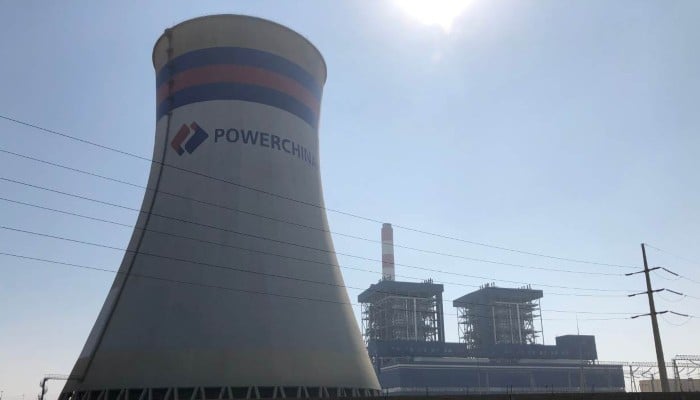
Pakistan's federal budget is an energy policy statement, a climate policy statement and a fiscal survival plan. The central question before the budget makers is not how much money should be allocated to the power sector, but what kind of power sector public money should be allowed to create.
For decades, Pakistan's Public Sector Development Programme treated electricity development as a race for more megawatts, more generation projects and more sovereign-backed capacity. That logic belonged to the age of loadshedding. Today, it belongs in a museum, preferably one with unpaid capacity charges displayed at the entrance.
Pakistan is facing a shortage of affordability, flexibility, transmission capacity, distribution efficiency and fiscal discipline. The country has built a power system in which consumers are asked to pay not only for electricity consumed, but also for electricity that exists only on paper through capacity payments. This is the main issue in Pakistan's energy economics problem. When the system is burdened by underutilised fossil fuel plants, take-or-pay contracts, exposure to imported fuel and weak demand, every new generation project adds fiscal weight rather than economic strength.
First, the PSDP must be rationalised because the old development model has collapsed. In a resource-constrained budget, every rupee spent on electricity must pass a strict test: does it reduce the average cost of power, improve system flexibility, lower imported fuel dependence, support renewable integration and reduce future fiscal liabilities? If not, it should not be called development. It should be called deferred circular debt.
The next budget should therefore shift from capacity expansion to capacity rationalisation. Pakistan does not need a PSDP that adds another layer of fixed costs to an already overburdened power system. It needs a PSDP that reduces uneconomic capacity, modernises the grid, unlocks distributed generation and protects consumers from the structural inefficiencies of the existing model. The reform principle should be clear: no new public funding for generation unless it directly supports least-cost dispatch, storage, grid stability, renewable integration or retirement of costlier fossil capacity.
Second, Pakistan must reorient PSDP spending towards distributed generation, particularly rooftop solar plus battery energy storage systems. Rooftop solar should not be viewed only as a private investment by wealthier households. Properly designed, it can become a national cost-reduction instrument. But solar alone is not enough. Standalone solar reduces daytime consumption but may increase evening grid stress. Solar plus batteries can charge during the day and discharge during peak hours, reducing expensive fuel-based generation, transformer stress and household exposure to tariff shocks.
This is where fiscal policy must become smarter. Instead of spending billions every year to reduce electricity bills after they are generated, the state should invest once to reduce the need for subsidised grid units in the first place. A dedicated Distributed Energy and Storage Fund should be created under the PSDP. Its purpose should not be a subsidy mela, but a structured investment window for rooftop solar, battery storage, smart inverters, net billing infrastructure, feeder-level monitoring and distribution-level hosting capacity upgrades.
Third, grid modernisation must become the central priority of electricity-related PSDP allocations. Pakistan’s problem is not merely how to generate electricity more cheaply. It is how to move, manage, store, dispatch, price, and balance it. Higher integration of variable renewable energy requires advanced metering, digital distribution systems, transformer mapping, smart inverters, automated voltage control, storage and better forecasting. Without these investments, Pakistan will continue treating solar as a threat rather than a resource.
Grid modernisation is a fiscal reform. Better grids reduce losses, opportunities for theft, peak procurement costs, transformer failures and unnecessary capacity additions. Public money should not compete with households and private investors in building generation. Public money should build the platform on which households, firms, communities, and industries can invest in clean energy without destabilising the system. In the old model, the state built power plants. In the new model, the state must build the intelligent grid.
Fourth, Pakistan must create a budgetary window for early retirement and repurposing of fossil fuel-based power plants. This is not environmental romanticism. It is fiscal realism. Imported coal, furnace oil, RLNG and inefficient thermal assets expose Pakistan to foreign-exchange pressure, fuel-price shocks, emissions costs and capacity-payment liabilities. The budget should establish a Fossil Capacity Rationalisation Facility that blends climate finance, concessional loans, grants, guarantees, carbon market revenues, and domestic fiscal savings to retire, refinance, renegotiate, or repurpose selected plants.
This facility should not be based on slogans. It should be based on asset-level diagnostics. Plants should be prioritised according to fuel import exposure, utilisation rate, emissions intensity, remaining contractual life, capacity payment burden, location and repurposing potential. Some plants may be converted into battery storage hubs, synchronous condenser facilities, grid-support assets, clean industrial zones or transition training centres. Others may require negotiated retirement or debt restructuring. Pakistan should approach climate finance institutions not with general appeals, but with bankable transition projects.
Fifth, the sequence of reforms must be corrected. Pakistan's reform debate is upside down. It begins with subsidy rationalisation while leaving capacity irrationality intact. That is like asking passengers to pay higher fares while the bus company keeps leasing empty buses in dollars. Capacity rationalisation must come before subsidy rationalisation. First, reduce the system's fixed-cost burden. Second, improve dispatch and grid efficiency. Third, modernise distribution. Fourth, reform tariffs and subsidies. If the order is reversed, the burden falls on consumers before the system has corrected its own waste.
The IMF's emphasis on subsidy reform may be fiscally understandable, but it is analytically incomplete if it treats household subsidies as the main distortion while capacity payments remain the elephant in the control room. Consumers who use less than 200 units are not overconsumers of electricity. They are rationing comfort, cooling, lighting, refrigeration, and dignity. A family struggling to stay below the protected-consumer threshold is not living in energy abundance. It is living under an electricity poverty ceiling.
Yes, there is misuse through multiple meters and artificial fragmentation of consumption. That must be addressed through NADRA-linked household verification, census data, BISP and NSER eligibility checks, and better consumer mapping. But misuse at the margin cannot justify a reform that ignores fixed capacity costs at the core. If subsidies are removed without reducing system cost, consumers pay more but the power sector does not become efficient. It simply becomes more expensive to survive.
Sixth, if subsidy removal is compulsory under IMF conditionality, then subsidy rationalisation must become subsidy reorientation. The state should not limit support to monthly cash transfers or bill rebates. It should convert part of the subsidy envelope into an energy asset transfer programme for protected consumers. This means small rooftop solar systems, modular batteries, efficient fans, LED lights and smart meters for low-income households.
A Solar plus BESS for Protected Consumers Programme should begin in high-poverty, high-heat, and high-loss areas. The package can include one to two kilowatts of rooftop solar, where technically feasible, a small battery for critical evening load, efficient appliances, and metering support. Ownership may be household-based, community-based or utility-leased, depending on roof availability and local risk. Financing can come from BISP-linked vouchers, concessional climate finance, results-based grants, carbon finance and savings from reduced subsidy claims.
This approach changes the politics of reform. People are more likely to accept subsidy reform when it gives them a ladder, not when it removes the floor. A poor household does not need only help to pay the bill. It needs help to reduce the bill permanently. Social protection must now become an energy productivity policy.
Finally, climate finance must be treated as a fiscal instrument, not a conference slogan. Pakistan should prepare a pipeline of early-retirement, distributed solar, storage and grid modernisation projects for the Green Climate Fund, the World Bank, the Asian Development Bank, the Islamic Development Bank, bilateral climate windows, Article 6 cooperation, and credible carbon market mechanisms. Climate finance should not decorate business-as-usual projects with green labels. It should reduce transition costs, protect workers, retire inefficient assets, and lower the fiscal burden on the power sector.
The verdict is simple: the next budget must not buy more capacity before it buys intelligence, flexibility and rationalisation. Pakistan should not use scarce public money to expand a power system whose existing capacity is already underutilised and fiscally expensive. It should modernise the grid, democratise distributed generation, protect vulnerable consumers through energy assets and retire uneconomic fossil capacity through climate finance. The era of megawatt nationalism is over. The cheapest power plant in the next budget may be the one Pakistan wisely decides not to build.
The writer has a doctorate in energy economics and serves as a research fellow at the Sustainable Development Policy Institute (SDPI).
Twitter/X: @Khalidwaleed_
Email: [email protected]
Disclaimer: The viewpoints expressed in this piece are the writer's own and don't necessarily reflect Geo.tv's editorial policy.
Originally published in The News