Balochistan govt unveils over Rs1tr budget for FY2026-27
Provincial govt seeks 7% hike in salaries and pensions of provincial employees
Published June 17, 2026
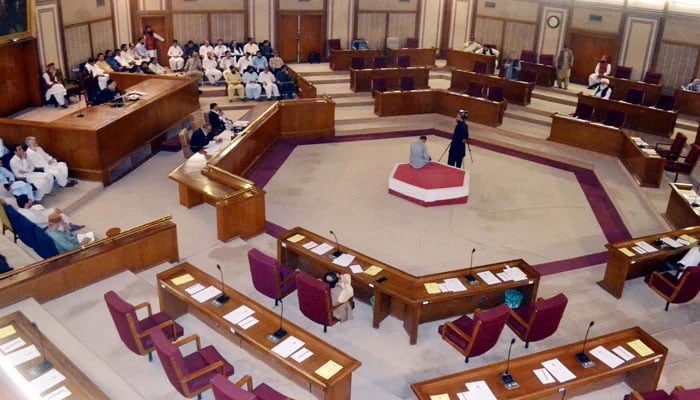
- Finance Minister Mir Shoaib presents budget.
- Development budget set at Rs206 billion.
- 1,000 jobs to be introduced in newly formed districts.
The Balochistan government on Wednesday unveiled a budget for the fiscal year 2026-27 with a total outlay of Rs1089 billion.
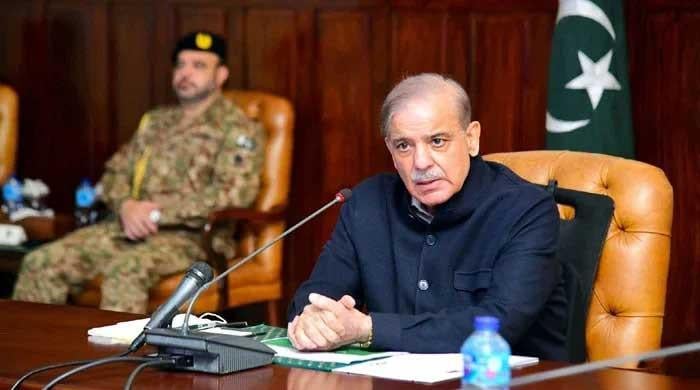
Provincial Finance Minister Mir Shoaib Nosherwani presented the budget in the Balochistan Assembly, outlining allocations aimed at balancing development priorities with fiscal discipline.
Presenting the budget, Mir Shoaib said that the development budget has been set at Rs206 billion, including Rs106 billion for new schemes and Rs100bn for the completion of ongoing projects.
In addition, the province will benefit from Rs45bn in federal development grants and Rs40bn through foreign project assistance, which are separate from the provincial development program.
He announced an increase of 7% in salaries and pensions of provincial employees on the federal model, despite the difficult financial situation.
Shoaib Nosherwani announced the creation of 5,000 new jobs in the provincial budget for the fiscal year 2026-27, aimed at expanding employment opportunities for youth across the province.
According to the budget details, 3,000 jobs will be created in the Departments of Schools and Colleges to strengthen the education sector.
The health department will receive 500 new posts to improve medical services and address staffing shortages.
In addition, 1,000 jobs will be introduced in newly formed districts to enhance administrative capacity, while another 500 posts will be allocated across various provincial departments.
The Balochistan government has set a revenue target of Rs170 billion for the upcoming fiscal year 2026-27, according to budget documents presented in the provincial assembly.
The provincial government has earmarked a total of Rs96 billion for the health sector in the provincial budget for fiscal year 2026-27, underscoring its commitment to improving healthcare facilities across the province.
The provincial finance minister announced that Rs6 billion has been allocated under the development budget and Rs90bn under the non-development budget.
He emphasised that healthcare remains the government’s foremost priority, noting that a strong health system not only improves quality of life but also contributes to economic growth.
The minister highlighted key allocations, including Rs7.7bn for initiatives such as the Balochistan Health Card, PPHI programs, medicines, trauma centres, Sheikh Zayed bin Nahyan Hospital, and nutrition projects.
The budget also includes the creation of 500 new posts in the Health Department to strengthen service delivery.
The Balochistan government has unveiled 11 new projects in the provincial budget for fiscal year 2026-27, aimed at reducing the financial burden on the provincial exchequer, improving agriculture, promoting online business, enhancing mineral resources, and raising the quality of development schemes.
Shoaib Nosherwani said that one of the key initiatives is the introduction of a comprehensive insurance system through Bolan Insurance Company Limited under a public-private partnership.
This will cover government properties, accidents, natural disasters, health, and other projects, ensuring compensation for financial losses without adding extra strain on the provincial treasury.
To strengthen agriculture and provide affordable energy, Rs3.8 billion has been allocated for the solarisation of tube wells.
The government has also earmarked Rs10 billion for the establishment of the Bank of Balochistan, and Rs3 billion for the creation of the Balochistan Aviation Company, of which Rs2 billion will be returned by the company.
Other initiatives include the establishment of third-party validation mechanisms to improve the quality and design of development projects, the creation of e-commerce centres to promote the digital economy and online business, and the allocation of Rs490m to boost mineral resources and investment opportunities.
To modernise revenue collection, the government has made it mandatory that all provincial taxes and fees be paid through Balochistan e-Pay, replacing manual collection methods.
This system will allow citizens to pay their dues online from anywhere in the country, with funds transferred directly into government accounts, reducing inconvenience for the public and preventing revenue losses.