Communist Cuba turns to Capitalism to save its economy: Here's how
The situation in Cuba has worsened since the Operation Absolute Resolve
Published June 19, 2026
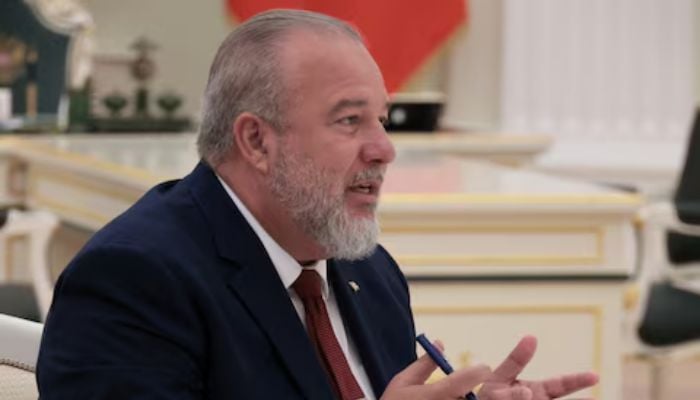
Cuba’s Communist government has turned to Capitalist economic measures in a bid to save the island’s collapsing economy amid U.S. sanctions.
In a historic development, the Cuban President Miguel Diaz-Canel-led government has passed 176 free market reforms, limiting the government’s interference in market operations in a bid to attract private investors.
The landmark session of the Cuban National Assembly on Thursday, June 18, saw the Prime Minister Manuel Marrero outlining the reforms. He revealed that under new laws, the foreign investors will no longer be required to form a joint venture with the government, instead, the enterprises will be allowed to acquire stakes in the previously state-owned companies.
For the unversed, in the communist form of government, the ruling authority decides all the business-related affairs, whereas, capitalism offers a free market system, meaning the investors can decide their own business affairs without any governmental interference.
The reforms have been described as the most profound economic changes since the 1959 revolution. President Diaz-Canel; however, vowed to stay on the course of socialism, saying, “Socialism or death!”
Key reforms approved by Cuba
- Foreign investors no longer required to partner with the Cuban government in joint ventures.
- State-owned enterprises can be converted into shareholding companies with private equity participation.
- Private banks will be allowed to operate in Cuba.
- Private real estate development will be permitted.
- State-owned property can be sold to domestic and foreign investors, including Cubans living abroad.
- Entrepreneurs will be allowed to own multiple businesses.
- The cap of 100 employees for private companies will be removed.
- A digital foreign-exchange market will be established.
- Private currency exchange businesses will be authorized.
- Greater foreign investment will be encouraged across multiple sectors.
- Private businesses will gain access to sectors previously reserved for the state.
- New tax reforms will shift more responsibility for funding public services to businesses.
- Uniform legal rules will apply to state-owned, private, domestic and foreign enterprises.
- Price controls on many goods will be reduced or eliminated.
- Reforms will affect major sectors including energy, agriculture, tourism and foreign trade.
- Municipal governments and state companies will receive greater autonomy.
- Import and export procedures will be liberalized for private economic actors.
The development comes as the U.S. has intensified its pressure on the Caribbean nation. America and Cuba have had hostile relations for decades due to different styles of governance and mutual animosity between both countries since the communist government took charge of Havana in 1959.
President Trump has openly touted attacking and taking over the island which is located just 90 miles from Florida.
The situation in Cuba has worsened since the Operation Absolute Resolve, which resulted in the capture of Venezuelan President Nicolas Maduro.
He was the closest ally of the Cuba and his arrest by the U.S. forces and imposed oil blockade has brought the country on the verge of collapse.