PML-N-PPP politics beyond AJK polls
What has come out from the election campaign by both PPP and PML-N is very unlikely to lead to any major break-up
Published July 24, 2026
As all is set for polls in Azad Jammu and Kashmir on July 27th, the boycott of Pakistan Tehreek-e-Insaf ( PTI), which had swept the last elections, leaving "political ground" open for the other two mainstream parties, Pakistan Muslim League (PML-N) and Pakistan Peoples’ Party (PPP), who are now in the race to form the next government in AJK.
Irrespective of the outcome of the polls, which for the first time are being held in four phases, raised questions about its fairness and impartiality, but its result would have its impact beyond AJK.
AJK electoral politics have their own dynamics, and normally the party in power in Islamabad has the advantage. Even when indigenous parties like late Sardar Abdul Qayyum’s Muslim Conference used to win in the past, it got support from the party in power in Pakistan.
Political observers believe that if more indigenous parties like the Muslim Conference have emerged and the mainstream political parties in Pakistan had taken the backseat, democracy would have taken strong roots there.
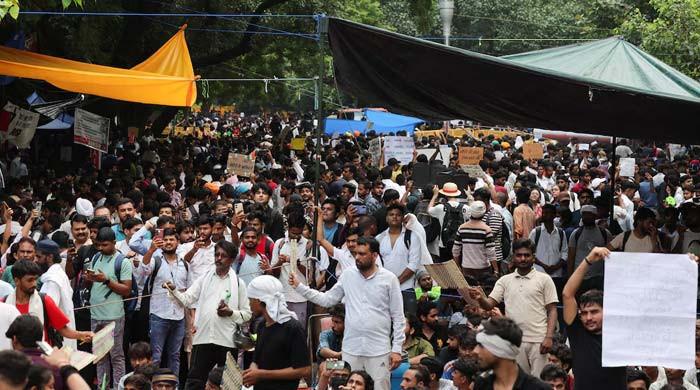
Challenges are enormous, but the party which will win the July 27th polls or, for that matter, form the government in AJK would have a daunting task of handling the ongoing protest from the recently declared outlawed Joint Awami Action Committee, JAC.
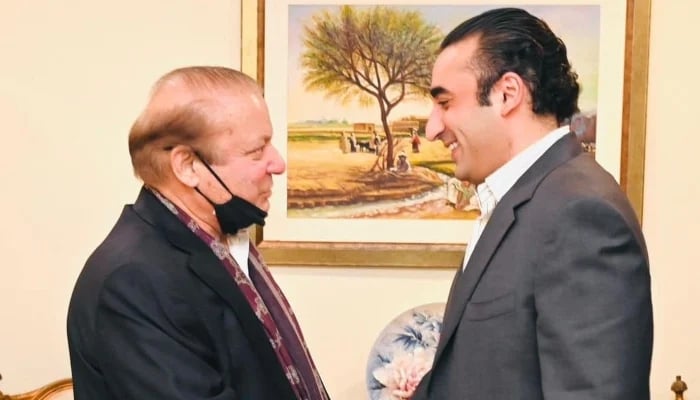
The importance of these elections could also be judged from the participation of top leaders of PML-N and PPP in the campaign — including former prime minister Nawaz Sharif, who after a long break looked active in AJK.
Besides, PPP Chairman Bilawal Bhutto Zardari, who also led from the front in the campaign in Gilgit-Baltistan and got a positive result now hoping for a win here, which the party believes would be a real boost for the PPP. But the PPP in AJK has a disadvantage as they stand hardly any chance on the 12 seats of "Refugees," as nine of them are in Punjab where the PPP hardly has any vote bank. They are still hoping for two seats in Karachi.
Had PTI been in the race, the PML-N would not have that advantage as the former has strong roots in Punjab as well. So, PTI's boycott actually went in favor of the PML-N.
PML-N, like PPP, also knows the importance of the outcome of these polls, and no wonder why Punjab Chief Minister Maryam Nawaz especially flew along with her father in the campaign.
In her presence, Nawaz had not only announced "development projects" like Metro and Motorway but, even surprised party leadership when he asked PM Shahbaz Sharif: if party wings in AJK, he would like to be the PM. Even if it was in a lighter tone her certainly made the "headline" for the media.
PTI boycott has given an additional advantage to PML-N, which will almost get a "walkover" on 12 refugee seats, and PML-N leader Rana Sanaullah was not all that wrong when he said, “Our counting starts from 11.” Thus, PPP surely has this disadvantage, and their leadership are well aware of these facts.
The question is why has the PTI boycotted these polls? I asked this question to the party's Secretary General, Salman Akram Raja.
“Yes, we have decided to boycott the polls as we are supporting the ongoing protest in AJK,” he said, adding that four of its members are contesting, against whom the party will take action.
PTI had swept the last polls but after "regime change", 26 out of 30 elected members switched loyalties, and the party fears history would repeat if we had decided to contest, he added.
It would be interesting to see how far the PTI boycott, ongoing protest, and disruption in "internet service" would"hit" the voter turnout on the polling day.
Whether the Election Commission of AJK would announce the result of each phase separately or after completion of all phases would be interesting to watch. The party which wins the first phase would surely have an advantage.
Despite the harsh tone used by the leadership of the two parties during the election campaign, it has generally been believed that there is little rather than no chance of either of the two discontinuing their coalition status in Islamabad for some "obvious" reasons.
Had PTI been in the race, these two would not have attacked each other in such a tone. On the contrary, they would have either jointly contested the poll or formed the coalition government.
Historically, Kashmir praised the executed prime minister Zulfiqar Ali Bhutto for his role in raising the Kashmir issue, but in the post-Benazir Bhutto era, PPP’s popularity has gradually declined.
PML-N and PPP have a long history of "love and hate" relationship and are natural adversaries for a simple reason: the birth of PML-N after the 1985 elections on the non-party basis was designed to counter PPP in Punjab by former military dictator General Zia ul Haq.
The two parties' top leadership — Nawaz Sharif and assassinated Benazir Bhutto — later admitted that they were used against each other when both were ousted and stopped from contesting the polls in the 2002 elections. All this led to the Charter of Democracy (COD) in 2006.
While COD was not fully enforced, it certainly set certain parameters of allowing each other to complete their term in office i.e, the five-year term. Had COD been fully enforced, Pakistani politics could have been different.
While their coalition government could not last in 2008, at least both PPP and PML-N for the first time completed their term. Their differences would have further sharpened had the third force in the form of PTI not emerged in 2013.
The PTI rise as the third option and the kind of support it started getting brought PML-N and PPP closer to each other. In 2014, during Imran Khan’s 124-day dharna, which almost led to the fall of the Nawaz government, the PPP, despite being in the opposition, strongly opposed any move to derail democracy.
Thus, as long as the PTI or Imran factor is there, the two parties would see each other as "partners" but, in reality, they are adversaries. So, chances are that in the post-AJK elections we may see both PPP and PML-N on one page on matters of "mutual interest".
As far as elections are concerned, perhaps, for the first time, general elections in Azad and Jammu Kashmir are being held in phases, and if results of each phase be announced before completion of the entire polls, it could surely raise questions of the election’s credibility in an uncertain and tense atmosphere.
As they say, "politics is the game of possibilities and opportunities". PPP and PML-N are natural adversaries, but circumstances brought them closer in the wake of the rise of Imran Khan and PTI. And as the situation stands today, one has to wait and see the post-AJK election scenario, but, its result would certainly have an impact on the post-election politics of the two parties besides PTI itself.
What has come out from the election campaign by both PPP and PML-N is very unlikely to lead to any major break-up, but their relationship and understanding may not remain the same.
The writer is a journalist and analyst of Geo, Jang and The News. He can be reached on X: @MazharAbbsGEO