Scientists grow Human Brains in lab for seven years in stunning breakthrough
The researchers studied 34 organoids and repeatedly analyzed their RNA over the five-year period
Published August 25, 2026
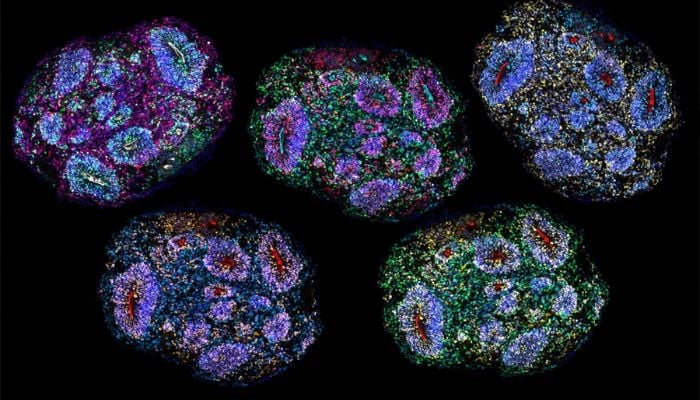
Scientists have managed to keep tiny human brain-like structures growing in a laboratory for years, with some of the oldest cultures now reaching seven years and offering researchers an unusual look at how the human brain develops over time.
The structures, known as brain organoids, are small clusters of human brain cells grown from stem cells. They are not fully developed human brains, but simplified models that allow scientists to study processes that would otherwise be extremely difficult to observe.
A team led by Harvard University stem-cell researcher Paola Arlotta recently reported keeping brain organoids alive and developing for five years, far beyond the periods typically used in laboratory research.
The researchers studied 34 organoids and repeatedly analyzed their RNA over the five-year period. They found that the cells continued to change and mature, following a developmental sequence that broadly resembled the early development of the human brain.
What makes the discovery particularly interesting is that the cells appeared to retain a kind of biological record of their development.
Researchers found that genetic markers of biological age closely tracked the amount of time the organoids had spent growing in the laboratory. In other words, the tissue appeared to retain molecular evidence of the developmental stages it had already passed through.
“This work showed that it’s actually possible to not just have these organoids survive in culture, but also continue to change, develop, and mature,” Arlotta said in a statement cited by researchers.
The breakthrough could give scientists a new way to investigate neurological conditions and test potential treatments by observing human brain cells over much longer periods.
Previously, one of the major limitations of brain organoids was their relatively short lifespan. A previous record reported in 2021 involved organoids maintained for 694 days.
Meanwhile, some of the researchers' organoids have now reached seven years, although the oldest cultures are becoming increasingly fragile.
Scientists are now looking at whether the same stages of brain development could eventually be reproduced much faster, effectively creating what Arlotta described as a biological “time warp.”