Scientists create mice with ‘half-human' brains: Could they eventually think like us?
Researchers say the experiment went through extensive ethical review
Published September 18, 2026
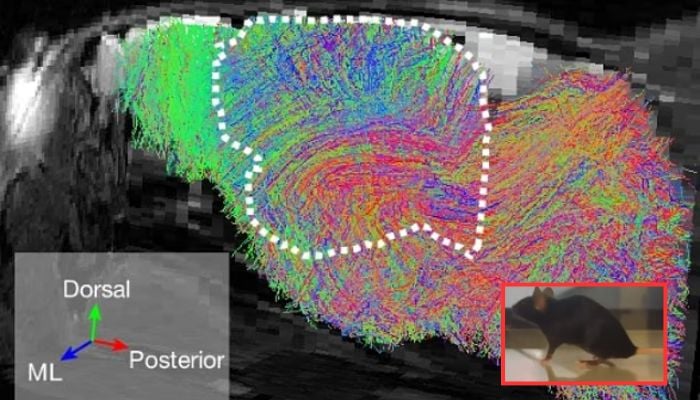
Scientists have created mice with brains that are around half human by volume, an experiment that could help treat serious brain diseases but also raises an obvious question: could these animals eventually start thinking like us?
Researchers at Stanford University first genetically engineered mice so they were born without most of their cerebral cortex: the outer part of the brain involved in things such as thinking, memory and decision-making.
That left an unusually large empty space inside their skulls.
Scientists then transplanted tiny pieces of human brain tissue, grown from stem cells in a laboratory, into that space.
Within months, the human tissue had expanded to fill more than 90% of the space left behind by the missing mouse cortex and started making connections with the animal's own nervous system.
Some human nerve fibres even reached into the spinal cord.
By volume, human tissue eventually accounted for roughly half of the mice's brains.
So, did scientists accidentally create super-intelligent mice?
The animals were put through behavioural tests and researchers found no evidence that the human cells had given them human-like intelligence. The mice behaved largely normally, although there were some differences in memory and movement.
The experiment wasn't done simply to see if human brain cells could survive inside another animal.
Scientists struggle to study living human brains, particularly diseases that begin while the brain is developing.
These mice could give researchers a way of watching human brain cells develop inside a living body and studying conditions including schizophrenia, epilepsy, cerebral palsy and rare forms of dementia.
Researchers say the experiment went through extensive ethical review, while outside experts have warned that animal welfare and any signs of unusual cognition will need to be closely watched as this technology becomes more advanced.