Earth's Center of Mass is moving: Should we be worried?
NASA finds Earth is shifting its weight
Published September 19, 2026
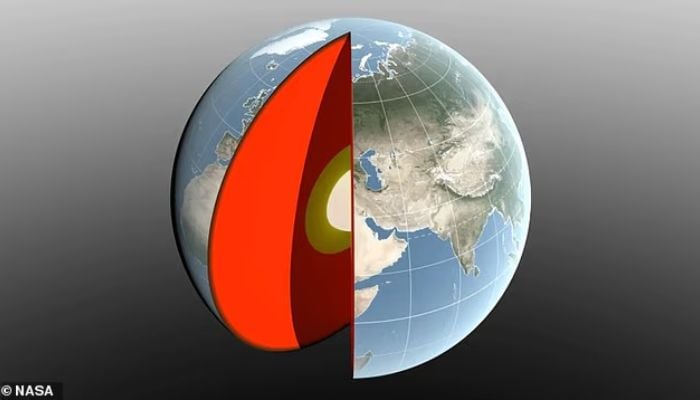
Earth's center of mass is moving throughout the year, but before you start worrying about the planet being knocked off balance, the shift is incredibly small, in millimeters.
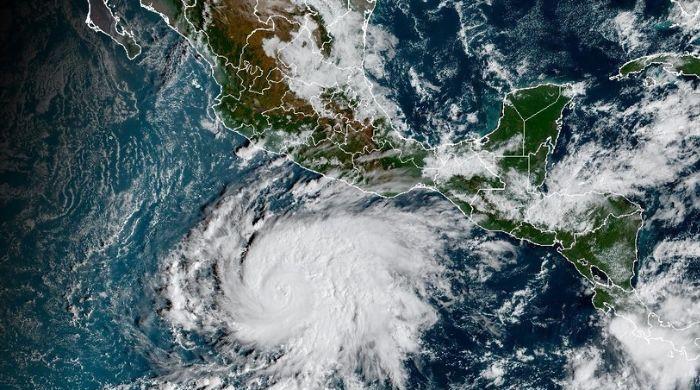
The National Aeronautics and Space Administration (NASA) scientists have taken a closer look at how Earth's center of mass, known as the geocenter, moves as huge amounts of water, ice and even air shift from one part of the planet to another.
If Earth were a completely solid ball, its center of mass would sit neatly at its geometric center.
But Earth isn't a solid ball and it has oceans moving around, snow building up and melting, rivers filling with rainwater and enormous masses of air constantly shifting through the atmosphere.
All that weight has to go somewhere.
In March, for example, snow building up across North America and Eurasia can move Earth's center of mass about three millimeters toward the North Pole.
Rainwater in the Amazon basin reaches its peak around April, with the extra weight pulling the center roughly 2.2 millimeters toward South America.
Later in the year, water moving into the oceans helps shift it toward the South Pacific.
It sounds dramatic when described as Earth's center moving, but NASA says these changes happen on a tiny scale and repeat as the seasons change.
And the latest research actually contains some reassuring news.
Scientists now estimate the annual back-and-forth movement to be around half of what they thought it was eight years ago.
So is any of this dangerous for humans?
Not in the sense of Earth suddenly becoming unstable, changing its orbit or threatening life on the planet.
The reason scientists care so much about a movement of just a few millimeters is because modern technology has become incredibly precise.
Satellites orbit Earth's center of mass, making an accurate measurement of its location important for GPS, mapping and measurements of changes in sea level.
Even a small error matters when scientists are trying to work out whether an ocean has risen by a few millimeters.
NASA researchers believe getting a better handle on the movement could eventually improve everything from global shipping to precision agriculture.
It could also help scientists track how water and ice are moving around Earth as the climate changes.