On a darkling plain
Pakistan has recorded 83% increase in violence-linked fatalities in third quarter of current year, shows report
Published October 04, 2026
Once more, I am tempted to invoke the last lines of Matthew Arnold’s ‘Dover Beach’: “And we are here as on a darkling plain/Swept with confused alarms of struggle and flight,/Where ignorant armies clash by night”.
I suggest the poet’s “ignorant armies” refers to our political adversaries, forever at each other’s throats. This is what we have been watching this week, the latest episode in our continuing political thriller.
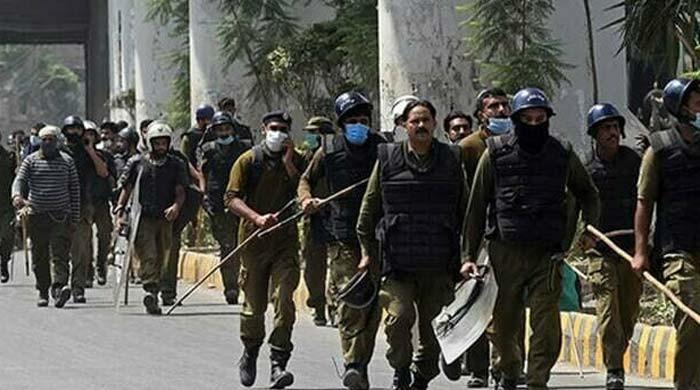
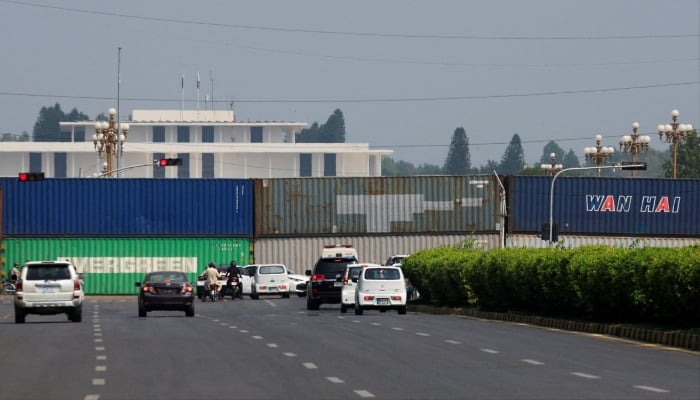
In a sense, the previous episode concluded last Sunday when the PTI’s long march, aimed at securing the release of former prime minister Imran Khan from prison, was postponed for a week. Meanwhile, the security arrangements to block the protesters from arriving in Islamabad have remained in place. This in itself is a spectacle, with huge containers used like interlocking Lego building blocks. That this ‘game’ amuses no one and disrupts the lives of entire communities is something else.
So, this weekend has witnessed a series of negotiations between the government and the opposition, led by the PTI. It was as suspenseful and thrilling as the chase sequence in a movie thriller. Tension is built, leaving the audience on the edge of their seats. To continue the metaphor, we are in for a wild ride, no matter how the script is drafted.
Throughout the week, the plot steadily thickened. Against the backdrop of a rising wave of terror, the ruling allies held serious discussions about either imposing the governor’s rule in Khyber Pakhtunkhwa and thereby sacking the chief minister’s belligerent administration or enforcing emergency across the country.
The 277th Corps Commanders’ Conference held in Rawalpindi on Friday issued a warning that any attempt to create agitation or a ‘May 9-like situation’ would be dealt with decisive force. The conference was presided over by the CDF-COAS Field Marshal Asim Munir.
Ostensibly, the main issue in the deliberations of the army top brass would be the ‘targeted action’ being taken against Afghanistan for providing sanctuary to the TTP terrorists operating in Pakistan. However, a statement issued by the Inter-Services Public Relations (ISPR) also “underscored the importance of internal stability and resolved that any attempt to cause agitation or create May 9-like situation, on any pretext whatsoever, will be dealt with decisive force and rule of law, without hesitation and discrimination”.
It should also be noted that Pakistan has recorded an alarmingly high 83% increase in violence-linked fatalities in the third quarter of the current year. This escalation was revealed this week in a report by the Centre for Research and Security Studies (CRSS), Islamabad.
It was in Balochistan where fatalities more than tripled, and the province accounted for nearly 88% of the national increase. Balochistan overtook Khyber Pakhtunkhwa during the specified period as the country’s worst region in both violence-related deaths and recorded incidents. Incidentally, this surge in terrorism and counterterrorism deaths in the third quarter of 2026 has reversed a declining trend recorded in the first and second quarters of the year.
This environment of deep apprehension about what might happen has naturally provided plenty of grist to the mill for our political pundits, who are lodged in the prison of their partisan formulations. This seemed to be a countdown to some form of disaster. In fact, they seem clueless about the consequences of the ongoing confrontation between Imran Khan’s followers and supporters of the current ruling arrangements. Divided opinions within either faction may further complicate the situation.
With all this disquiet swirling around, people at large are under great stress and unable to make sense of what is happening. There was some conversation about the mental health situation at the global mental health summit held in Islamabad. The National Mental Health Policy was launched at the inaugural session on Thursday.
Anyhow, the existing situation is expectedly dismal. According to estimates presented by Federal Health Minister Mustafa Kamal, around 24 million people in the country require psychiatric assistance. But we have fewer than one psychiatrist for every 500,000 people.
In short, Pakistani society is seriously unwell in most respects, and it is a manifestation of this multi-layered malady that the system of governance has professedly ‘collapsed’. Yet the real challenges Pakistan faces remain largely unattended because rulers’ attention is diverted by political disputes. Our lack of stability on this front has enhanced the incidence of social and economic disability that has an impact on the daily lives of the citizens.
This mismatch is noticed in many developed societies at this time when things all around are falling apart. I noticed this point in a report on stress in America, compiled by the American Psychological Association. It found that a majority of adults reported feeling isolated and more anxious about the future than they used to be. The report said that much of the trouble could be laid at the door of “our impossible politics”. Almost two-thirds of respondents cited “societal divisions” as a significant stressor.
In Pakistan, the deprivations of the people are so much more acute than in most other countries. Our human development indicators are worse than any other South Asian country, which is truly a shame. Our capacity to endure economic, social and mental deficiencies is very limited. That is why our people buckle so easily under pressure.
Every week, I find a number of stories in the media that certify that the certify that the Pakistani society is steadily losing its equilibrium. There is also evidence that the administration is unable, as well as unwilling, to establish social harmony and enforce rule of law. Let me conclude with one headline from this week, datelined Islamabad, and leave you to ponder the message it brings: “Three policemen found running ‘dacoits gang’”.
The writer is a senior journalist. He can be reached at: [email protected]
Disclaimer: The viewpoints expressed in this piece are the writer's own and don't necessarily reflect Geo.tv's editorial policy.
Originally published in The News