Fighting terror in the court
Anti Terrorism Act of 1997 procedures proved inadequate against organised groups such as TTP and BLA
Published October 05, 2026
Pakistan has spent more than two decades fighting terrorism, but arresting suspects has never been the only challenge. The real test is whether the state can investigate them, produce admissible evidence, protect those involved in the case and secure convictions through the courts.
The cost of terrorism has been enormous. According to the National Counter Terrorism Authority (Nacta), Pakistan lost approximately 83,000 lives between 2001 and 2022 and suffered economic losses exceeding Rs35 trillion.
Yet the prosecution system has struggled to deliver results. Figures presented by the Ministry of Interior to the Senate show that between January 2020 and June 2023, 5696 terrorism suspects were sent for trial. Only 671 were convicted, while 776 were acquitted. Many other cases remained pending.
These numbers reveal weaknesses in investigation, evidence collection, witness protection, prosecution and judges’ vulnerability to terrorist reprisals. They also explain why Pakistan needs legal procedures designed for the realities of modern terrorism.
Ordinary criminal law was largely developed to investigate offences after they had occurred. Terrorist organisations operate differently. They use secret networks, encrypted communications, informal financial channels and cross-border sanctuaries. Their members often use assumed identities and communicate through anonymous digital platforms. They also threaten witnesses, prosecutors, investigators and judges. Information collected through surveillance or intelligence operations may identify a suspect, but it does not always meet the evidentiary requirements of a criminal trial.
When prosecution becomes difficult, pressure grows on law-enforcement agencies to operate outside conventional procedures. If a suspect is apprehended but the arrest is not acknowledged or connected to a judicial process, the family is left without information. This creates the space in which allegations of missing persons and enforced disappearances grow.
The answer cannot be to deny the problem. Nor can unlawful detention be justified in the name of national security. Pakistan needs a system that protects the country from terrorism while keeping every detention within the law.
The Anti Terrorism Act of 1997 established the basic framework for dealing with terrorism-related offences. However, its procedures proved inadequate against organised groups such as the TTP and the Balochistan Liberation Army. Section 11EEEE now permits preventive detention for inquiry for up to 90 days where prescribed grounds exist and reasons are formally recorded. The Anti-Terrorism Balochistan Amendment Act of 2025 has further applied this framework across the province. The defined period gives investigators and joint investigation teams time to examine intelligence, establish identities, trace communications, investigate financial links and collect evidence that can be presented in court.
The purpose is simple. Exploit intelligence-led information to unearth a terrorist cell or a terror plot. If allegations cannot be established, authorities must release the detainee. If sufficient evidence is collected during the detention period, the suspect must be formally charged and tried. This movement from apprehension to release or prosecution is essential to addressing allegations of enforced disappearance. Detention never means that a person vanishes from the protection of the law.
Every detainee is registered at an officially recognised facility. The family is informed without delay. Access to a lawyer and relatives is provided. The detainee’s medical condition is documented, and the legality of detention is open to judicial review. Without these safeguards, preventive detention will obviously give legal cover to secrecy. With proper oversight, however, it creates a clear chain of responsibility connecting the arresting authority, the place of detention, the investigation and the final judicial outcome.
The challenge does not end when a case reaches court. Terrorist organisations understand that they do not always need to disprove the evidence. They can defeat a prosecution by frightening a witness, threatening a prosecutor, kidnapping an investigator or killing a judge.
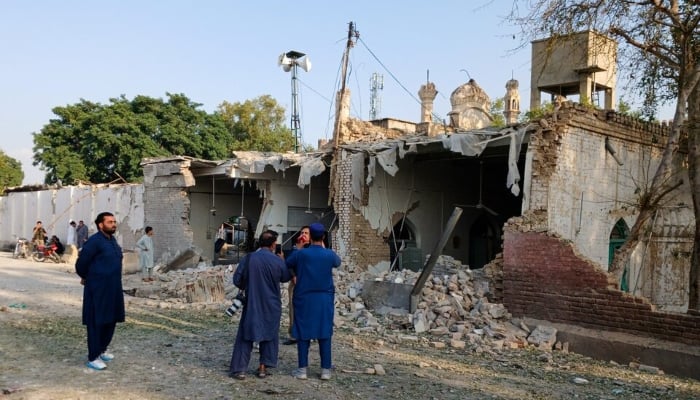
Pakistan has experienced this danger directly. Justice Muhammad Noor Meskanzai, a former chief justice of the Balochistan High Court and Federal Shariat Court, was assassinated in Kharan in 2022. He had previously survived an attack on his convoy. In July 2026, District and Sessions Judge Abdul Hakim Kakar and his security guard were killed when terrorists ambushed their vehicle in Mastung.
Threat extends to police as well. On July 6, 2026, nine policemen embraced shahadat during an attack on a police post in Ziarat. Another 18 policemen were abducted and later martyred. The loss of 27 policemen in a single episode showed how terrorist organisations attempt to weaken the state by targeting those responsible for maintaining law and order.
Punjab has responded by introducing Section 21AAA through the Anti Terrorism Punjab Amendment Act of 2026. It creates a special security framework for judges, prosecutors, witnesses, defence counsel and others involved in particularly dangerous cases. Under this framework, the chief justice of the Lahore High Court may nominate a special judge from among the judges serving in Anti Terrorism Courts. The prosecutor general of Punjab submits a panel of five prosecutors from which one may be appointed to conduct the case.
The identities of judges, prosecutors and witnesses may be protected through coded references, confidential documents, sealed records, secure locations, video proceedings, screens and voice-changing technology.
These arrangements are commonly described as faceless courts. The name can sound troubling, but the purpose is not to remove courts from the process. It is to allow cases to proceed without exposing those involved to assassination, kidnapping or intimidation.
Pakistan is not the first country to use such protections. Colombia concealed identities of judges during its struggle against drug cartels and terrorist groups. Italy created special arrangements for people cooperating with the justice system against the Mafia. The UK permits witness anonymity orders, including the use of pseudonyms, screens and voice modification. France, Spain, Netherlands and Chile also provide various forms of protection for threatened witnesses and informants. The Netherlands used protected witness procedures during MH17 proceedings.
These examples show that identity protection can be a legitimate response to an exceptional threat. According to official sources quoted by The News in September 2026, around 90 suspects had been detained under the new Balochistan framework. Five were released because the allegations could not be established, while 40 were referred for trial pending submission of their challans.
These early figures suggest that the system is beginning to move suspects from preventive detention into a defined judicial process. However, the status of every remaining detainee must also be recorded and disclosed through appropriate legal channels.
Pakistan has belatedly begun building the legal structure needed to close the gap between modern terrorism and legacy criminal code procedures. Delay in aligning the criminal code with the complexities of terrorism resulted in thousands of terrorists being acquitted and going on to kill people again, after having been apprehended at the cost of the lives of law enforcers.
The writer is a public policy expert and leads the Country Partner Institute of the World Economic Forum in Pakistan. He tweets/posts @amirjahangir and can be reached at: [email protected]
Disclaimer: The viewpoints expressed in this piece are the writer's own and don't necessarily reflect Geo.tv's editorial policy.
Originally published in The News