‘Phoenix Planet': New world rises from ashes of a white dwarf
Scientists find first evidence of a planet born from a dead star’s ashes around a white dwarf
Published October 06, 2026
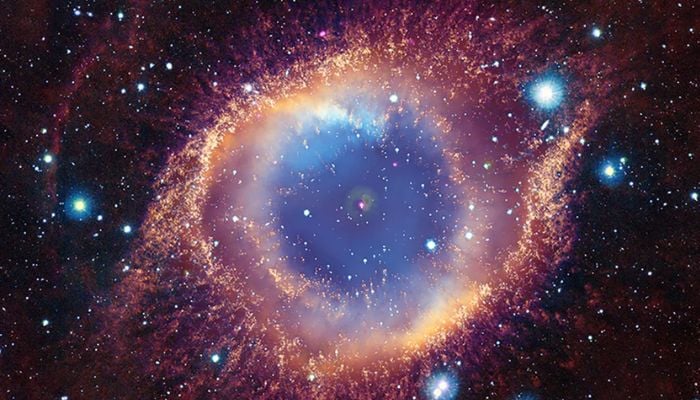
Scientists say they have found the first-ever evidence of a planet born from the remains of its dead star, a cosmic “phoenix” rising from stellar ashes.
The planet is likely a gas giant orbiting a white dwarf called HS 0209+0832, about 270 light-years from Earth, as per the study published on Monday, October 5, in Nature Astronomy.
Researchers assessed observations from NASA’s Hubble Space Telescope and other instruments and found chemical traces suggesting the planet condensed from material expelled by the star as it died.
When a sunlike star dies, it expands into a red giant, sheds its outer layers, and collapses into a dense, hot core called a white dwarf. Some first-generation planets can survive and have found evidence of a second-generation planet, an entirely new world made from a dead star’s debris.
The telltale sign was an unusual abundance of heavy elements, including niobium, raining down onto the white dwarf.
Lead author Jamie Williams, a doctoral student at the University of Warwick, said: “This planetary material is very rich in an element called niobium. It’s the first time this element is found in a white dwarf, and this implies the planetary material is made from the ashes of the star as it died,” he added.
Data from NASA’s TESS mission also suggested a faint brightness repeating every 4.4 days, consistent with a giant planet orbiting the white dwarf. Williams cautioned that the planet is “not confirmed - only a candidate for now.”
But if verified, the discovery suggests more second-generation planets may exist around white dwarfs, and could preview our own solar system’s future.
Coauthor J. Wilson said: “The Sun will eventually become a white dwarf. Maybe the Sun will get a new planet someday!”