Pakistan slams Afghan Taliban's 'diversionary claims', demands provable anti-terror action
Aassertion that Kabul lacks capacity to destabilise Pakistan does not address documented concerns, says ministry
Published October 24, 2026
- Pakistan’s concerns are not based on conjecture, says ministry.
- Pakistan cites United Nations, US reports on outlawed TTP.
- Urges Afghan Taliban regime to act against TTP, BLA.
Pakistan on Saturday rejected the Afghan Taliban regime's assertion that Afghanistan lacked the capacity or interest to destabilise Pakistan, calling Kabul's statements "diversionary allegations" and urging the regime to address Islamabad's longstanding security concerns over terrorist groups operating from Afghan territory.
In a statement issued by the Ministry of Information and Broadcasting, Islamabad said blaming Pakistan's security institutions would not absolve the Afghan Taliban regime of its responsibility to prevent Afghan territory from being used for terrorism against Pakistan.
"Pakistan's concerns are not based on conjecture," the ministry said, citing assessments by the United Nations (UN) and the United States (US) on the presence and activities of terrorist groups in Afghanistan.
The statement referred to the UN Security Council's Analytical Support and Sanctions Monitoring Team's 16th report (S/2025/796) and the US Lead Inspector General's Operation Enduring Sentinel report to Congress for January-March 2026.
According to the ministry, the US report stated that the Afghan Taliban continued to allow the outlawed militant outfit, Tehreek-e-Taliban Pakistan (TTP), to operate from Afghan territory, while Taliban support and greater freedom for the group contributed to increased attacks against Pakistan.
The report estimated the TTP's strength at 4,000 to 6,000 fighters, it added.
"These assessments underscore the seriousness of Pakistan's concerns regarding terrorist sanctuaries and support networks operating from Afghan soil," the ministry said.
Cross-border infiltration concerns
The ministry said Kabul's assertion that Afghanistan lacked the capacity or interest to destabilise Pakistan did not address the documented concerns.
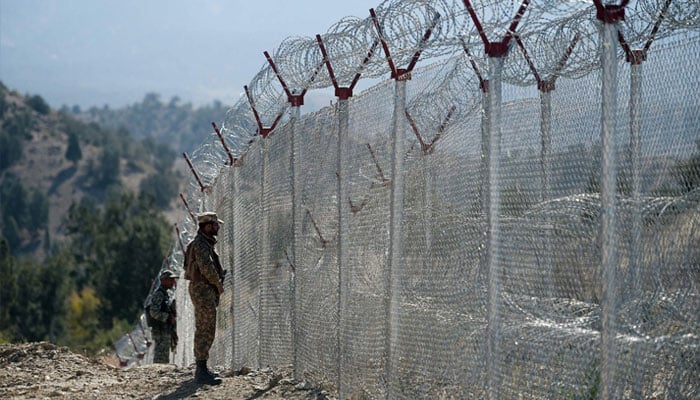
It said repeated attempts by armed terrorists to infiltrate across the Pakistan-Afghanistan border warranted serious scrutiny.
The statement also cited the killing of Afghan nationals and members of terrorist groups during Pakistan's counterterrorism operations, along with the recovery of foreign-origin weapons from terrorist elements.
Pakistan had also raised concerns over the alleged facilitation of terrorist groups by Afghan Taliban officials, including officials in Kandahar.
"Such concerns cannot be dismissed through blanket denials; they require credible explanations and verifiable action," the ministry said.
Call for action against terrorist groups
The ministry stressed that Pakistan's security measures were directed against terrorist threats, not the Afghan people, adding that peace and stability in both countries were closely linked.
It called on the Afghan Taliban regime to end any tolerance, facilitation or support for proscribed terrorist organisations, including the TTP, the Balochistan Liberation Army (BLA) and their affiliates, and ensure that Afghan territory was not used to plan, prepare or launch attacks against Pakistan.
"Attempts to portray Pakistan's legitimate security concerns and necessary defensive measures as hostility towards Afghanistan will neither deflect attention from the issue nor resolve it," the statement said.
Pakistan would continue to take all necessary measures to protect its citizens, sovereignty and territorial integrity, the ministry added.
Islamabad remained open to responsible engagement based on mutual respect, verifiable commitments and concrete action against terrorist sanctuaries, support networks and cross-border infiltration.
However, the ministry stressed that regional peace could prevail only if the Afghan Taliban regime verifiably addressed Pakistan's core concern of terrorism originating from Afghanistan.
Pakistan has witnessed a sharp rise in cross-border terrorist incidents, particularly in KP and Balochistan, since the Afghan Taliban returned to power in 2021.
Pakistan recorded its highest monthly number of militant attacks in 12 years during September 2026.
Islamabad has repeatedly urged Kabul to prevent its territory from being used by militant organisations to carry out attacks inside Pakistan.
Pakistan maintains that the Afghan Taliban regime has failed to take effective action against groups responsible for attacks on Pakistani security forces and civilians.
Despite multiple rounds of talks, Islamabad and Kabul have yet to resolve their differences, with the issue of militant groups operating from Afghan soil remaining a major point of contention between the two sides.