Saving ruins of a lost city, Mohen jo Daro
Pakistan´s bloody fight against militancy has also raised the spectre of destruction
Published May 16, 2017
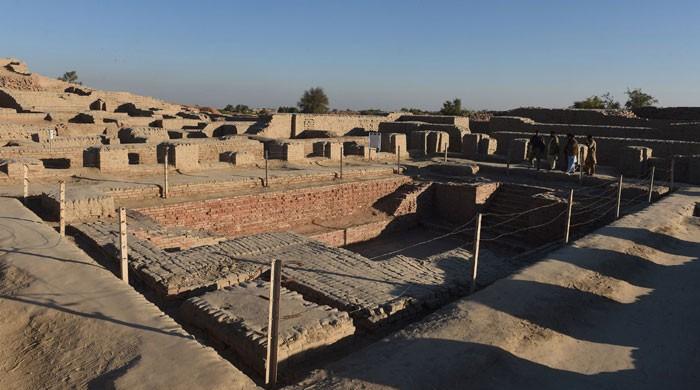
Ruins of the metropolis that existed around 3000 BC, boasting toilets and a water waste system, Mohen jo Daro, could fade to dust and obscurity if nothing is done to protect them, archaeologists have warned.
"Everybody knows Egypt, nobody knows Mohen jo Daro, this has to be changed," says Dr Michael Jansen, a German researcher working at the sun-baked site on the banks of the Indus River in Sindh.
Jansen is at the forefront of a new effort to promote the site internationally while finding ways to protect what is left of the settlement that was once the centre of a powerful ancient civilisation.
In summer temperatures can soar above 46 degrees Celsius (115 Fahrenheit). "There is enormous thermo-stress," says Jansen, adding that salt from the underground water table is also damaging the ruins.
But it is more than just the weather and time. Pakistan´s bloody fight against militancy has also raised the spectre of destruction by an Islamist group, much like Daesh destroyed the ruins in Syria´s Palmyra.
Most horrifying, however, is the wanton disregard for Mohen jo Daro — a Sindhi language phrase that means mound of the dead — by the citizens.
In 2014, police stood atop the main stupa as hundreds of people swarmed the site to, ironically, commemorate Pakistan´s cultural heritage – complete with scaffolding, dancing, fireworks, heavy spotlights and lasers.
Sindh Minister for Culture, Tourism and Antiquities Sardar Ali Shah had vowed never to let such a thing happen again.
"It´s like you are jumping on the bed of a 5,000-year-old ailing patient," he tells AFP.
Yet today curious visitors still roam the remains with impunity, many leaving rubbish in the once pristine streets and wells.
Preserving the site
Jansen and his Friends of Mohenjo Daro society aim to promote the site internationally, with plans to recruit Pakistanis around the world for conferences, seminars and debates.
Dr Kaleem Lashari, chief consultant to the Pakistani government over Mohen jo Daro, says they will also digitally archive the Indus script — which has never been deciphered — in hopes that making it accessible will increase the site´s profile.
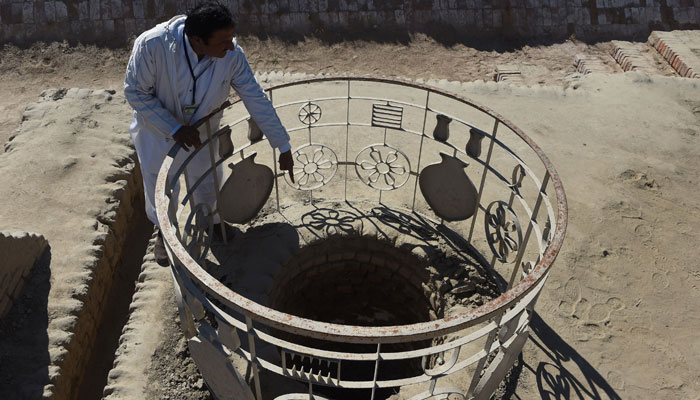
A caretaker at the UNESCO World Heritage archeological site of Mohen jo Daro, Ismail Mugheri, points out a well. PHOTO: AFP
At the site itself, he says, technical reviews are being held to examine the water logging issue and other ways to shore up the ruins, while exploring new, modern technology that allows researchers to ascertain what lies beneath the surface in the portions of the city not yet excavated.
But, Lashari says, perhaps the biggest challenge remains Pakistan´s international image, tarnished by extremism, corruption, poverty, and insecurity.
"Foreigners are afraid to visit Pakistan and the site because of the chronic issue of law and order," he warns.
All roads lead to equality?
The issues he cites underscore unsettling differences between modern day Pakistan and the civilisation found among the ruins.
At their peak during the Bronze Age, the Indus Valley people are believed to have numbered up to five million, with Mohen jo Daro their largest and most advanced settlement.
Clay and metallic seals, coins, standardised weighing stones, gold and bronze ornaments, toys and whistles – the bric-a-brac of ancient lives have revealed volumes about thriving Indus trade and commerce.
The layout of the city itself suggests an egalitarian people more concerned with cleanliness than hierarchy, says Dr Jonathan Mark Kenoyer of the University of Wisconsin.
"In Mesopotamia, the streets went from the city to the palace ... whereas in (Indus) cities all the streets were organised to allow access to the whole city," he says.
Mohen jo Daro had a complex water and waste management system which observers have wryly noted was better than in many parts of Pakistan today.
Only a small portion of the site has been excavated properly, but the most important building appears not to have been a palace or a place of worship, but a massive public bath.
Houses had tiled bathrooms and their own cylindrical brick wells, sometimes raised to the second floor to allow for a flush system.
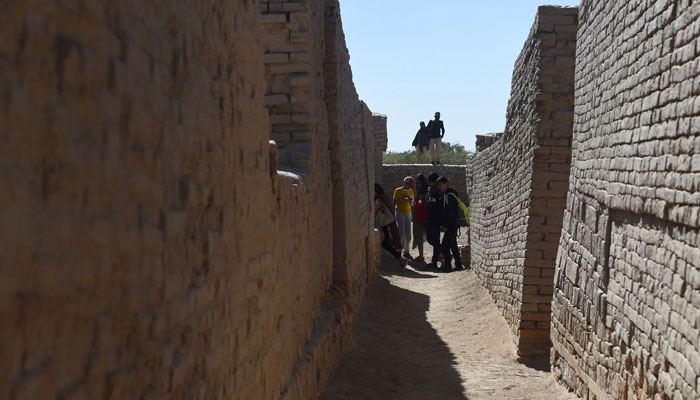
Visitors walk through the site. PHOTO: AFP
None of this, however, has yet explained why such a powerful, advanced and flourishing civilisation disappeared so abruptly around 1900 BC.
Currently, there is no bid to excavate further among the plans being laid by Lashari and Jansen. "It is actually preserved when it is buried," explains Harvard University´s Dr Richard Meadow.
Their access to new technologies puts researchers in a quandary, especially as they try to understand what happened to the Indus people. As Jansen says, the "best way to learn information is to excavate".
But mysteries take time to solve: for now, the researchers say, they will settle for ensuring that Mohen jo Daro endures for a few centuries more.