Bangladesh to launch direct flights to Karachi: high commissioner
Biman Bangladesh Airlines to use Indian airspace on its route to Karachi, says Iqbal Hussain
Published December 04, 2025
- Pakistani carriers unlikely to operate flights to Dhaka.
- Direct routes could boost profits for traditional industries: envoy.
- South Asia trade potential blocked by politics, says Hussain.
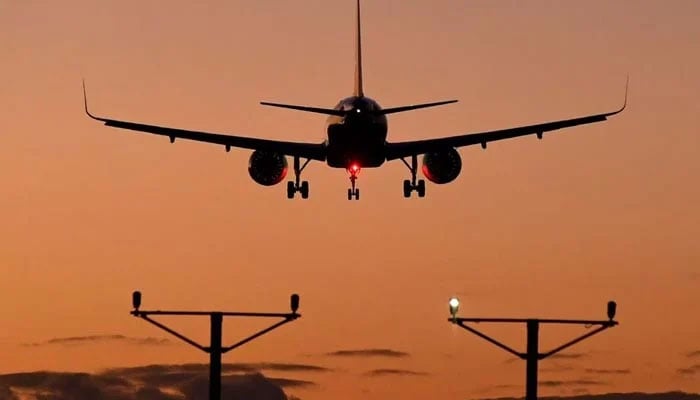
ISLAMABAD: Bangladesh High Commissioner to Pakistan Iqbal Hussain Khan has confirmed that Biman Bangladesh Airlines is preparing to launch three weekly flights to Karachi.
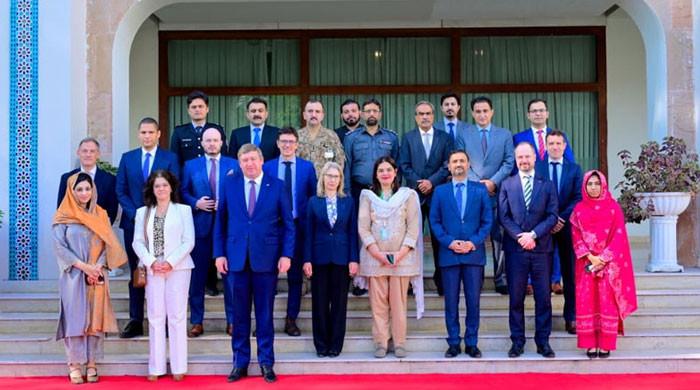
He made these remarks while speaking to The News on the sidelines of his address at the Foreign Services Academy on Wednesday. The academy has recently introduced a new lecture series featuring foreign envoys, giving young Pakistani diplomats in training a chance to engage directly with ambassadors on diplomatic affairs and regional issues.
“Yes, we are starting direct flights with Pakistan. Our national airline will operate three weekly flights to Karachi”, the Bangladesh high commissioner said when asked about the development.
When asked whether the route would pass over Indian airspace, he said that, just as Indian aircraft can use Bangladesh's airspace, Biman flights would also fly over India.
Sources indicate that, due to India's ongoing airspace restrictions on Pakistan, there is currently no immediate prospect of Pakistani carriers operating flights to Dhaka.
Earlier, High Commissioner Khan delivered a detailed lecture and also responded to questions from young diplomats in an interactive session.
The high commissioner said South Asia holds vast potential for trade, connectivity, and cooperation, but limited access, border restrictions, and regional politics continue to obstruct economic growth. He said platforms such as the Foreign Services Academy's new lecture series allow constructive dialogue with young diplomats who represent the region’s future.
He said Pakistan and Bangladesh can significantly expand bilateral trade, but access constraints remain the biggest barrier. He noted that, in the past, railway links facilitated trade between the two countries, but today Pakistan’s dates reach regional markets via Dubai.
Direct access, he said, would boost profits and raise farmers' incomes. Citing the centuries-old pashmina industry in Kashmir, he noted that traditional sectors like dates and pashmina could multiply trade volumes if given direct market routes.
High Commissioner Khan said weak geographical connectivity is South Asia's most serious obstacle to progress, even though ancient trade routes once linked Kabul, Peshawar, Dhaka, and Myanmar.
No country, he stressed, can progress in isolation, and regional cooperation is the only practical way forward. Referring to BIMSTEC, he called it an important regional grouping including India, Thailand, and Bangladesh, but said border restrictions and the behaviour of larger powers often weaken regional trust.
He said colonial mindsets, ideological dominance, and tendencies towards regional supremacy hinder the effectiveness of regional organisations. Across the world, he said, countries experiencing internal inequalities often create external distractions, particularly during election periods, to consolidate political advantage.
"South Asian societies share deep historical, cultural, and civilisational linkages. The influence of Arab traders, interactions during the British era, and the legacy of Muhammad bin Qasim remain visible in the region's culture and social structures," the high commissioner said.
Bangladesh's coastal and maritime history, he added, has contributed to a tradition of openness and exchange.
He highlighted that the younger generation in South Asia is more aware, ambitious, and eager for change. Political shifts in Bangladesh in 2024, he said, have revived optimism among youth.
"As young leadership emerges, new avenues of economic progress will open, and older barriers can be dismantled. Despite artificial restrictions, people across the region want to come closer, and with time, democratic processes will strengthen and better leadership will emerge."
Concluding his remarks, he expressed hope that a new era of regional trade, connectivity, and shared development can take shape if South Asian nations prioritise collective progress and put cooperation at the centre of policymaking.