Is hepatitis B vaccine at birth no longer required? What parents need to know
CDC vaccine advisers, in historic shift, vote to end universal Hepatitis B vaccination at birth
Published December 06, 2025
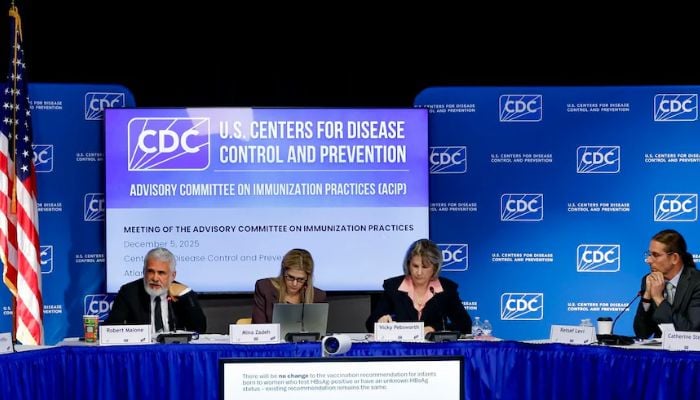
A newly reconstituted federal vaccine advisory panel voted Friday, December 5, to end the universal recommendation that all newborns receive their first dose of the hepatitis B vaccine within 24 hours of birth.
The Centers for Disease Control and Prevention’s Advisory Committee on Immunization Practices (ACIP) voted 8-3 to recommend the birth-dose vaccine only for infants who test positive for the liver-attacking virus or to those whose hepatitis B status is unknown.
As per the committee's new advisory, Infants who test negative will follow a “shared clinical decision-making” between parents and doctors on the timing of the first dose.
A second, separate vote (6-4, with one abstention) suggested testing children’s antibody levels after each hepatitis B shot to potentially evaluate if the standard three-dose series could be reduced (a practice not supported by existing vaccine efficacy data, as per CDC officials at the meeting).
This marks the most critical change to the childhood vaccine schedule in a generation and is regarded as a sweeping overhaul of the nation’s vaccine advisory bodies initiated by Health and Human Services Secretary Robert F. Kennedy Jr., a long-time vaccine skeptic.
In June, Kennedy dismissed all prior ACIP members and appointed new ones, many of whom share his critical views on vaccine safety.
Since 1991, the universal hepatitis B birth-dose policy is credited by health experts with minimising childhood hepatitis B inflections over 90% and prevented around 90,000 deaths.
Hepatitis B leads to chronic infection, causing liver cirrhosis, cancer, and failure. Newborns are highly vulnerable, with up to 90% developing lifelong infections.
During the two-day meeting, major medical stories also criticised the change. Dr. Grant Paulseen of Pediatric Infectious Disease Society stated, “Our question is why? Why is there pressure today to change something that has been working?”
“We know it is safe, and we know it is very effective. If the committee made the proposed change we will see more children and adolescents and adults infected with hepatitis B,” said Dr. Cody Meissner, a paediatrician and sole holdover from previous ACIP.
However, proponents of the change, led by members of an ACIP subgroup that proposed that the policy is a move towards individualised care and raises concerns over potential, though unproven by any scientific evidence, long-term harms of vaccinating newborns.
Retsef Levi, an ACIP member and MIT professor labelled the policy as a "fundamental change in the approach,” enabling parents to “carefully think about whether they want to take the risk.”
The vote immediately drew condemnations from former CDC directors and various medical organisations.
The acting director of CDC, Jim O’Neill, must now decide whether to formally adopt the recommendations.
With this decision, there's uncertainty over the future of other childhood immunizations as the Kennedy-appointed panel begins a comprehensive review of the complete U.S. vaccine schedule.