Binance, HTX NOCs 'not blanket approval', says PVARA chief
NOCs are the first step in a risk-mitigated, supervised entry, says Bilal bin Saqib
Published December 14, 2025
- 30–40 million Pakistanis actively use digital assets.
- Phased model mirrors major global financial centres.
- Timely decisions needed under global financial system.
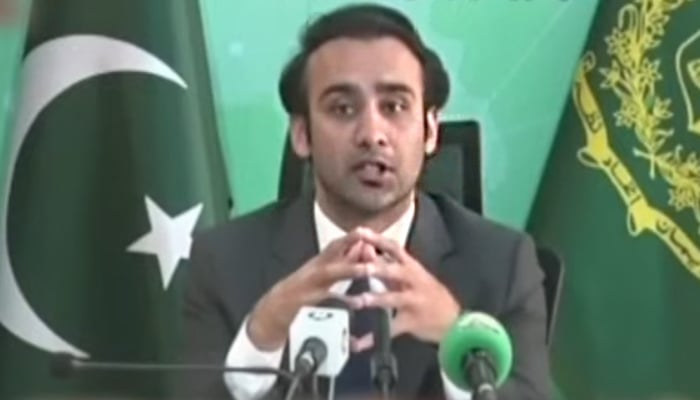
Bilal bin Saqib, Special Assistant to the Prime Minister for Binance and Crypto and chairman of the Pakistan Virtual Assets Regulatory Authority (PVARA), said the no-objection certificates (NOCs) issued to global cryptocurrency exchanges Binance and HTX were not a “blanket approval” but the first step under a “risk-mitigated, phased, supervised entry framework”.
Addressing a press briefing in Islamabad, Bilal said Pakistan has, for the first time, opened a “regulated, transparent and globally compliant pathway” for global exchanges, describing the issuance of the NOCs as a practical step towards a new regulatory vision.
He said the newly introduced framework will enable effective monitoring of anti-money laundering measures and counter-terrorism financing, and stressed that timely and informed decision-making within the financial system is essential.
Bilal said Pakistan ranks among the world’s top three crypto-adopting nations, with an estimated 30 to 40 million Pakistanis actively using digital assets, and pointed to the $100 trillion global bond market shifting towards digital systems, which he said underscored the importance of regulating crypto assets.
He said Pakistan aims to become a global model in digital assets regulation and said the country will strengthen its sovereignty through technology over the next decade.
Two days ago, the finance ministry said Pakistan had inked a memorandum of understanding with Binance to explore the “tokenisation” of up to $2 billion in the country’s assets. It described the MoU as a framework for exploring collaboration on the tokenisation and blockchain-based distribution of Pakistan’s real-world and sovereign assets.
The ministry said the assets could include sovereign bonds, treasury bills, and commodity reserves such as oil, gas, metals or other raw materials owned by the government. It described tokenisation as the process of creating a digital version of an asset.
It said the initiative could involve assets of up to $2 billion, subject to approvals, with the aim of improving liquidity, transparency and international market access.
Finance Minister Muhammad Aurangzeb said the MoU signalled Pakistan's reform trajectory and “a long-term partnership.”
Binance founder Changpeng Zhao said the agreement was “a great signal for the global blockchain industry and for Pakistan”, saying it marked the beginning of a move toward full deployment of the tokenisation initiative.
Separately, PVARA said it issued NOCs to Binance and HTX, allowing them to begin regulated engagement in Pakistan’s digital asset market.
The NOCs were granted after a formal review process in coordination with public-sector stakeholders, with a focus on governance, compliance, risk management and alignment with emerging regulatory requirements, according to a statement issued by PVARA.
Aurangzeb said “the introduction of this structured NOC framework demonstrates Pakistan's commitment to responsible innovation and financial discipline.”
PVARA said the NOCs permit the firms to register on the FMU goAML system and engage with the Securities and Exchange Commission of Pakistan (SECP) for local subsidiary incorporation. It said the firms can submit full VASP licence applications and provide AML-registered services after goAML registration.
The issuance of the NOCs, however, does not constitute a full operating licence, the communique said.
Bilal termed the development “the beginning of a new chapter for Pakistan’s digital asset ecosystem”.
“The issuance of these NOCs is the first step toward a fully licenced and regulated environment that places consumer protection, financial integrity, and responsible innovation at its core,” he added.
PVARA said annual trading linked to Pakistan is projected above $300 billion. It emphasised timely regulation to ensure transparency, governance and market integrity, while signalling that Pakistan was open to responsible innovation under structured rules.
Bilal had also outlined Pakistan’s digital asset ambitions at Bitcoin MENA 2025 earlier this week, where he laid out Pakistan’s plan for a structured, responsible and globally aligned digital asset framework. The event drew more than 7,000 participants and delegates from over 40 countries, according to the background material provided.
During a panel alongside Antalpha COO Derar Islim, Bilal said Pakistan was approaching Bitcoin and digital assets “not as speculation, but as economic infrastructure designed for the future”.
“Pakistan is not chasing the future. Pakistan is trying to build a new one,” he said, pointing to the country’s demographic profile, with over 70% of the population under the age of 30.
He framed blockchain and digital assets as a foundational financial rail for the Global South and a catalyst to turn Pakistan’s youth from consumers into builders.
He said digital assets and Bitcoin had gained organic adoption in Pakistan because they addressed everyday needs, including protecting savings amid currency volatility, providing access to financial services for the unbanked, and enabling global, instant payments for a large freelancer population.