Pakistan 'winner' of US foreign policy driven by Trump's 'personal' affinity for CDF Asim Munir
Foreign Policy and The Diplomat report May’s clashes with India restored Pakistan’s strategic credibility
Published December 25, 2025
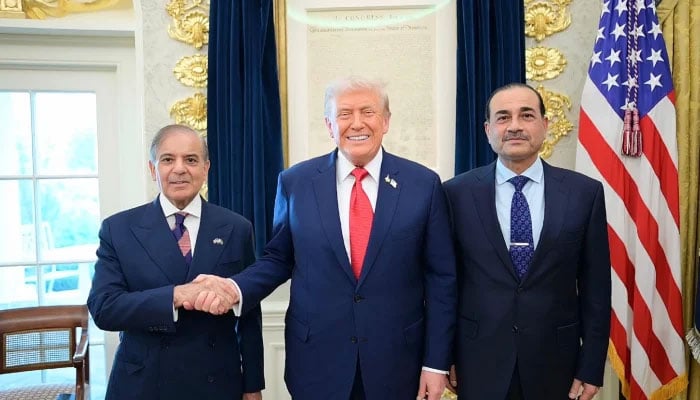
- Pakistan's forces countered India's military modernisation: The Diplomat.
- Adds Pak-US ties warmed after conflict, US-India relations strained.
- Arrest of terror mastermind earned Pakistan goodwill from Trump: Foreign Policy.
Pakistan re-emerged as a significant player on the global stage in 2025, especially after intense military clashes with India in May, even as political instability and economic pressures persisted at home, according to analyses published in international magazines, Foreign Policy and The Diplomat.
The turning point came after brief but intense military clashes with India in a four-day conflict in May this year, which highlighted Pakistan’s air power capabilities and restored its strategic credibility internationally, according to The Diplomat.
"For militaries across the world, this demonstrated that Pakistan’s armed forces had not only kept pace with India's military modernisation but, to an extent, effectively countered New Delhi’s advancements despite economic challenges at home," it added.
According to The Diplomat, after the confrontation, Islamabad witnessed a noticeable warming of ties with Washington, while New Delhi’s relations with the United States faced strain.
"Pakistan also strengthened defence cooperation in the Middle East, formalising a mutual defence pact with Saudi Arabia."
China welcomed the battlefield validation of its defence systems deployed by Pakistan, which helped revive momentum for the second phase of the China-Pakistan Economic Corridor (CPEC).
Pakistan’s diplomatic footprint expanded further with its involvement in international discussions on Gaza’s stabilisation. These developments positioned Islamabad to play a more influential role in regional and global affairs heading into 2026.
According to The Diplomat, on the western front, Pakistan adopted a tougher posture towards Afghanistan as Islamabad applied sustained pressure to counter the Tehreek-e-Taliban Pakistan (TTP), including cross-border strikes and the suspension of trade.
Foreign Policy reported that Pakistan’s role in the arrest of the mastermind behind a major terror attack on US forces in Afghanistan has helped Islamabad secure early goodwill with US President Donald Trump.
“Our relationship looks good, as good as it has ever been,” Pakistan’s ambassador to Washington, Rizwan Saeed Sheikh, told Foreign Policy earlier this year.
According to Foreign Policy, Pakistan’s improving standing in Trump’s eyes has become more striking as it coincides with a visible downturn in US relations with India
According to Foreign Policy, India’s refusal to give Trump credit for brokering a cease-fire with Pakistan after a brief armed conflict between the two neighbours in May, along with Trump’s purported frustration over India’s trade policies and its purchases of Russian oil, has seen New Delhi hit with some of the world’s highest Trump tariffs.
“But as 50 percent tariffs remain in place and a trade deal remains elusive, those who look at the optics cannot help but concede that they don’t look good.”