Pakistan-Saudi defence pact expansion to be decided jointly, says Khawaja Asif
Defence minister calls for broader collective defence framework for Muslim nations to ensure their security
Published January 19, 2026
- Asif terms Trump's invitation on Gaza peace positive.
- Pakistan backs two-state solution for Palestine: minister.
- Defence pact expansion to be jointly decided, says Asif.
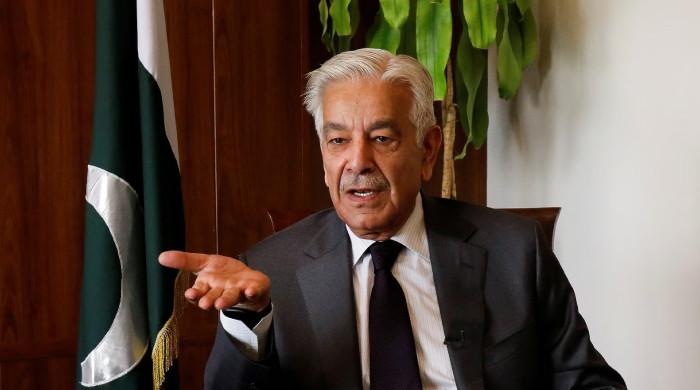
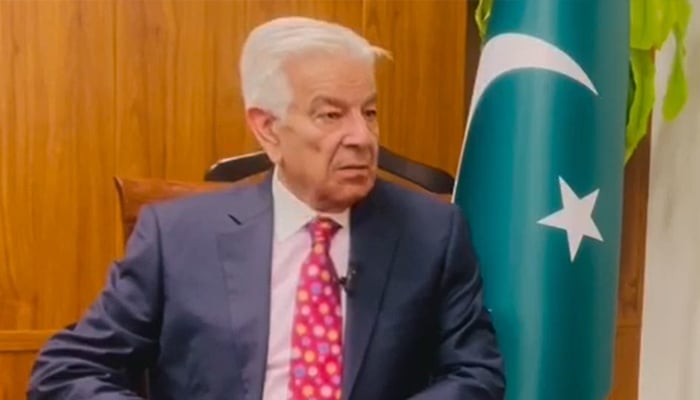
ISLAMABAD: Defence Minister Khawaja Asif said on Monday that any expansion of the Pakistan-Saudi Arabia defence agreement, including the possible inclusion of other countries, will be decided mutually by Islamabad and Riyadh.
"Turkiye or any other country could become part of the defence pact if both Pakistan and Saudi Arabia agree," the defence minister said while speaking to Geo News exclusively at Parliament House.
The statement came after Minister for Defence Production Raza Hayat Harraj, in an interview with Reuters on January 15, confirmed that Pakistan, Saudi Arabia, and Turkiye have prepared a draft defence agreement after nearly a year of talks.
Harraj said the potential deal between the three regional powers was separate from a bilateral Saudi-Pakistani accord announced last year. A final consensus between the three states is needed to complete the deal, he said.
Earlier, Bloomberg reported that Ankara was at an "advanced stage of discussions" to join the Strategic Mutual Defence Agreement (SMDA) between Pakistan and Saudi Arabia.
The publication stated that the potential deal would pave the way for a new security alignment that "could shift the balance of power in the Middle East and beyond".
However, Harraj has clarified that the new draft was separate from the Pakistan-Saudi Arabia SMDA.
Pakistan and Turkiye have decades-long defence ties, with Ankara building corvette warships for the Pakistan Navy. Ankara has also upgraded numerous F-16 fighter jets for the Pakistan Air Force and provided drone technology to Islamabad.
Asif, in today's interview, noted that Muslim countries should work towards a broader collective defence framework to ensure their security. "This would prevent Muslim countries from being systematically weakened or incapacitated one by one," he added.
Commenting on regional and international issues, the defence minister termed US President Donald Trump’s reported invitation to Prime Minister Shehbaz Sharif to join Gaza peace efforts a positive development.
He said Pakistan could play a key role in shaping any future roadmap for Gaza, noting that the world was united on the two-state solution for Palestine.
Asif described the current moment as a “golden opportunity” granted to Pakistan to raise a strong voice for the freedom, salvation and rights of the Palestinian people, expressing confidence that PM Shehbaz would advocate forcefully for Palestine at international forums.
Addressing Iran-related concerns, the defence minister said Iran was Pakistan’s neighbour with whom it enjoyed exemplary relations, describing Iranians as brothers.
He said Iran harboured no hostile intentions that could threaten other countries, adding that Pakistan’s consistent position was that Iran’s security should be ensured.
He also said Israel was a country perceived as a threat by many.