Pakistani national deported from US after green card interview; family appeals for review
Pakistani national's daughter questions why deportation order issued in 1990s suddenly enforced decades later
Published January 21, 2026
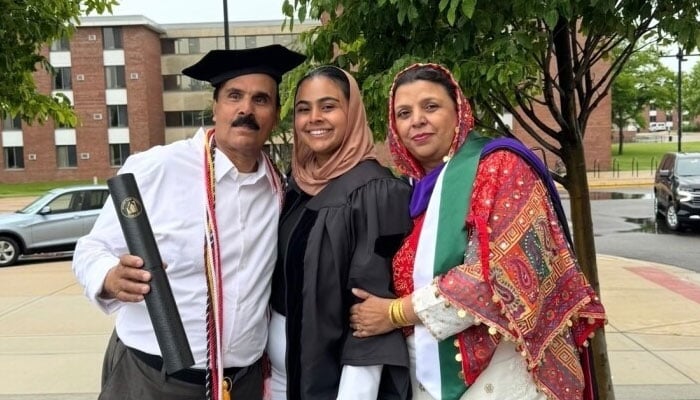
A Pakistani national who had lived in the United States for nearly five decades was deported following a green card interview, triggering concern within the Pakistani-American community and prompting appeals for a humanitarian review of his case.
Asif Amin Cheema, a resident of Chicago in the US state of Illinois, was deported to Pakistan on January 1 after immigration authorities acted on a decades-old deportation order. His family has urged the court to reconsider the case on humanitarian grounds.
Speaking exclusively to Geo News, Cheema’s daughter, Rabia Amin, said her father arrived in the United States in the late 1980s along with his cousins. He married a Pakistani woman in 1995. Asif is now a father of five children — two sons and three daughters.
Without elaborating the reason, Rabia revealed that a deportation order had been issued against her father in 1993. However, until 1997, he continued travelling between Pakistan and the United States without facing any obstruction from immigration authorities at airports.
She said her father appeared for a green card interview in April 2025 and was hopeful of receiving permanent residency, as he had no criminal record and was widely regarded as a respectable member of the Chicago community.
Asif Cheema, 63, owned a restaurant in the Humboldt Park area of Chicago and also possessed a valid work permit, his daughter added.
In September, while heading to work as usual, Asif was unexpectedly arrested by officials from Immigration and Customs Enforcement (ICE). He was scheduled to be deported in November, but moments before boarding the aircraft, he experienced severe chest pain and was temporarily removed from the flight. He was transferred to a hospital for medical treatment.
In an interview, Asif claimed he was denied medication during his detention, an allegation US authorities have denied.
Legal appeals were filed to halt his deportation, but the immigration judge ruled against the family. As a result, Asif was deported to Pakistan.
His daughters questioned why a deportation order issued in the 1990s was suddenly enforced decades later. They said an attorney had assisted in attempting to adjust their father’s immigration status, but the family was unaware that the old deportation order was still active.
Fighting back tears, Rabia said the family had followed all legal procedures, yet her father was subjected to what they believe was unjust treatment. She added that her father never took bank loans for his children’s education and had moved to the US with dreams of securing a better future for his family — dreams she said were now shattered.
Following former President Donald Trump’s return to office, a large number of individuals from various countries, including India, have reportedly been deported as part of a broader crackdown targeting those with criminal backgrounds or prior deportation orders.
Addressing concerns over the issue, Pakistan’s Ambassador to the United States, Rizwan Saeed Sheikh, said in a recent interview that fewer than 300 Pakistanis had been deported so far.
Rabia said her father recently visited a hospital in Pakistan and is currently staying at a relative’s home. She expressed concern over his health and uncertainty about when the family would be reunited.
The family remains hopeful that the judge will reconsider the case, allowing them to reunite and live together again in the United States.