Federal Constitutional Court upholds super tax
Parliament holds exclusive authority over taxation, rules FCC
Published January 27, 2026
- Super tax valid since 2015, rules FCC.
- FCC affirms parliament’s authority to levy tax.
- Rs310bn recovery expected after FCC verdict.
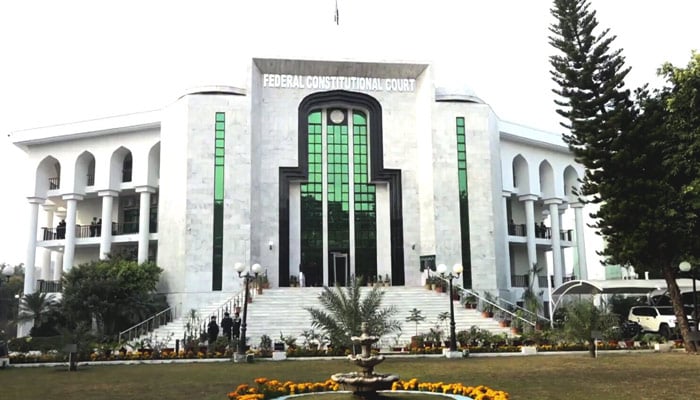
In a landmark ruling, the Federal Constitutional Court (FCC) on Tuesday upheld the super tax, accepting the authority of parliament to legislate on imposing taxes.
The court delivered its verdict in the long-running super tax case, restoring Section 4-B of the Income Tax Ordinance (ITO) and dismissing objections to the maintainability of the petitions.
A three-member bench of the Federal Constitutional Court, headed by Chief Justice Aminuddin Khan, heard the super tax case and rejected objections to the maintainability of the petitions, while restoring Section 4-B of the ITO with effect from 2015.
According to the judgement, Section 4-B of the ITO will remain in force from 2015, and parliament has the authority to impose a levy through legislation.
“The objections raised on the maintainability of the case are rejected,” the court ruled. The FCC further held that parliament was fully empowered to impose a tax.
The court also observed that high courts had erred in declaring the super tax discriminatory. “The decisions of the high courts declaring the super tax discriminatory were not correct,” the order read, adding that “Sections 4-B and 4-C relating to the imposition of super tax are in accordance with the law.”
The court also ruled that the super tax would not apply to modarabas, mutual funds and benevolent funds.
In its order, the court said the oil and gas sector could seek individual relief. “Oil and gas companies may approach the relevant tax commissioner for individual relief,” the court ruled.
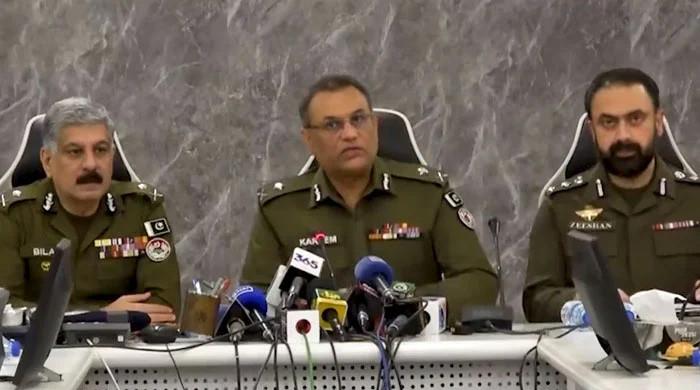
Speaking to the media after the verdict, Revenue Division lawyer Hafiz Ehsan Khokhar said the decision would benefit the federal government financially.
“The federal government will receive around Rs310 billion as a result of this judgement,” he said. He added that the court had recognised parliament’s legislative authority.
“The Federal Constitutional Court has acknowledged parliament’s power to legislate,” Khokhar said, adding that high courts had exceeded their jurisdiction.
What is super tax?
The super tax was introduced in 2015 to support the rehabilitation of people affected by terrorism in Khyber Pakhtunkhwa. At the time, a 5% additional tax was imposed on those earning annual profits above Rs300 million, a move upheld by all high courts.
In 2022, the tax was extended to profits exceeding Rs150 million, with the rate increased to a maximum of 10%. The move was challenged by business figures, banks and companies on grounds of retrospective application and double taxation.
The case has been under litigation since 2019, with hearings held in the Supreme Court, later before a constitutional bench following the 26th Constitutional Amendment, and finally transferred to the Federal Constitutional Court after the 27th Amendment.
The Federal Constitutional Court has conducted 17 hearings in the matter.