Conviction after conviction shrinks Imran Khan's chances of securing release
Situation worsens after Dec verdict in Toshakhana-II case, sentencing Khan, Bushra each to 17 years in prison
Published January 28, 2026
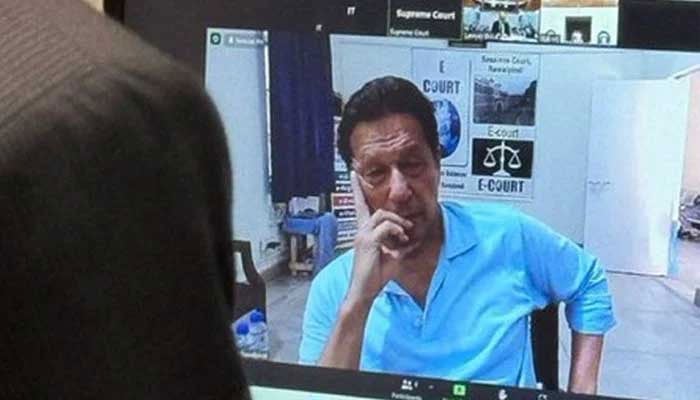
- Imran, Bushra remain imprisoned under multiple convictions.
- No immediate relief in sight for couple from higher judiciary.
- Multiple May 9 cases remain pending at various stages.
ISLAMABAD: With the recent conviction in the Toshakhana-II case, Imran Khan’s chances of securing freedom in the near future have further diminished.
After this newspaper’s earlier report, published in October 2025, highlighted the bleak legal timeline facing the former prime minister, the situation has worsened following the December 2025 verdict in the Toshakhana-II case, in which Khan and his wife Bushra Bibi were each sentenced to 17 years’ imprisonment.
At present, both remain imprisoned under multiple convictions, with no immediate relief in sight from the higher judiciary.
Legal experts point out that even the appeal process itself has become a major hurdle. Khan’s appeal in the Al-Qadir Trust case, in which he and Bushra Bibi were sentenced to 14 years, was filed in January 2025, yet a year later, the Islamabad High Court (IHC) has not fixed it for hearing.
Under the IHC’s Fixation Policy, framed in line with the directives of the National Judicial Policy Making Committee (NJPMC), criminal appeals are taken up strictly according to seniority. Priority is given to older cases, particularly those involving death sentences and life imprisonment.
As a result, dozens of criminal appeals filed well before Khan’s are already in the queue, making it unlikely, under routine procedures, that his appeal will be heard anytime soon unless the court itself decides to grant priority.
Party insiders acknowledge privately that without such priority fixation, the Al-Qadir Trust appeal still may take months before it is listed for regular hearing.
The situation has further deteriorated following the Toshakhana-II conviction delivered in Dec 2025. Legal sources say that the appeal against this verdict faces a similar fate and may take over a year before being taken up, unless an early hearing is granted.
“This means that even if relief is eventually granted in one case, the other conviction will continue to keep him behind bars,” a senior lawyer associated with the PTI admitted.
Meanwhile, multiple May 9-related cases remain pending at various stages. PTI’s own legal experts concede that the prosecution retains sufficient procedural leverage to prolong trials, ensuring that even bail or acquittal in one matter does not automatically translate into release. Within the PTI, serious leaders privately express deep concern over what they describe as a “closing legal window” for their founder. They believe that the continued policy of confrontation pursued by hawkish elements inside the party has further reduced the chances of any political or judicial relief.
“There is growing realisation among senior figures that unless there is a change in approach or some extraordinary judicial intervention, Khan’s legal troubles are not ending anytime soon,” a party source said.
Even under the most optimistic scenario, for acquittals at the high court level, the appellate process itself is expected to be lengthy.
Barring a court decision to take up the appeals on a priority basis, a political understanding, or some unforeseen development, the prevailing legal timeline suggests that Khan’s stay in jail is likely to continue for a long time.
Originally published in The News