Outdated systems, equipment plague Saddar fire station
Much of equipment appears unchanged since colonial era, despite emergency response's global advancements
Published January 30, 2026
The Saddar Fire Station, Karachi's second-oldest fire brigade facility, which was established in 1937, today presents a picture of severe neglect, raising serious concerns about the city's emergency preparedness, particularly in a high-priority Red Zone.
The infrastructure of the Saddar Fire Station — one of 28 fire stations in Karachi and originally designed to house two fire vehicles — has deteriorated to an alarming extent.
The state of rescue and emergency services in Karachi has come under intense scrutiny in the aftermath of recent tragedies, most notably the Gul Plaza inferno, in which at least 80 people lost their lives, and two others were reported missing.
The incident, compounded by a delayed response from the authorities concerned, exposed critical shortcomings in the city’s rescue mechanisms.
Against this backdrop, the deteriorating condition of the Saddar Fire Station — serving some of the city’s most densely populated and commercially vital areas — raises serious questions about Karachi’s preparedness to respond effectively to large-scale emergencies.
Areas meant for storing critical firefighting equipment are visibly dilapidated, with damaged ceilings, crumbling plaster, and outdated facilities that resemble rural storage sheds rather than a modern emergency services institution.
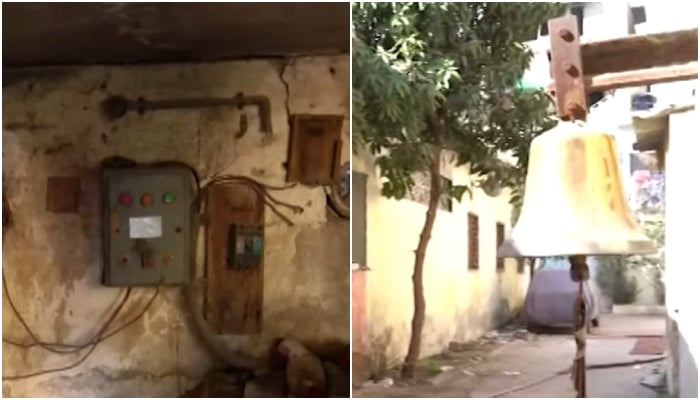
The station still relies on original electrical switchboards dating back to its founding, with worn-out breakers and exposed systems that pose safety risks.
Much of the equipment appears unchanged since the colonial era, despite global advancements in emergency response technology. Once considered advanced for its time, the water supply system also depicts an outdated and deteriorated look.
The underground water tank and pumping station — also dating back to 1937 — are now partially non-functional. The motor required to pump water into fire tenders is missing, and manual controls remain in use while modern automatic systems are standard elsewhere in the world.
Despite being nearly 100 years old, the station continues to operate using the same alarm bells that were installed at the time of its construction. These bells signal emergencies, summoning firefighters from nearby residential quarters to report for duty.
The staffing situation further underscores systemic imbalance. At the Saddar Fire Station, only one operator manages the control room. In contrast, Rescue 1122 reportedly deploys 36 operators at a single time, with monthly operational costs running into millions.
Ironically, the fire brigade — where actual firefighting vehicles are stationed — operates with minimal staff and resources, while agencies with limited firefighting capacity receive significantly larger budgets.
Currently, the station has only three fire brigade vehicles, supported by seven auxiliary units, often described as small fire tenders or water bowsers. The shortage is especially concerning given the station’s strategic location and the critical nature of its responsibilities.