Balochistan: 'Political violence', not a military manoeuvre
It was not a campaign to capture ground or challenge the state militarily
Published February 02, 2026
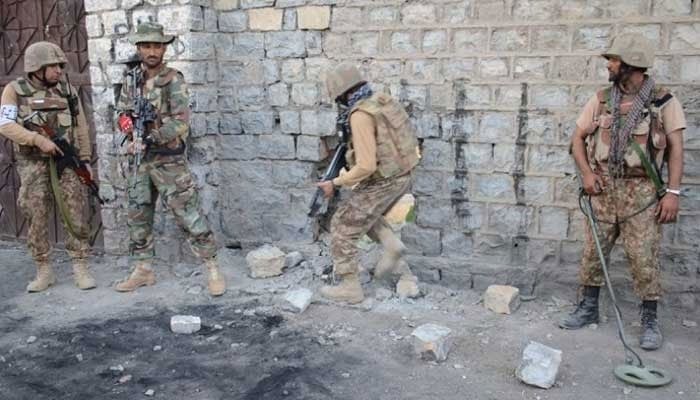
What unfolded across multiple districts of Balochistan was not a military manoeuvre, nor an attempt to seize or hold territory. It was not a campaign to capture ground or challenge the state militarily. It was a coordinated act of political violence — brief, dispersed, and symbolic.
It was a shock-and-signal operation, low-duration, high noise. Yes, the attackers forced security forces into a simultaneous response across districts. The violence followed a familiar insurgent template: two primary engagements – Quetta and Kalat.
Nushki, Dalbandin, Gwadar, Pasni, Mastung and Buleda/Tump can be best classified as ‘harassment actions’ – attempted raids, long-range fire, grenade attacks and brief highway disruptions. This was not twelve battles. It was two fights and many distractions. Quetta was chosen for political symbolism; Kalat for institutional disruption.
Together, they maximised visibility while remaining within limited insurgent capacity. The attackers showed reach, not command-and-control. This was an operation built for fear, headlines, and recruitment — not for military effect.
The multi-node activation across a wide belt points to a distributed cell network acting in parallel, not a massed force. These were discrete tactical actions, not a breakdown of state writ. This remains an asymmetric insurgency, not a revolutionary force.
The attackers demonstrated no capacity to seize, hold, or defend terrain. The operation sought visibility and psychological effect, not territorial control. The attacks followed a hit-and-withdraw pattern, low-to-mid intensity, including an attempted suicide strike.
State response was rapid and effective, with security forces regaining full control and neutralising the operation within an hour. The pattern points to centralised intent with decentralised execution. Yes, shared timing and narrative, but autonomous cells acting without real-time operational control.
Red alert: The primary battlefield was not terrain, but information — amplification through social media and narrative compression designed to exaggerate scale and induce anxiety. The danger lies not in underestimating such violence, but in misreading it — treating political signalling as military escalation risks policy responses that strengthen the very narratives insurgents seek to advance, widen the gap between state and society, and convert tactical noise into strategic grievance.
In shock-and-signal operations, silence and overstatement both help the insurgent. Precision starves them. The state machinery must establish a single, time-bound public brief – what happened, where, when, what didn’t.
The state machinery must publish confirmed facts only; explicitly mark what is unverified. And the state machinery must rapidly correct exaggerations without chest-thumping or narrative inflation. The state machinery must disrupt cells, not narratives. The state machinery must break facilitation, not optics.
Remember, not all violence is the same. What unfolded in Balochistan fits the definition of political violence: violence used to communicate, mobilise, and contest legitimacy rather than to seize territory or defeat the state militarily.
Its success is measured not in ground held, but in attention captured and narratives advanced.
Finally, the state would have to close the grievance gap that the insurgency exploits. Remember, political violence thrives on misreading. The state’s task now is simple but exacting: contain the gunfire, starve the narrative, dismantle the networks, and close the political space in which such violence seeks meaning.
Originally published in The News