UNSC calls for accountability after Balochistan attacks as forces kill nearly 200 terrorists
UN body terms attacks as "heinous and cowardly"
Published February 04, 2026
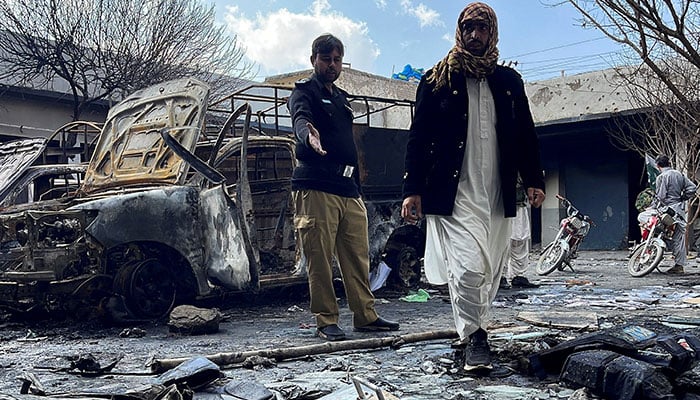
- UNSC urges states to cooperate with Pakistan.
- Says perpetrators, sponsors must face justice.
- 197 militants linked to BLA killed, say sources.
The United Nations Security Council (UNSC) has strongly condemned the terrorist attacks carried out across multiple locations in Balochistan, urging all states to actively cooperate with Pakistan, in line with international law, to counter terrorism.
In a statement issued on Tuesday, the UNSC termed the attacks as “heinous and cowardly” and stressed the importance of holding those responsible for the attacks — including perpetrators, organisers, financiers, and sponsors — accountable and bringing them to justice.
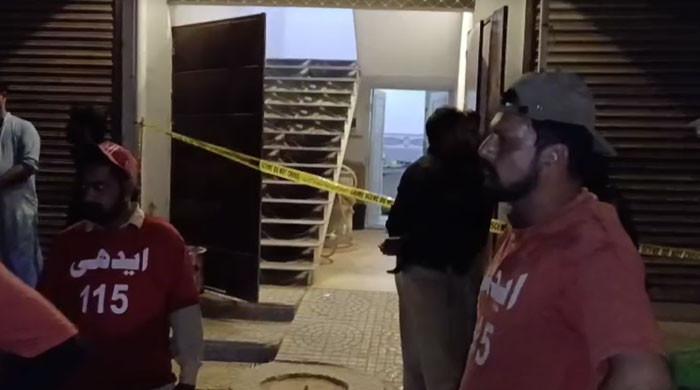
The condemnation followed days after the separatist Baloch Liberation Army (BLA) carried out multiple attacks, targeting nearly a dozen locations and killing 22 security personnel and 36 civilians.
In response, security forces launched a wide-ranging counterterrorism operation across Balochistan, sources said, killing 197 militants linked to India-sponsored Fitna al-Hindustan, after coordinated attacks struck 12 towns in the province over a three-day period.
“The Balochistan Liberation Army (BLA) has claimed responsibility for the attacks. Members of the Security Council expressed their deepest condolences to the families of the victims, as well as to the government and people of Pakistan, and wished a swift and complete recovery to those injured,” the statement read.
The UNSC reiterated that terrorism, in all its forms and manifestations, remains one of the gravest threats to international peace and security.
The council members urged all states to actively cooperate with the government of Pakistan, in line with international law and relevant UNSC resolutions, to counter terrorism.
They reaffirmed that acts of terrorism are criminal and unjustifiable, regardless of motive, location, timing, or those responsible, and underlined the need for all states to combat terrorist threats in accordance with the UN Charter and international human rights, refugee, and humanitarian law.
On January 31, terrorists belonging to Fitna al-Hindustan carried out attacks, targeting civilians in Quetta, Mastung, Nushki, Dalbandin, Kharan, Panjgur, Tump, Gwadar, and Pasni.
Chief Minister Sarfraz Bugti had said around 200 militants attacked different parts of the province, adding that most of them have either been chased out or killed. Bugti said that militants deliberately used civilians as human shields during the attacks.
The chief minister said Afghan soil is being used against Pakistan and maintained that militant leadership continued to operate from across the border.
Pakistan has experienced a rise in cross-border terrorist incidents since the Taliban regained control of Afghanistan in 2021. The provinces of KP and Balochistan, which border Afghanistan, have been particularly affected by these attacks.
ISPR Director General Lieutenant General Ahmed Sharif Chaudhry, in his presser on January 6, said that law enforcement agencies carried out 75,175 IBOs across the country in 2025.
Giving a breakdown, he said 14,658 IBOs were conducted in KP, 58,778 in Balochistan, while 1,739 operations took place in the rest of the country.
Lt Gen Chaudhry said that 5,397 terrorism incidents were reported nationwide during the last year. Of these, 3,811 incidents, he said, occurred in KP, 1,557 in Balochistan, and 29 incidents were reported in other parts of the country.
He said that 2,597 terrorists were killed during counterterror operations last year. While providing details of 10 major terror attacks across the country, he said that civilians and soft targets had been deliberately targeted, and Afghan militants were involved in all attacks.