Everything you need to know about March's ‘Worm Blood Moon' eclipse
‘Worm Blood Moon’ total eclipse arrives March 3
Published February 24, 2026
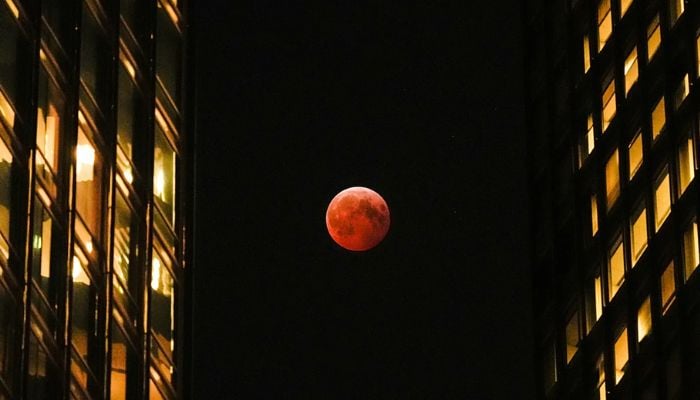
A total lunar eclipse resulting from the “Worm Moon” will rise across America, Asia, and Oceania on March 3, 2026.
The Worm Moon will pass through Earth’s shadow, causing a spectacular “blood moon.”
What exactly is a “Blood Moon”?
Skywatchers can observe the eclipse overnight March 2-3. The lunar eclipse will turn the sky into a deep and coppery red. This phenomenon is also known as Rayleigh scattering. It occurs when Earth’s atmosphere filters out blue light while enabling longer red wavelengths to bend around the plant and cast a ruddy glow on the lunar surface.
Why is it named “Worm Moon”?
The March full moon is called the Worm Moon due to softening ground in late winter, which represents the emergence of earthworms.
How long does an eclipse last?
The eclipse will last for approximately 58 minutes, the period when the Moon is fully engulfed in Earth’s shadow.
In which regions will the blood moon be visible?
National Aeronautics and Space Administration (NASA) reported that the most dramatic views of the blood moon will be visible in North America, the Pacific region, Australia, and East Asia.
People residing in the western United States will see the entire event, while those on the East Coast will only catch the beginning of the blood moon just before the lunar disk sets below the horizon at dawn. People in Europe or Africa will not be able to watch the eclipse.
What is the ideal time to watch a blood moon?
For U.S. observers, the penumbral phase of the eclipse will start on 3:33 a.m. EST. While the partial eclipse will be visible around 4:50 a.m. EST. The eclipse will become prominent from 6:04 a.m. to 7:02 a.m. EST, reaching its maximum red hue at 6:33 a.m. EST.
How to watch a blood moon?
In contrast to a solar eclipse, a blood moon is safe to watch with the naked eye, though using binoculars or telescopes will improve the view.