Pakistan's moment
Pakistan has emerged as a facilitator of dialogue, opening channels of communication at a time when escalation appears easier than restraint
Published March 31, 2026
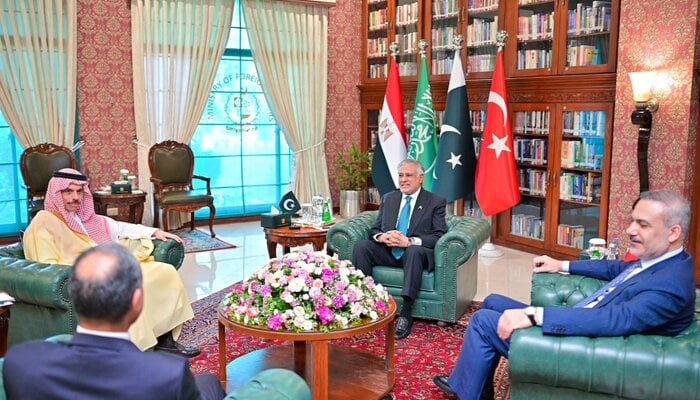
As the war between Iran and the US – backed by Israel – enters a dangerous and uncertain phase, a quiet but consequential shift is underway in regional diplomacy.
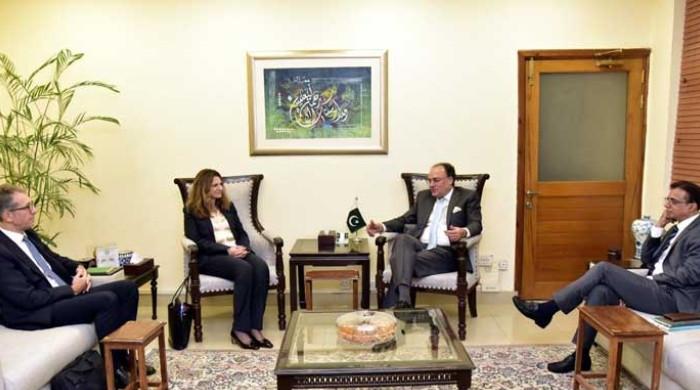
Pakistan has emerged as a facilitator of dialogue, opening channels of communication at a time when escalation appears easier than restraint. This is not accidental; it reflects a convergence of military credibility, diplomatic neutrality and growing trust across rival camps. The presence of the foreign ministers of Turkiye, Egypt and Saudi Arabia in Islamabad has shown the evolving thinking on the ongoing war and the need for a diplomatic solution grounded in inclusivity.
From Islamabad’s perspective, being a neighbour of West Asia, mediation is not opportunism but a necessity. What strategists describe as a ‘multi-front dilemma’, Pakistan could face simultaneous challenges: instability along its border with Iran, militant threats emanating from Afghanistan, diplomatic expectations from Gulf partners, and persistent tensions with India. The convergence of these pressures would test Islamabad’s strategic resilience.
Pakistan is directly exposed to spillover risks such as refugee flows, sectarian tensions and militant exploitation of instability. Unlike distant powers, Pakistan cannot afford strategic detachment.
As one of the few Muslim-majority states with nuclear capability and a battle-tested military, Pakistan commands respect across the region. Its experience in both conventional deterrence and counterterrorism operations enhances its standing as a serious actor. This credibility reassures all parties that Pakistan is neither weak nor easily pressured, an essential quality for any mediator operating in a high-stakes conflict environment. Pakistan’s approach to dealing with the ongoing challenges emanating from the war are multi-faceted.
First, crucially, Pakistan has not converted military strength into coercive diplomacy. Instead, it has adopted a posture of restraint, projecting itself as a responsible stakeholder rather than an assertive power. This balance has helped Islamabad engage multiple actors without triggering suspicion or resistance.
Second, Pakistan’s diplomacy reflects careful calibration. It maintains close ties with Iran while sustaining deep strategic relations with its Gulf partners, particularly Saudi Arabia, and functional engagement with Washington. This is not passive neutrality but active balancing and reassuring all sides without alienating any. Such multidirectional diplomacy allows Pakistan to operate as a bridge rather than a partisan actor.
Third, the most significant asset Pakistan brings to mediation is trust. Unlike major powers often viewed as pursuing dominance or hidden agendas, Pakistan is seen as a stakeholder with shared regional risks. Its emphasis on quiet diplomacy, consistent messaging and avoidance of public grandstanding has helped build confidence across divides. In a polarised conflict, this perception is invaluable and widely acknowledged.
Fourth, India’s unease with Pakistan’s mediatory efforts highlights the broader geopolitical implications. India has long positioned itself as a bridge between the West and the Global South, leveraging ties with Iran, the US and Israel. However, India lost its influence by alienating the neighbourhood. Concurrently, its skewed articulation of ‘strategic autonomy’ only exposed India as an opportunistic power with hegemonic designs. India’s close ties with Israel further eroded its credentials as an ‘honest broker’, and its cautious approach in the ongoing war has left it on the sidelines, while Pakistan has stepped into the diplomatic space. As Shashi Tharoor noted, this reflects both embarrassment and a missed strategic opportunity.
Fifth, Pakistan has wisely avoided unilateralism by working with partners such as Turkiye, Egypt and Saudi Arabia. This multilateral approach broadens legitimacy, distributes responsibility and reduces the risks associated with acting alone. It reinforces the perception of Pakistan as part of a collective regional effort rather than a self-interested actor.
However, despite the advantages listed above, Pakistan faces clear limitations. Domestic economic pressures, political polarisation and ongoing security challenges constrain its diplomatic bandwidth. Neutrality itself is fragile; even perceived bias could undermine trust. Moreover, Pakistan lacks the leverage to dictate outcomes to major powers. Its role remains facilitative. There are many speculations about the US’s fifteen-point demands and Iran’s five-point counter-demands. Without going into the details of those demands, there is a silver lining: they themselves are a signal of engagement amongst the parties. How Iran and the US conduct sensitive dialogue would remain a guessing game for stakeholders and onlookers.
Notwithstanding the challenges ahead, Pakistan must adhere to three guiding principles: strategic restraint, genuine neutrality and institutional continuity. Quiet diplomacy should take precedence over public signalling, balance must be maintained across all stakeholders, and mediation efforts should be embedded within broader regional frameworks.
This moment, strewn with landmines, represents a potential turning point for Pakistan. Long viewed primarily through a security lens, it now has an opportunity to redefine itself as a credible diplomatic intermediary.
As past experiences show, success will ultimately not be measured by visibility but by outcomes. If Pakistan can help lower tensions, facilitate dialogue and help prevent a wider war, it will demonstrate that credible power – when paired with restraint and neutrality – can still shape peace in a fractured world. And in a region on edge, that may be Pakistan’s most meaningful contribution of all.
The writer is a former ambassador of Pakistan to Iran and the UAE. He is also a former special representative of Pakistan for Afghanistan and currently serves as a senior research fellow at the Islamabad Policy Research Institute (IPRI).
Disclaimer: The viewpoints expressed in this piece are the writer's own and don't necessarily reflect Geo.tv's editorial policy.
Originally published in The News